
Last updated November 17, 2026
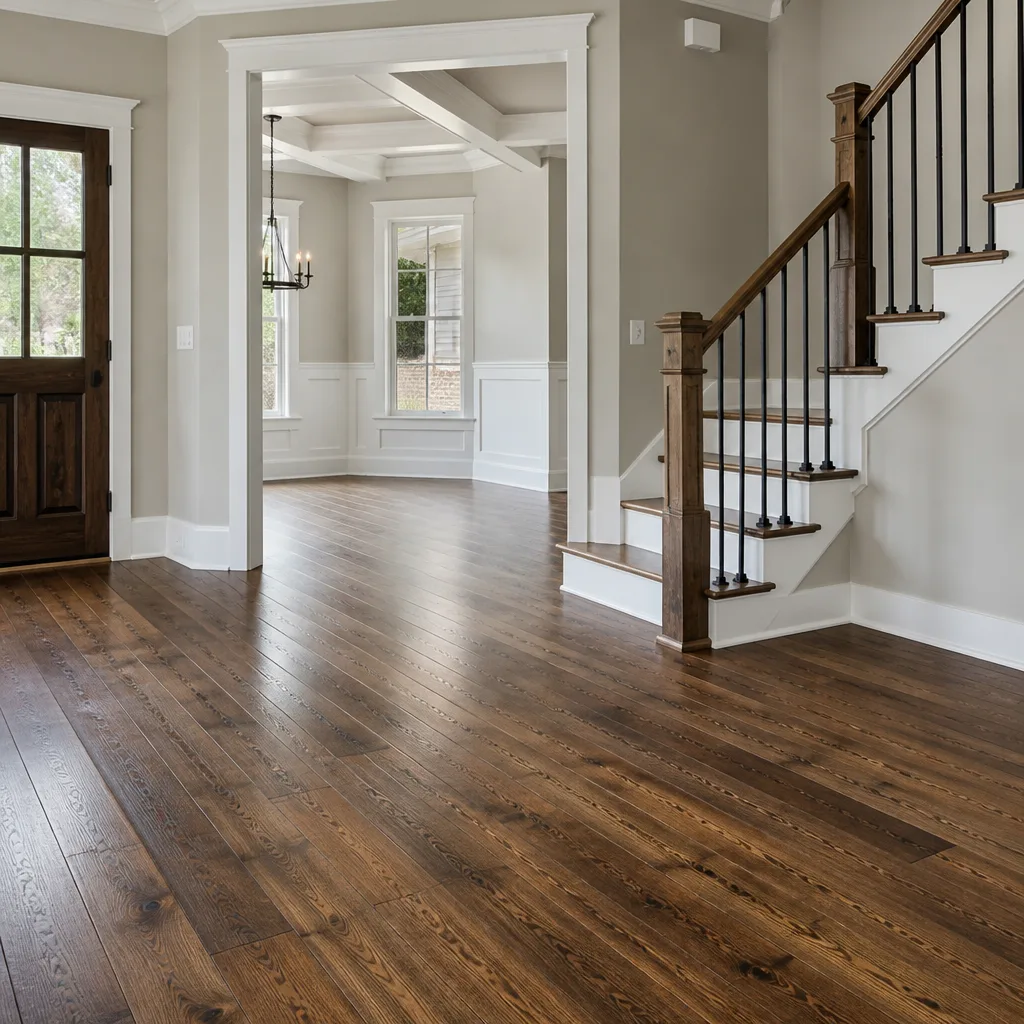 Hardwood
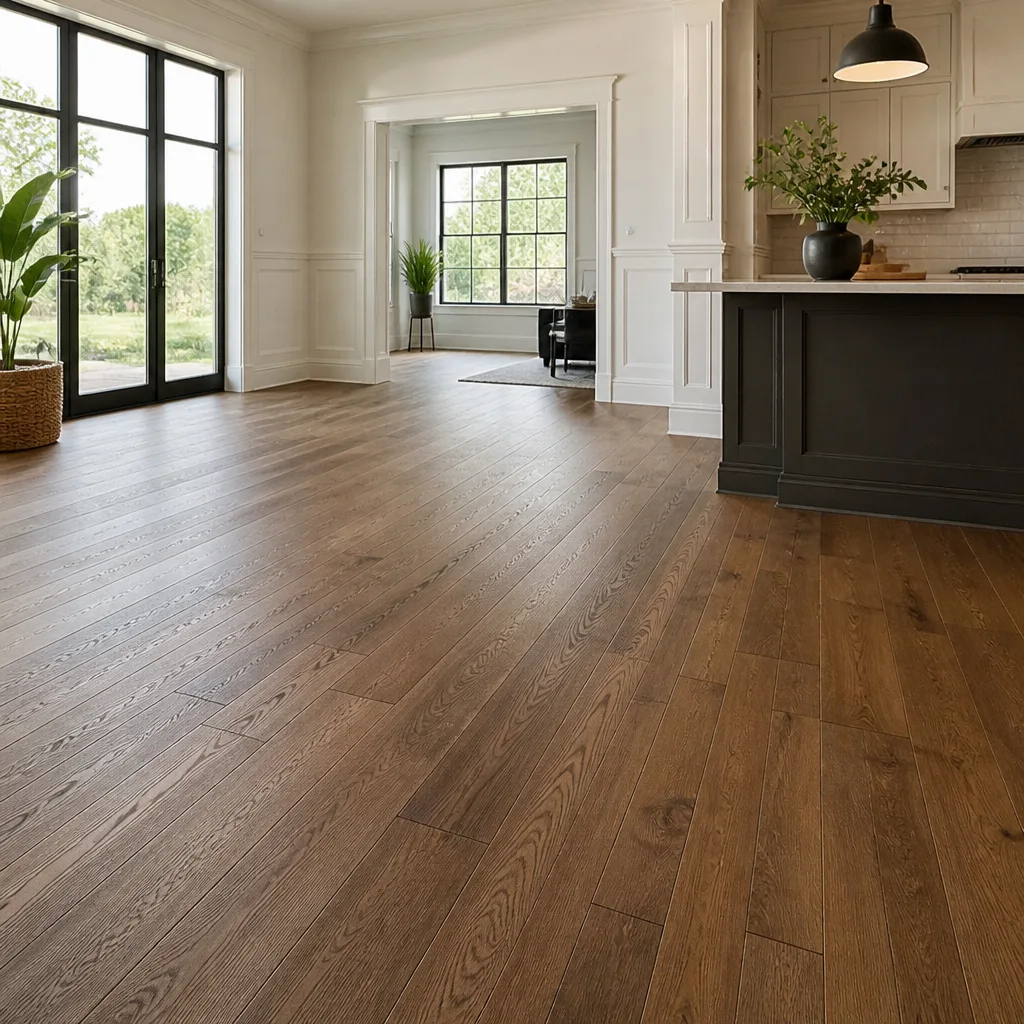 Engineered hardwood
 Luxury vinyl plank
 Laminate
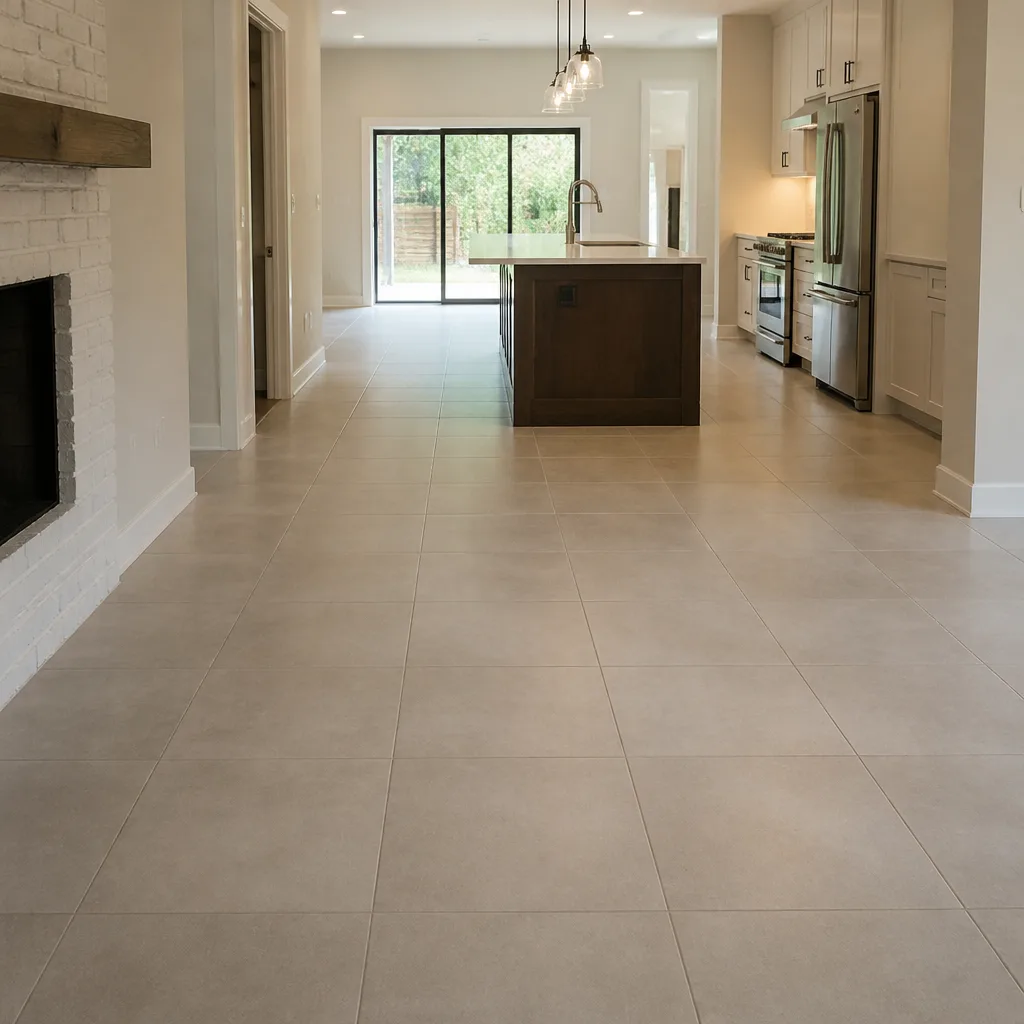 Porcelain tile
 Carpet
 Shaw
 Mohawk
 COREtec
 Pergo
Free in-home measure and written estimate: Shaw, Mohawk, COREtec and Pergo lines compared on your own rooms, with carpet, tile, vinyl plank, laminate and hardwood laid out side by side
Get your free estimateFix It or Start Over: Flooring Repair vs Replacement
Most homeowners make the repair-or-replace call with their eyes, not their math. The floor looks wrecked, so it must be gone. But the damage you can see is only half the decision. The other half is whether the parts still exist, whether the subfloor underneath will hold a fix, and how many useful years the product has left. A small patch sounds cheap until you learn the plank was discontinued, or the pad under that ten-year-old carpet has gone flat and the subfloor squeaks every step. In this guide we’ll walk through the diagnostic order that actually works: subfloor first, material second, budget last. We’ll also show you where Enterprise Flooring Installation fits when the answer lands on replacement.
Quick Answer
Repair makes sense when the subfloor is sound, the material has real life left, and matching product is still available. Replace when the decking is moving or wet, the floor is past its refinish or patch cycle, or discontinued planks turn a patch into a whole-room job. The age of the floor alone never decides it.
Styles & brands we work with
- Hardwood
- Engineered hardwood
- Luxury vinyl plank
- Laminate
- Porcelain tile
- Carpet
- Shaw
- Mohawk
- COREtec
- Pergo
Table of Contents
- Why the Subfloor Decides Before the Surface Does
- The Discontinued Product Trap
- The Real Cost Math: Repair vs Replacement
- Tile Repair Logic
- Hardwood: Refinish Cycles and Cupping
- Carpet and Luxury Vinyl Patches
- A Step-by-Step Decision Path
- Common Mistakes to Avoid
Why the Subfloor Decides Before the Surface Does
No surface repair outlives a bad subfloor. Carpet, tile, hardwood, and vinyl all sit on the same structure, and if that structure flexes, holds moisture, or squeaks, your patch will fail on the same schedule the original floor did. That’s why we check the deck below before we quote a repair, and why the answer so often flips once a moisture meter comes out.
Three diagnostics tell you most of what you need to know in Enterprise:
- Deflection. Walk the floor and watch for spring. A flexible subfloor cracks grout, pops tile, and opens seams in any floating floor. A surface fix cannot correct movement underneath.
- Moisture readings. A pin or pinless meter on the decking versus the slab tells you whether moisture is coming up from below. In desert homes this matters more than people expect, because slab moisture and plumbing leaks both hide under flooring.
- Squeaks and soft spots. Squeaks mean boards or panels are rubbing; soft spots mean the panel has taken on water. Both point to a fix that goes below the surface.
Here’s the counterintuitive part. A ten-year-old carpet with a compromised pad over a squeaky subfloor is a worse repair candidate than a cracked tile floor where the field tile is still in production. The carpet looks fine from the doorway, but re-stretching it without fixing the deck below just resets the clock. The tile looks worse but is easier to save. This is the diagnostic order that matters, and it’s the first thing our technicians check at the estimate.
The Discontinued Product Trap
Most “small repairs” fail before the first patch goes down, and the reason is usually a discontinued product. Replacement parts have to match on color, wear layer, thickness, and locking profile, and flooring lines get retired or reformulated all the time. A 2018 install might not have a matching plank left on the market. That turns a twenty-square-foot fix into a whole-room job in a hurry.
Here’s how to check before you commit to a patch:
- Find the lot and dye information. Carpet has a dye lot number printed on the back, and most LVP cartons carry a lot or run number. That number is the only reliable match key.
- Pull a spare from the home. If you kept a leftover box, that’s the gold standard. If not, pull a plank from a closet or a piece from under a baseboard, because those almost always match the field.
- Search the current catalog. A retired colorway is a real risk with any line. If the specific color and lot aren’t available, a patch is off the table for a visible area.
- Test a sample before you buy. Once you find a candidate, hold it against the floor in the actual light of the room. LVP color shifts more than people expect between lots.
This is where brand depth is useful. Brands like COREtec and LifeProof change up their color offerings over time, and Pergo entry-level lines turn over faster than designer lines like Karndean. When a match falls through, our range of nine brands (Shaw, Mohawk, COREtec, Pergo, LifeProof, Mannington, Armstrong, Daltile, and Karndean) gives us more than one line to look through for something close. Rather than pretend any line is forever, we do the honest check: if a patch can’t be invisible, we say so.
The Real Cost Math: Repair vs Replacement
Every repair quote hides a second number that doesn’t show up on the invoice: what you’ll pay again in a year. A patch that fails in twelve months costs the patch plus the replacement. When we run the math with homeowners in Enterprise, we compare two columns: what the repair costs now versus what a per-square-foot replacement costs, and how many years each gives you.
- Repair labor. A handful of tiles, a stretched carpet edge, a small LVP patch, or a board-and-tongue replacement is usually a few hours to a half-day of labor plus material. It’s often the right call when the rest of the floor is in good shape.
- Replacement cost. New material, tear-out, disposal, and install all run together, and it’s the right call when the floor is past its useful life anyway.
- Hidden costs, either way. Furniture moves, baseboard removal and reinstallation, door trimming, and transitions between rooms apply to both. People forget these, then get surprised by a two-line item that wakes up the total.
| What you’re deciding | Usual better call | Why |
|---|---|---|
| One visible patch on a discontinued line | Replace, or replace that room | You’ll see the mismatch every day |
| Small patch on an available line, sound subfloor | Repair | Cheap, invisible, and it matches |
| Old floor, bad pad, squeaky deck | Replace | The fix is below the floor anyway |
| Refinishable solid hardwood, surface wear only | Refinish | Saves the floor you already own |
We give every homeowner a written estimate that names both paths when it’s a close call, so you can compare line by line. The final price is set per job by that written estimate, not by a rule of thumb. You’ll know the number before anything moves.
Tile Repair Logic
Tile is the one material where repair math is genuinely good, as long as the failure is at the surface. A cracked tile in the middle of a room is usually the result of point load, a moving subfloor, or a heavy drop. Replace that one tile, re-grout, and you may never look at it again. But a tile with a hollow sound when you tap it means something different: the bond beneath has let go, and that usually means the whole field is debonding.
Work through it in this order:
- Tap and listen. A hollow ring over several tiles in a pattern means the mortar is failing. One hollow tile might be a bad set.
- Is the problem in the grout? Crumbling or missing grout that’s not paired with movement or hollow tiles is usually a re-grout job, not a replacement.
- Is the subfloor moving? Cracks that run in a line across several tiles suggest a deflection or a panel joint below. Fixing just the tile resets the clock, and not by much.
- Are extras stored? If you have original tiles in the garage, selective replacement is usually valid. If not, a Daltile field tile still in production can be sourced, and the other fields may not match.
Porcelain, ceramic, and natural stone each behave differently, and the right answer changes with the setting bed. Our tile flooring installation team sees this a lot in kitchens and baths where movement beneath the tile is the real culprit. When selective replacement is structurally valid, we’ll do it. When the whole field is lifting, we’ll say so rather than patching over a problem that will keep spreading.
Hardwood: Refinish Cycles and Cupping
Solid hardwood is the one floor where repair is usually the cheaper answer, because you can keep refinishing it. Here’s a simple framework. Most solid floors handle 2-3 sandings over their life, so if the wear layer on top still has room, refinishing is a real option. If the floor is already near the tongue after prior sandings, sanding again risks going through. That’s a check we do at the estimate, not a promise we make from a photo.
Cupping is the other question. Boards that cup (edges higher than the middle) usually took on moisture and then dried. Boards that cupped and then flattened out on their own are a sign the moisture has moved through, and sometimes a light sand brings them back. Cupping that’s still active, still damp, or paired with a swell against the wall should be fixed at the source first, because sanding while the move is still happening just creates a new problem. And when the tongue-and-groove itself is split or gouged, no amount of sanding repairs it. Those boards get replaced, not sanded.
Refinishing existing floors is one of the three services we offer, and it’s the one that lets you skip a full replacement on a floor that still has good wood left. Enterprise Flooring Installation provides that refinishing alongside new installation, so the recommendation is matched to your floor, not to a sales target.
Carpet and Luxury Vinyl Patches
Carpet and LVP are both far more patch-friendly than people think, but only under narrow conditions. On carpet, a patch works when the dye lot matches, the carpet isn’t in a sun-faded area, and the failure is at a seam or doorway rather than the middle of a room. On LVP, a patch works when the plank is still available and the locking profile is unchanged.
- Carpet dye lots. Two rolls of the same color can differ visibly side by side. If a patch uses a different dye lot, the seam will show under certain lighting even if the color looks right.
- Carpet pad condition. A worn or compressed pad under a stretched carpet will make a new stretch fail again. If the pad is the problem, replace the pad and reinstall.
- LVP locking profiles. A new plank from a different lot may match on color but not quite click together. Test a sample first, and if it won’t lock cleanly, don’t force it.
- Floating versus glue-down. Floating LVP patches are simpler than glue-down, which is why knowing how the original was installed matters. We ask at the estimate.
Water-resistant products help in wet rooms, but they don’t erase the check. COREtec and LifeProof can make a basement or kitchen a viable LVP install, but if the moisture came from below, the subfloor still needs handling. Our carpet installation team sees the same thing: the pad and the deck underneath decide whether the surface fix holds. That’s not a reason to replace; that’s a reason to diagnose first.
A Step-by-Step Decision Path
Here’s the order we use on every estimate, and the order that keeps a repair from becoming a re-do.
- Check the subfloor first. Walk for deflection, meter for moisture, and press for soft spots. If the deck fails, surface repair is off the table until it’s fixed.
- Read the material’s remaining life. Solid hardwood gets a refinish count. Carpet and LVP get a patch-versus-replace look at age, wear, and pad.
- Confirm parts availability. Find the lot number, pull a spare, check the current catalog, and test a sample under the room’s lighting.
- Compare the two quotes. Repair now versus replace, with furniture moves, baseboards, and disposal named in both.
- Look at the year math. If the repair gives you one or two more years and a replacement is coming anyway, it’s often cheaper to do it once.
- Book the work. If the answer is replacement, the schedule is set at the estimate, and you get a written price before the install day.
This is also where a mixed-material home gets simpler. Hard surface, soft surface, or natural wood, one install crew for all three means you don’t have to coordinate three separate trades. Enterprise Flooring Installation handles carpet, tile, and hardwood refinishing under one team.
Common Mistakes to Avoid
- Deciding by looks alone. A floor that looks wrecked can often be saved, and one that looks fine can be failing underneath. The subfloor reading is what matters, not the photo.
- Patching over a moving subfloor. A patch on a flexing deck cracks or pops again quickly. Fix the movement first, or the surface repair won’t hold.
- Buying a patch plank without checking the lot. Color can shift between lots. Test a sample in the room’s light before committing.
- Forgiving the hidden costs. Furniture moves, baseboard reinstallation, and transitions between rooms apply to both repair and replacement. Ask for both in the written estimate.
- Sanding a cupped floor while it’s still moving. Cupping that’s still damp or swelling gets worse when sanded. Fix the moisture source first.
- Assuming hardwood can always be refinished. It depends on the thickness of the wood and its condition, checked at the estimate.
- Selecting on price per square foot alone. A cheap patch on a retired LVP line often ends up a whole-room replacement anyway. The brand roster matters more than the price tag.
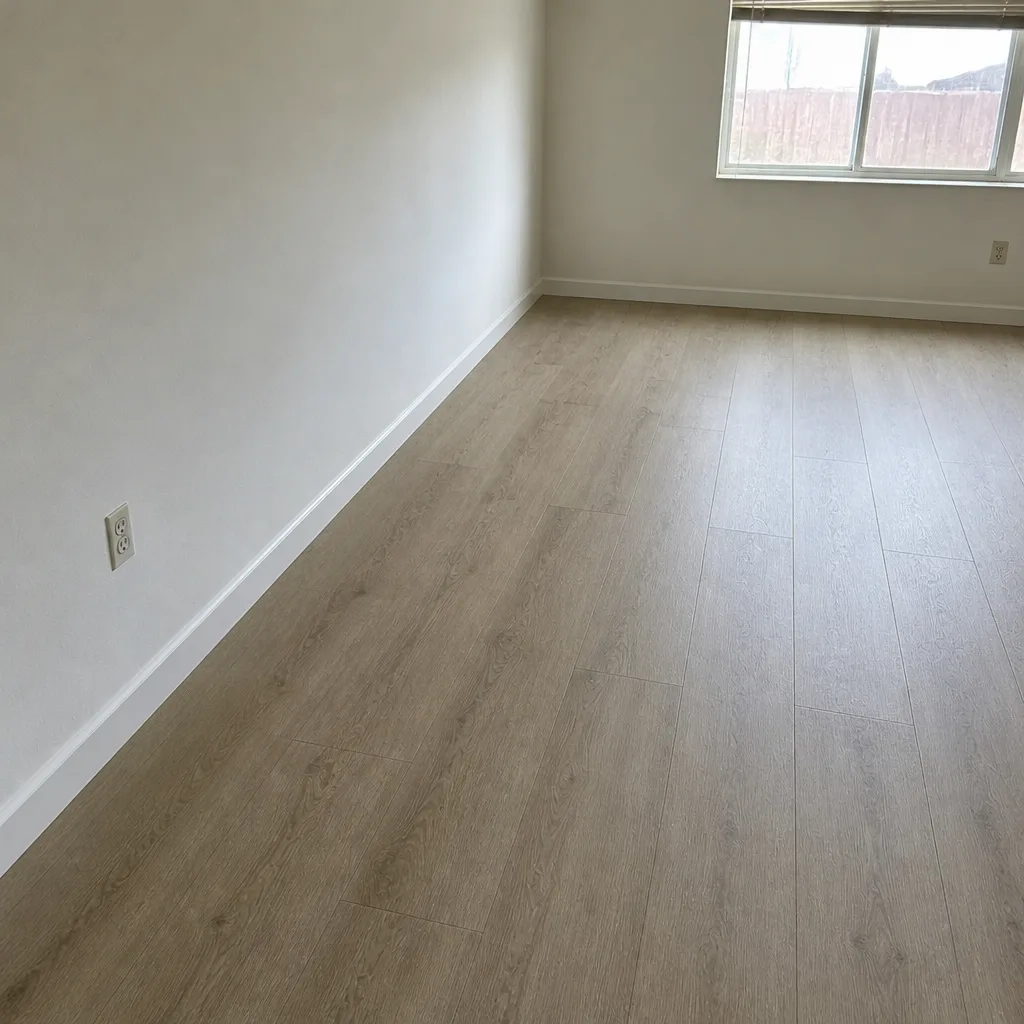
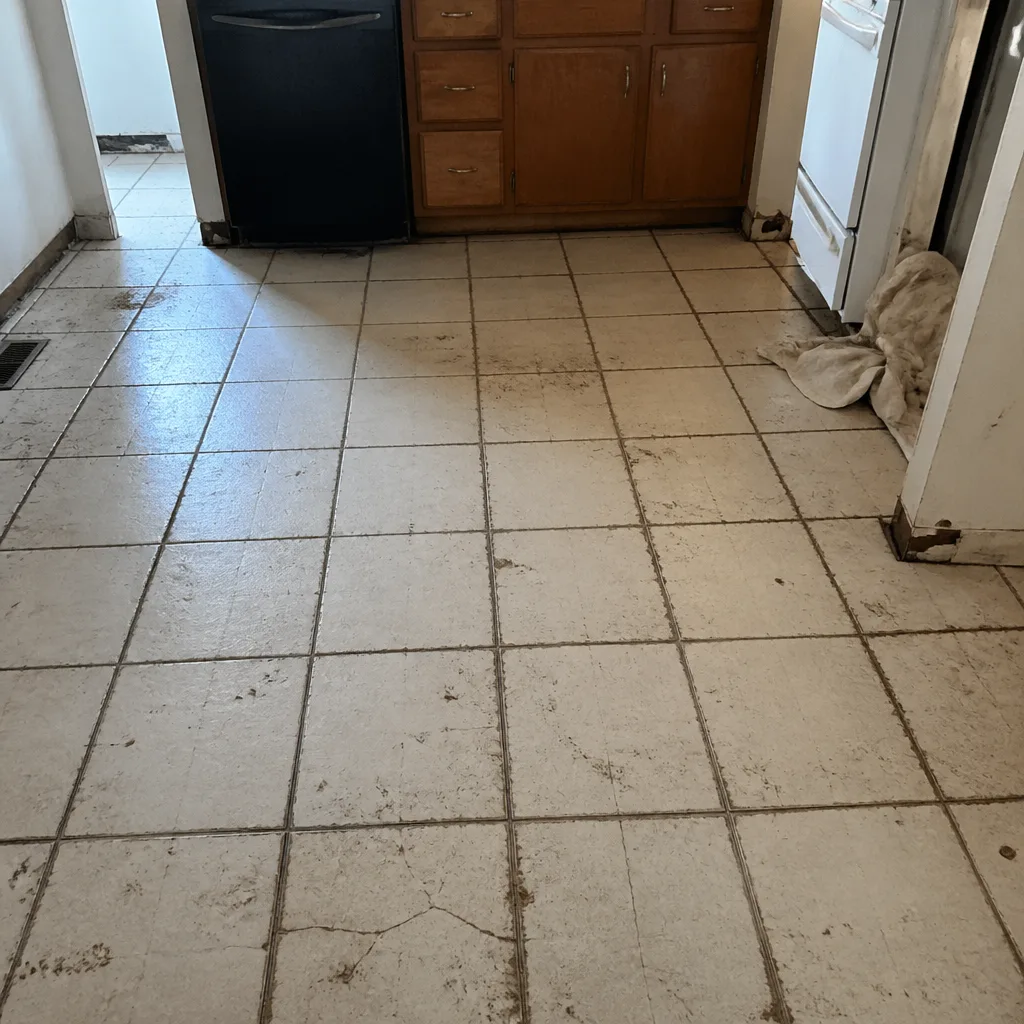
See the difference
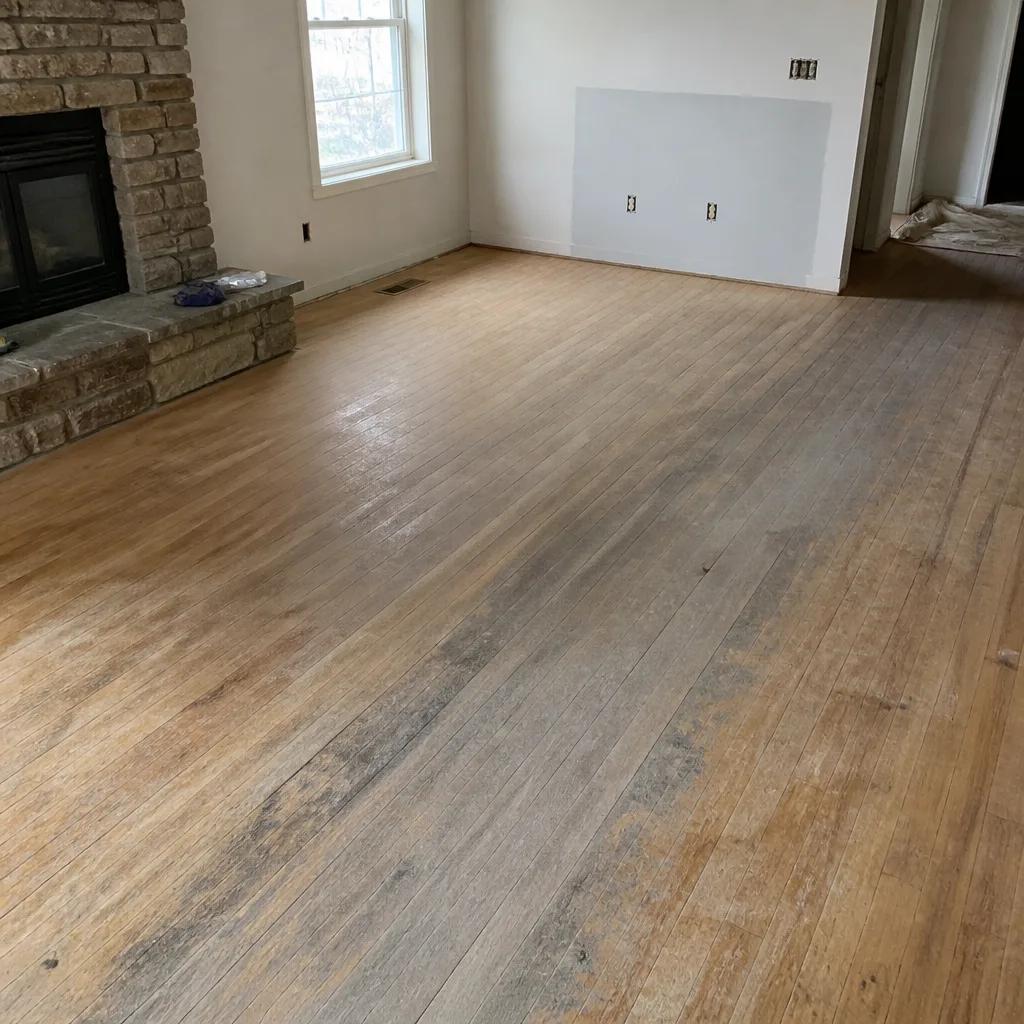 Before
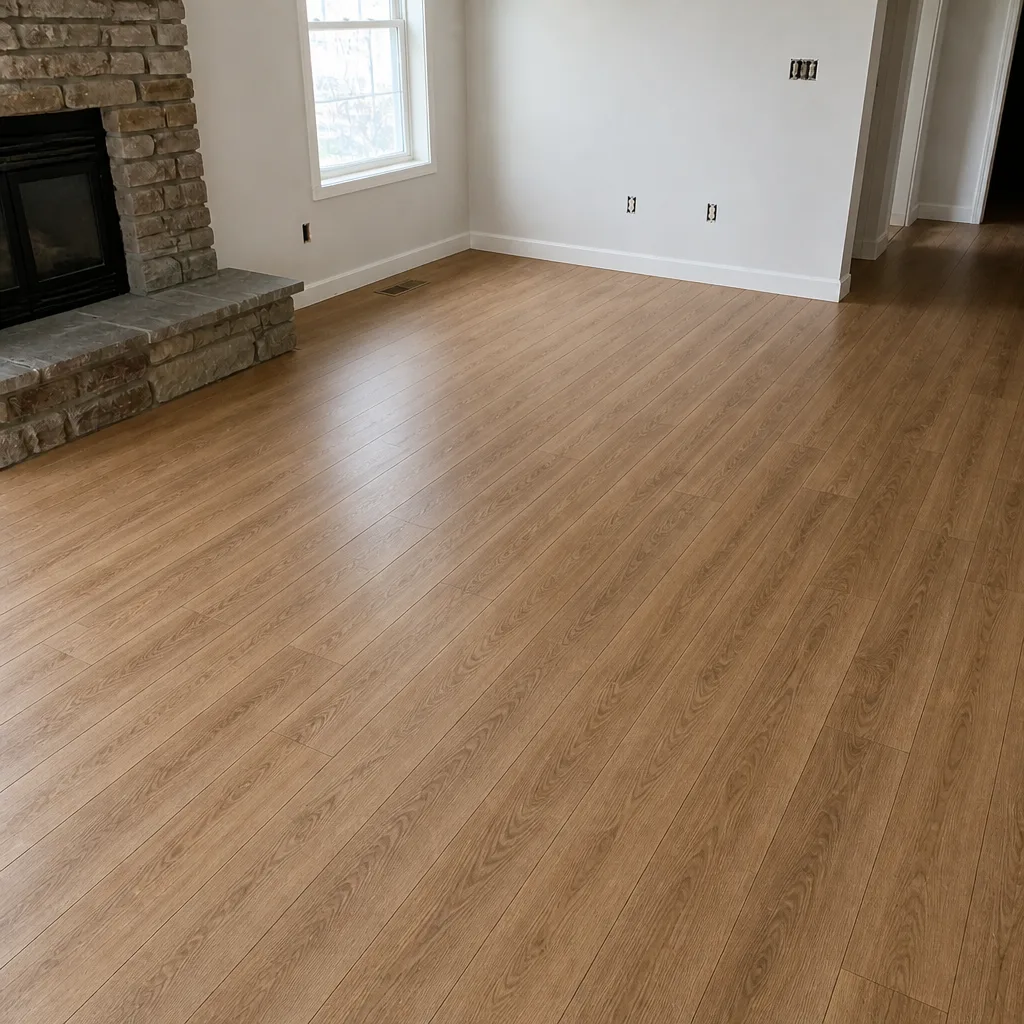 After
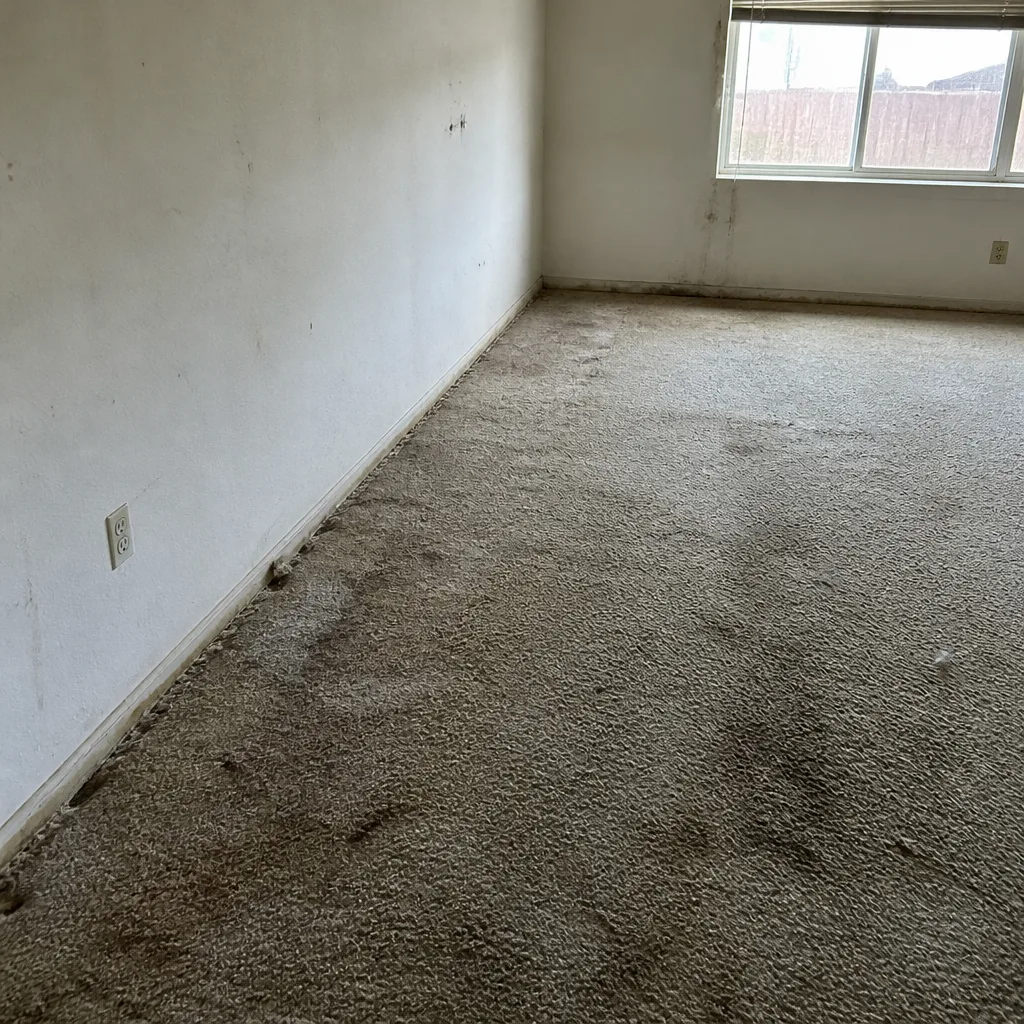 Before
 After
 Before
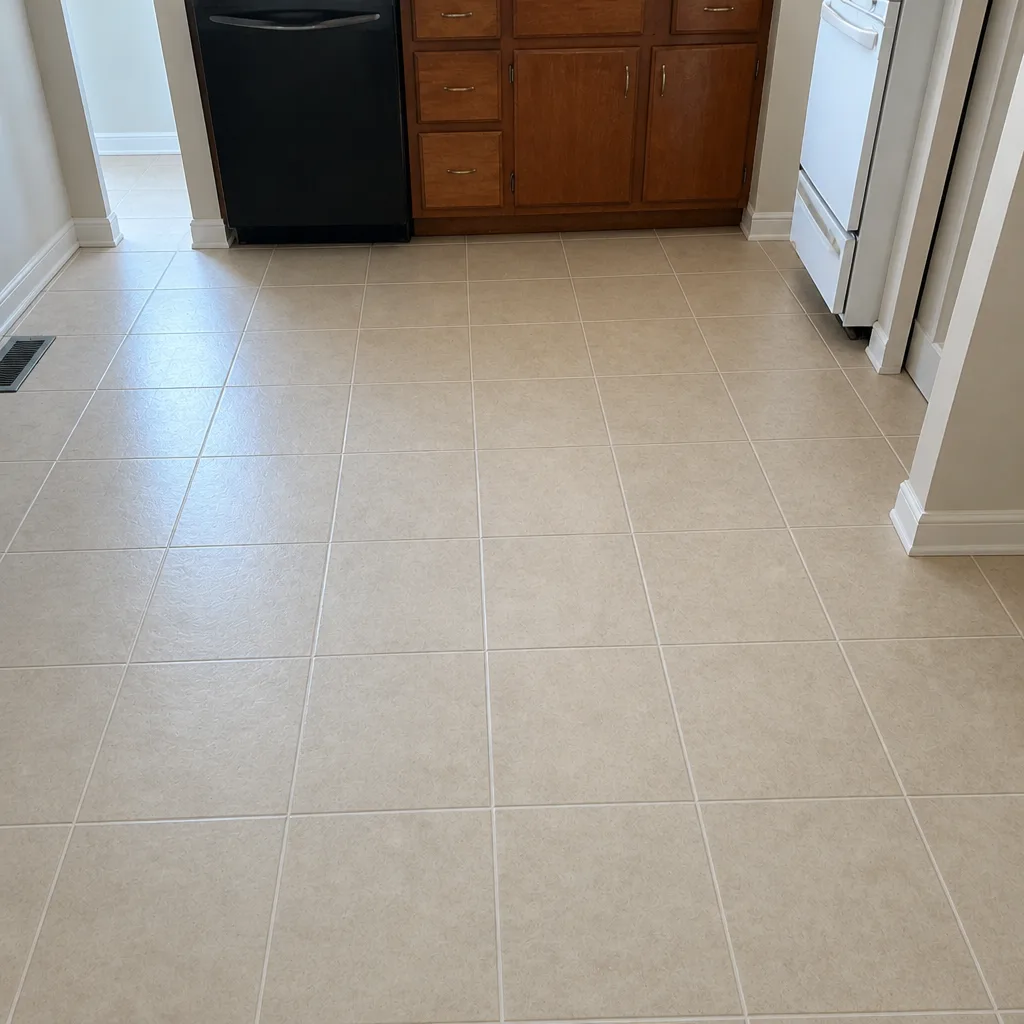 After
When to Call a Professional
Some calls are clear. A tile field that’s hollow across the room, a subfloor that moves underfoot, a bathroom leak that came through a floor, a hardwood floor cupping along an exterior wall, or a carpet seam that’s already failed twice is a job for a trained set of hands. In those cases a surface fix is the wrong tool. The risk is spending the repair budget now and the replacement budget in a year. If you’re not sure which column you’re in, that’s exactly what the estimate is for. Enterprise Flooring Installation offers free estimates in Enterprise. Call (833) 620-6314. We answer 24/7. Fast dispatch from 7am to 7pm, Sunday through Friday, and the written estimate sets the final price.
Frequently Asked Questions
Repair is worth it when the subfloor is sound, the material has usable life left, and matching product is still available. Replace when the deck is moving or wet, the floor is past its refinish or patch cycle, or the part is discontinued and a patch would show. Age alone never decides it.
You can patch LVP if the same plank and lot number are still available and the locking profile matches. Find the lot or run number on the original carton or pull a spare plank, then test a sample in the room’s light. If the line is retired, a visible patch will show. Call (833) 620-6314 for an exact quote. Estimates are free.
Most solid hardwood floors can be sanded 2-3 times over their life, depending on the thickness of the wood and how much was taken off before. A floor already near the tongue may not have room for another pass, which is why we check at the estimate instead of promising it over the phone.
Yes, if the failure is at the surface. A single cracked tile or a failing grout line can be repaired, and selective replacement is often structurally valid when you have matching tile or the field tile is still in production. Hollow-sounding tiles across the floor point to a failing bond under the whole field, which is a larger repair.
The estimate is free and covers the subfloor check, the material assessment, and a written price for both repair and replacement when both are possible. There’s no service-call fee or trip charge. Call (833) 620-6314 for an exact quote. Estimates are free.
The schedule is set at the estimate, and the install length depends on the material, the room size, and any subfloor prep. We confirm the install day and the plan in writing before any tear-out begins. Call (833) 620-6314 to start the estimate.
The Bottom Line
Repair or replace isn’t an age question. It’s the subfloor, the remaining life of the material, and whether the parts still exist. Run the checks in that order, compare the two quotes with the hidden costs named, and look at the year math. If the fix holds and the part matches, repair. If the deck is moving, the floor is past its cycle, or the line is discontinued, replace. Either way, get the written estimate first. Enterprise Flooring Installation handles carpet, tile, and Enterprise hardwood refinishing with one crew and nine trusted brands, so the answer is matched to your home, not the stockroom.
Ready to know which column you’re in? Call (833) 620-6314. We answer 24/7. Fast dispatch from 7am to 7pm, Sunday through Friday. Your free estimate includes the subfloor check and a written price, so you can decide with numbers instead of looks.
Written by the team at Enterprise Flooring Installation.