
Last updated November 17, 2026
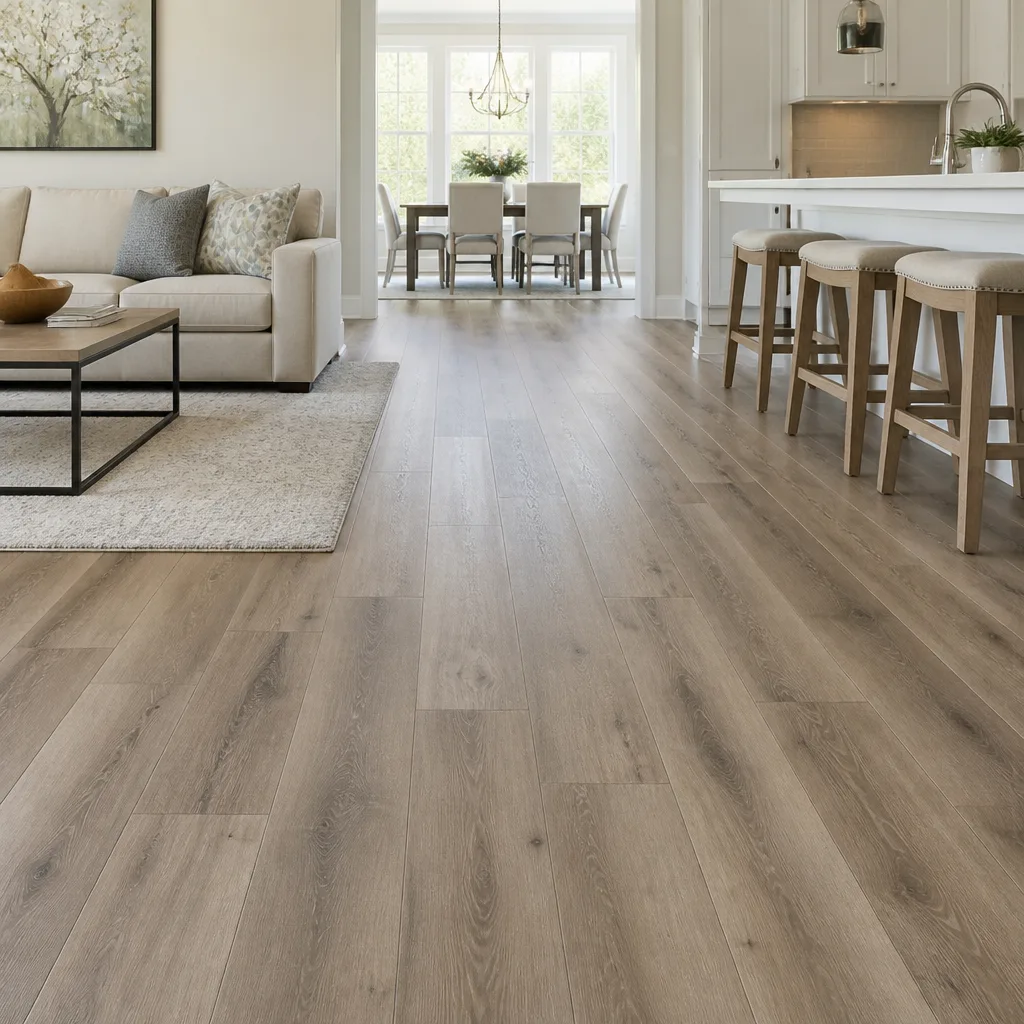 Luxury vinyl plank
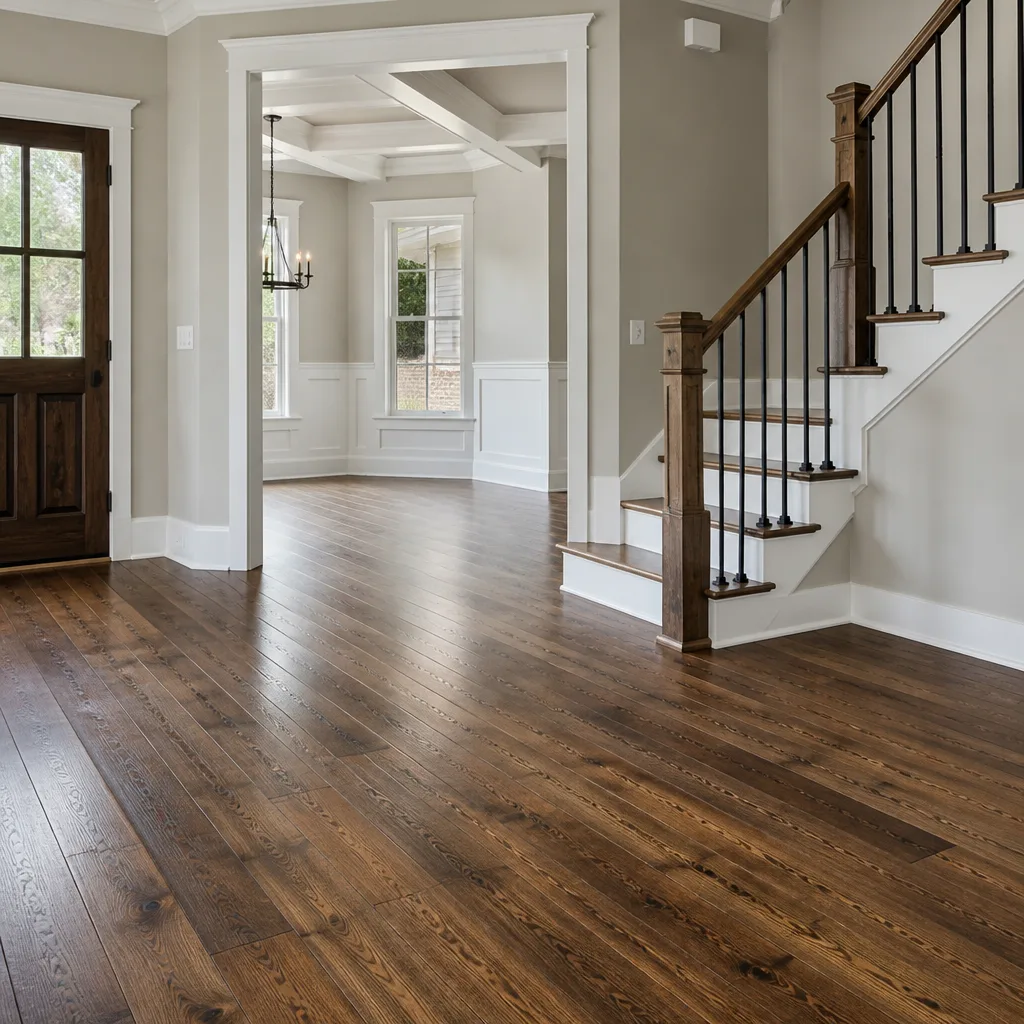 Hardwood
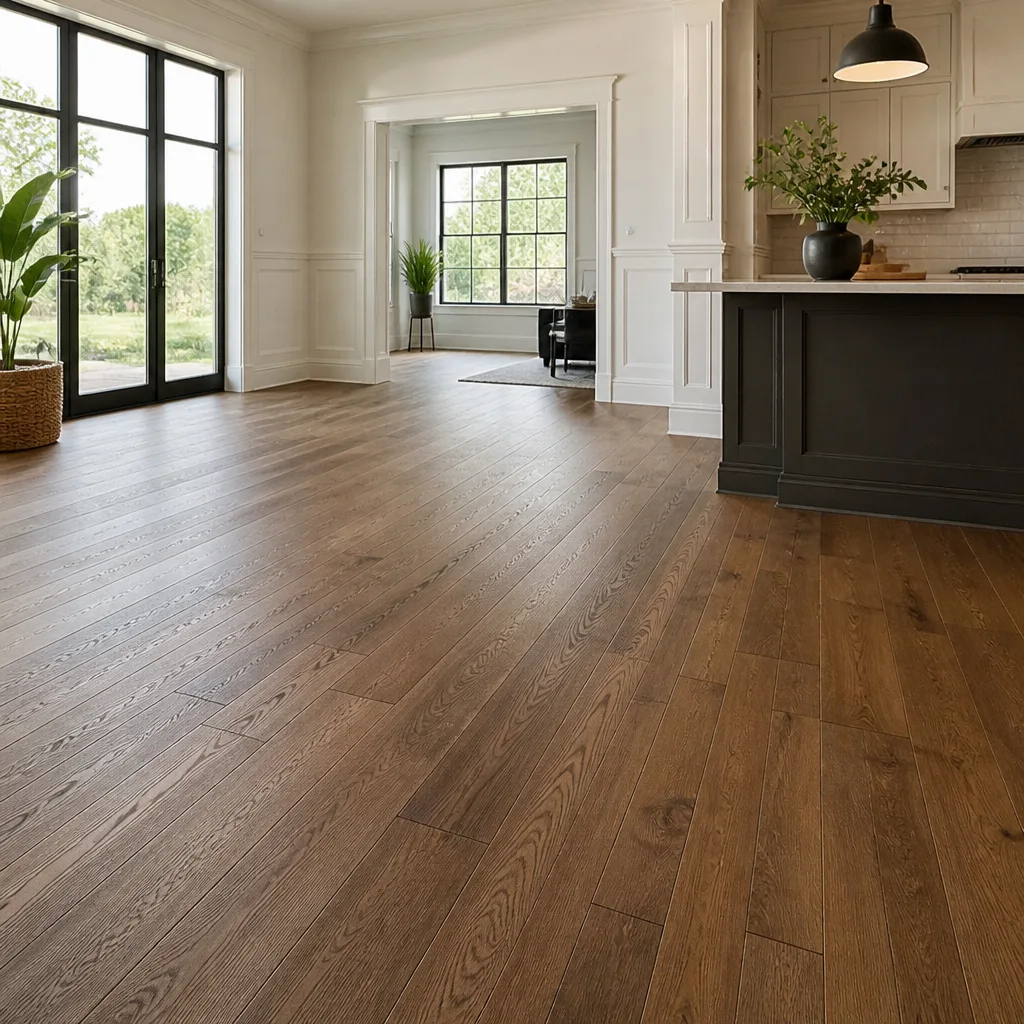 Engineered hardwood
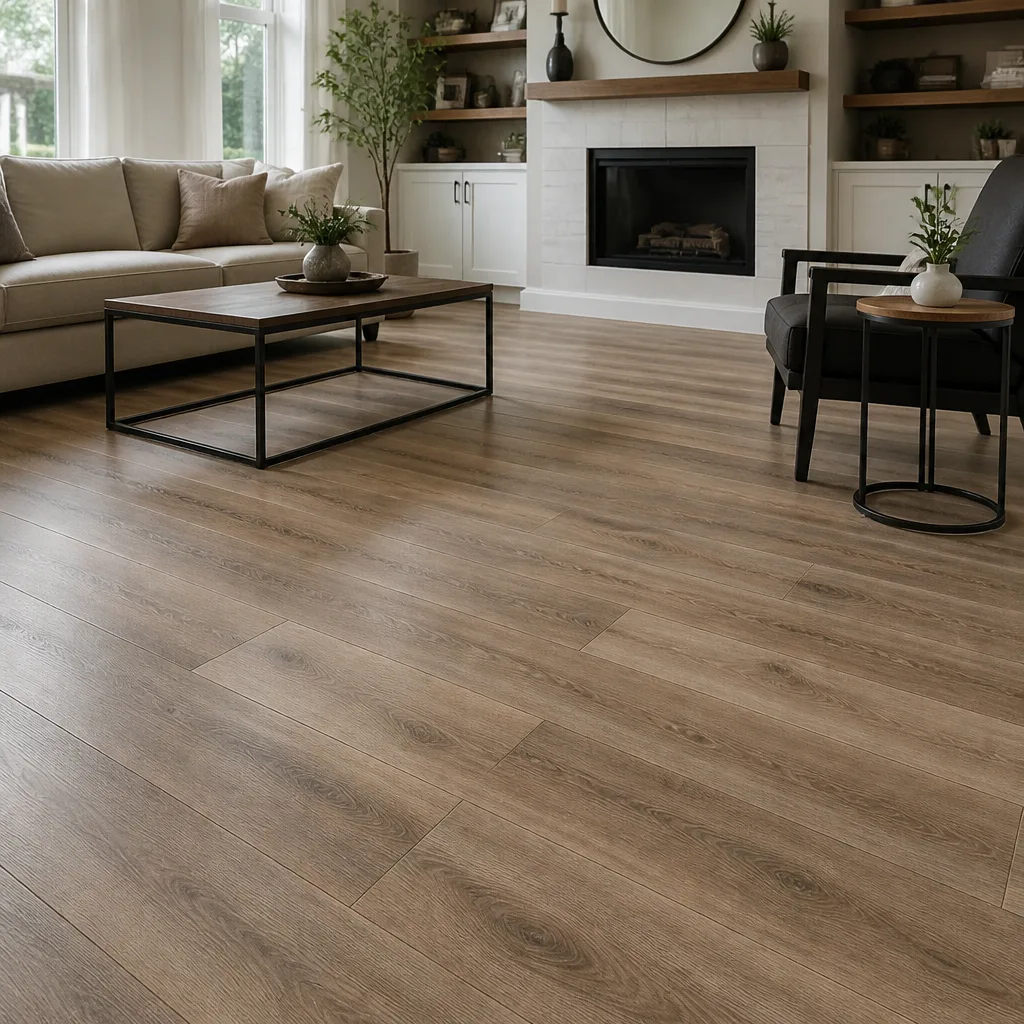 Laminate
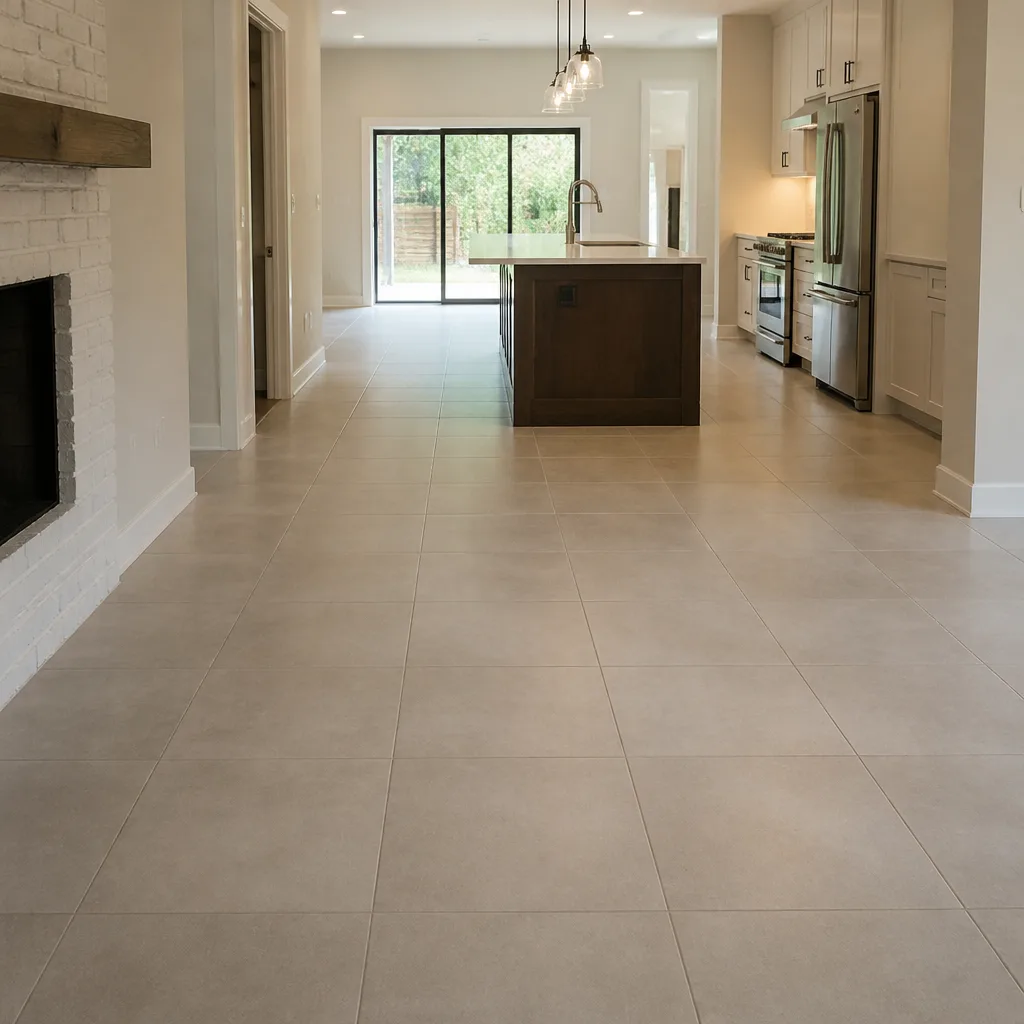 Porcelain tile
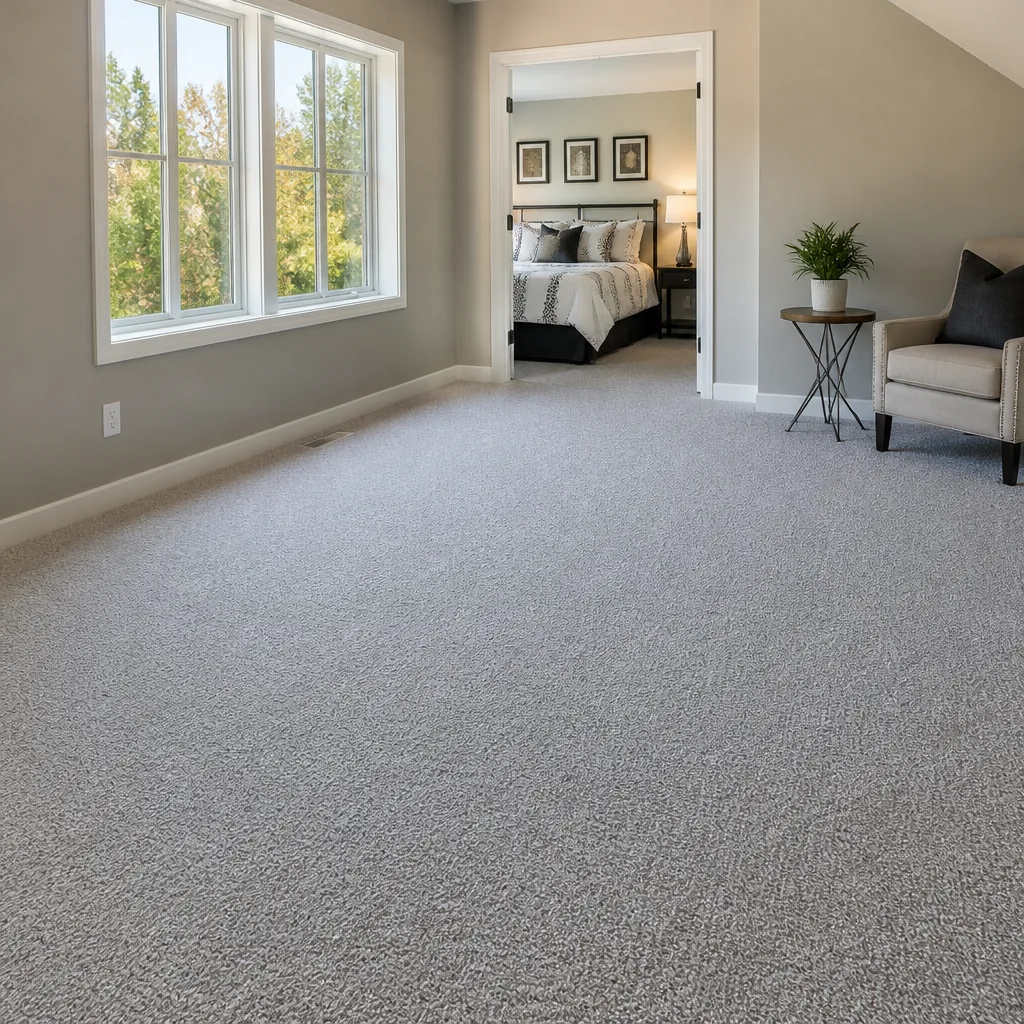 Carpet
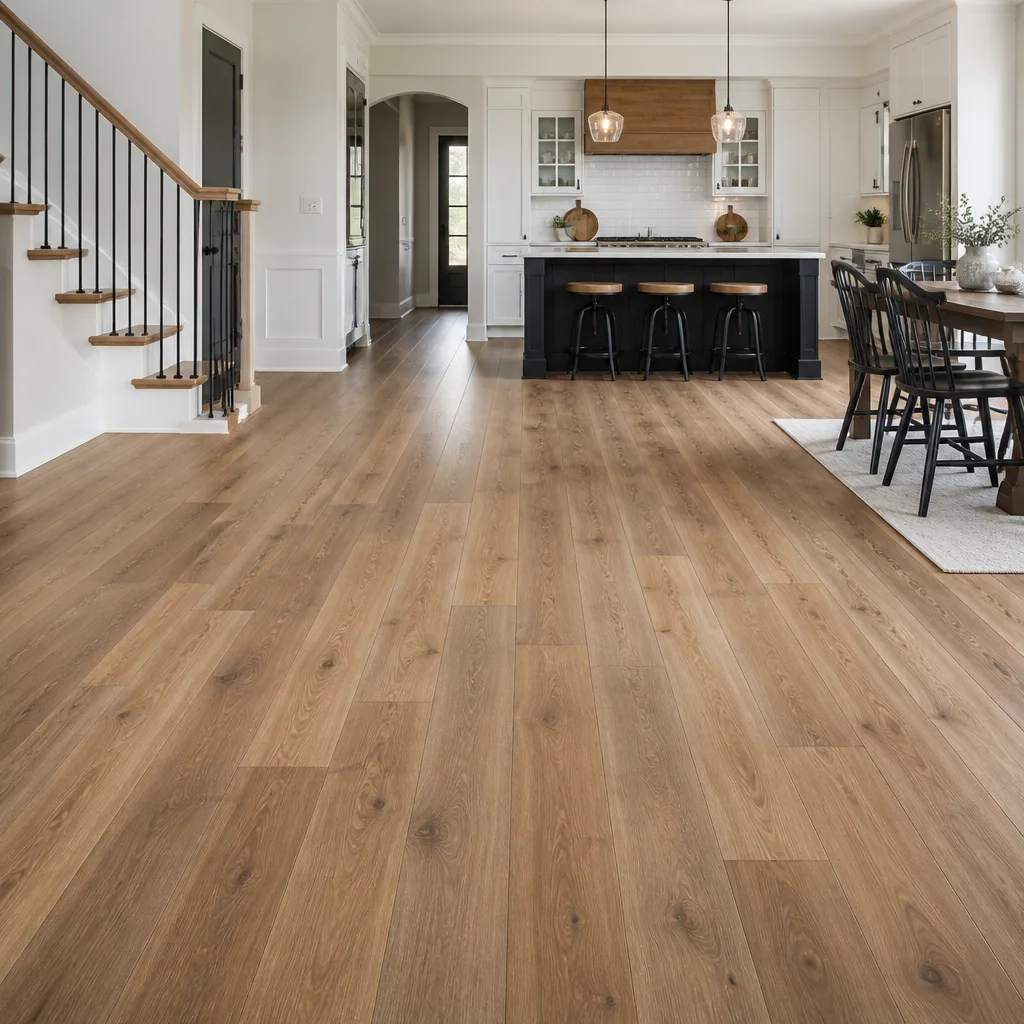 Shaw
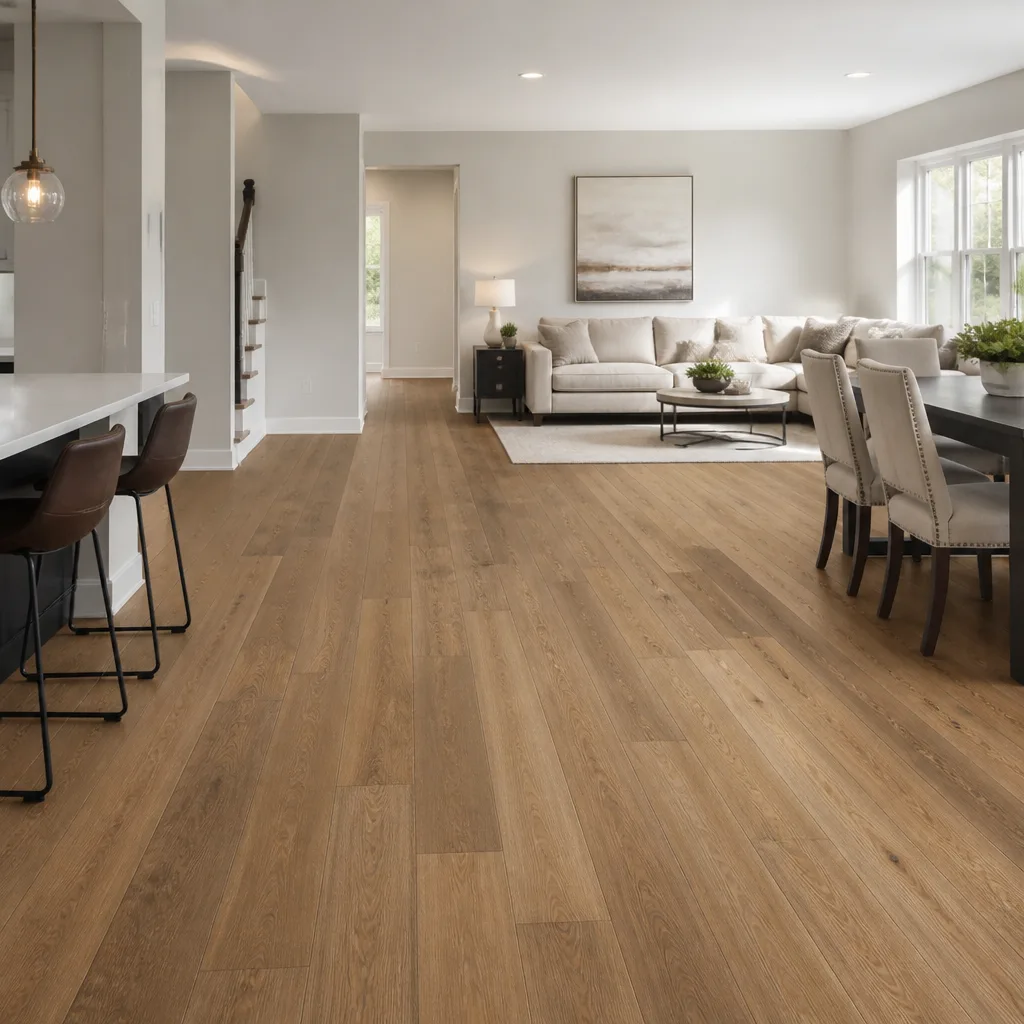 Mohawk
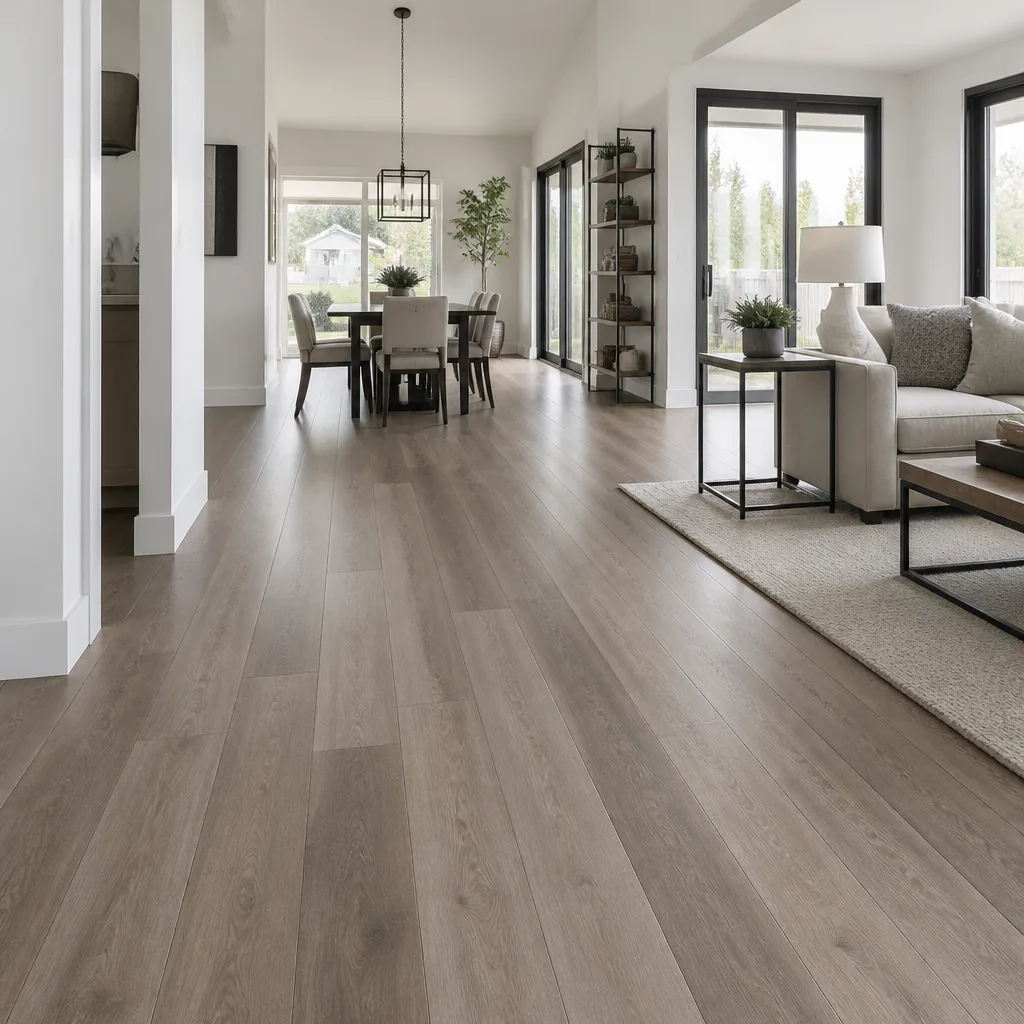 COREtec
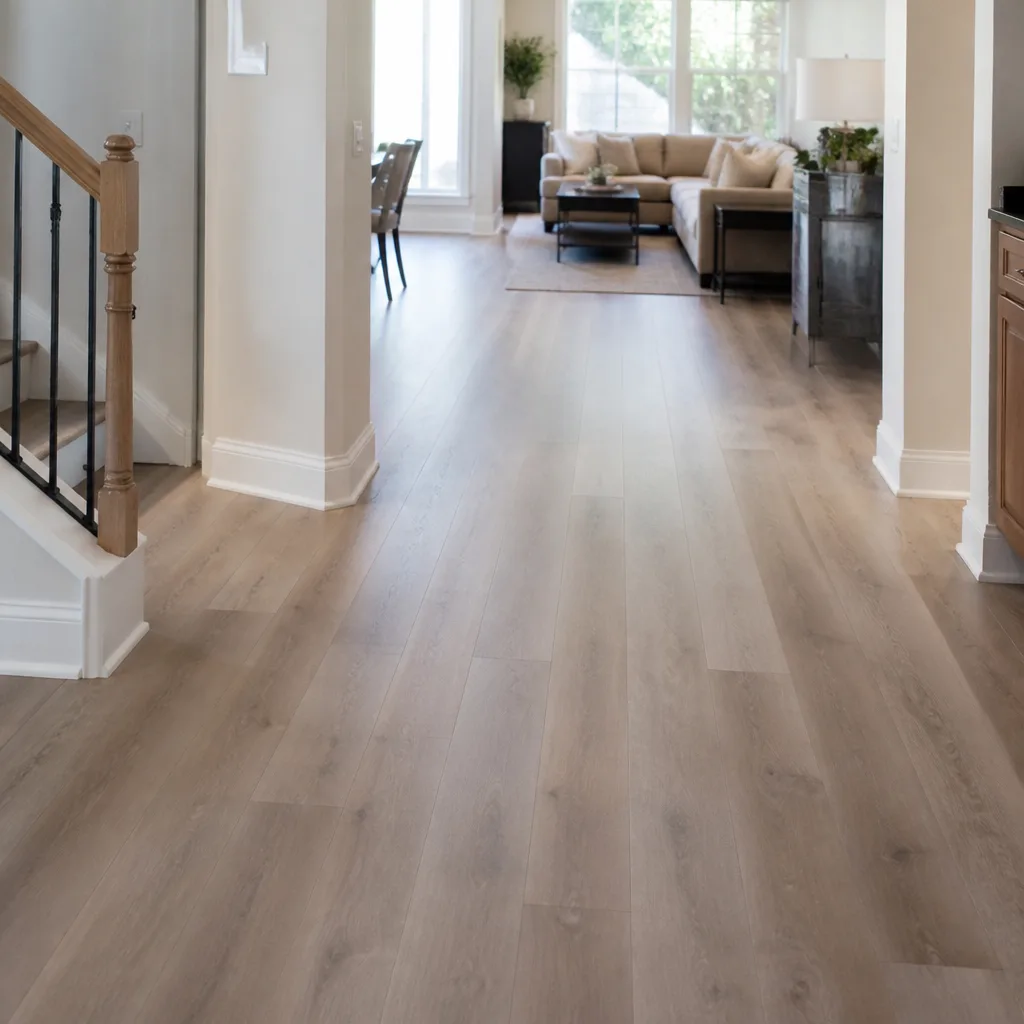 Pergo
Free in-home measure and written estimate: Shaw, Mohawk, COREtec and Pergo lines compared on your own rooms, with carpet, tile, vinyl plank, laminate and hardwood laid out side by side
Get your free estimateHardwood, Vinyl Plank, Laminate or Tile: How Enterprise Homeowners Decide
Most flooring advice starts with looks, and that’s the wrong place to start in Enterprise. The four materials people ask about – hardwood, luxury vinyl plank, laminate, and tile – don’t compete on appearance nearly as much as they compete on moisture tolerance. You can put any of them in a room and like how it looks. What decides whether that floor survives five Las Vegas Valley summers is what’s happening underneath it. This guide walks through the tests, the product differences, and the questions that actually settle the choice before you ever pick a color.
Quick Answer
The right floor for an Enterprise home depends first on a moisture test of the slab or subfloor, then on the room, the budget, and whether you want real wood. SPC and WPC vinyl plank tolerate moisture best, tile is unaffected by it, engineered hardwood works on dry upper floors, and standard laminate is the riskiest bet on a below-grade slab. Pick the material that matches your moisture reading and lifestyle, not the photo you liked online.
Styles & brands we work with
- Hardwood
- Engineered hardwood
- Luxury vinyl plank
- Laminate
- Porcelain tile
- Carpet
- Shaw
- Mohawk
- COREtec
- Pergo
Table of Contents
- Why Moisture Testing Comes Before Anything Else
- What the Calcium Chloride and RH Probe Tests Actually Tell You
- Why Standard Laminate Struggles on Enterprise Slabs
- Product Comparisons That Matter: Engineered vs. SPC vs. Laminate
- When Solid Hardwood Is Actually Viable in Enterprise
- The Resale Question: Real Wood vs. Wood-Look
- A Step-by-Step Way to Decide
- Common Mistakes to Avoid
Why Moisture Testing Comes Before Anything Else
In most of the country, the first question about a floor is what it’s made of. In Enterprise, the first question is what it’s sitting on. Homes here sit on concrete slabs far more often than on crawl spaces, and a slab that looks bone dry trades moisture with the room above it constantly. A slab pours in summer can hold surprising amounts of water vapor for a long time after the surface feels dry to the touch.
That’s why we treat moisture testing as the start of the decision, not an optional add-on. A calcium chloride test costs very little and takes a few days. Skipping it and installing the wrong product can mean pulling up an entire floor and starting over – a replacement that runs into the thousands on a typical room and much more across a full home. The test is cheap insurance against a very expensive mistake.
Enterprise sits at the edge of the Mojave, where outdoor humidity is normally low. That’s the part of the story homeowners already know. The part that gets missed is that low outdoor humidity doesn’t guarantee a dry slab. Interior humidity, irrigation, plumbing, and even freshly poured concrete can push slab moisture well above what a flooring product tolerates.
Other local factors play in too. Homes in Enterprise neighborhoods with slab-on-grade construction and no basement have nowhere for moisture to go but up through the slab face. The result is that two houses on the same street, built the same year, can read very differently on a moisture test. The test tells you which one is yours, and that single number can eliminate two of the four materials you were considering before you ever see a sample.
What the Calcium Chloride and RH Probe Tests Actually Tell You
Two tests dominate concrete moisture measurement, and both tell you something useful in different ways. The calcium chloride test (ASTM F1869) measures moisture vapor emission rate, or MVER, expressed in pounds per 1,000 square feet per 24 hours. Think of it as how fast moisture is escaping the surface. The relative humidity probe test (ASTM F2170) measures the humidity inside the slab at a set depth and reports it as a percentage.
Here’s how to read them without a lab coat:
- Calcium chloride (MVER): Reads the rate at which moisture vapor leaves the slab surface. Below roughly 3 lbs per 1,000 sq ft per 24 hours, most products are comfortable. Between 3 and 5 pounds, some are still fine and some aren’t. Above 5 pounds, you’re into product-specific territory and should confirm with the manufacturer’s published limits.
- RH probe (ASTM F2170): Reads the slab’s internal relative humidity as a percentage. Most manufacturers set their ceiling somewhere in the 75% to 85% range, but the exact number depends on the product. This is the test most manufacturers now prefer because it’s less sensitive to site conditions on the day of the reading.
- Both readings should be taken in the room where the floor will go. A dry hallway doesn’t mean a dry bathroom slab.
Once you have a reading, products sort themselves into tiers:
- Tile (ceramic, porcelain, Daltile lines, and similar): Essentially immune to subfloor moisture through the face of the slab. Ceramic and porcelain don’t swell, warp, or delaminate from slab moisture. The prep work still matters (flatness, crack isolation), but the product itself doesn’t care about the reading.
- WPC and SPC luxury vinyl plank: The rigid core, water-resistant construction used in COREtec and LifeProof, tolerates higher slab moisture than wood-based products. Most cores are unaffected by normal slab readings, though every manufacturer still publishes a ceiling and the subfloor still has to be flat.
- Engineered hardwood: Tolerates some slab moisture but not unlimited. Plywood-core engineered products in the 3/8 to 3/4 inch range hold up to moderate readings. A high reading eliminates them.
- Solid hardwood and standard laminate: Both are wood-based. A high slab moisture reading usually takes them off the table.
For a homeowner making a first-time choice, the practical takeaway is this: ask for the test readings before you commit. Any reputable installer will provide them or request them, and any honest answer comes with a product-specific interpretation. We walk Enterprise homeowners through their readings at the estimate visit so the choice starts from data, not from a showroom display.
A word of safety: moisture testing, subfloor grinding, and adhesive work involve judgment and equipment that owners shouldn’t improvise. If you’re considering doing the diagnosis yourself, have a professional check the slab rather than skipping it.
Why Standard Laminate Struggles on Enterprise Slabs
Laminate has a bad reputation here that it doesn’t fully deserve, and a good reputation elsewhere that it also doesn’t fully deserve. The difference is where you put it.
Standard laminate is built on an HDF (high-density fiberboard) core. That core is wood fiber glue-pressed together, and wood fiber swells when it absorbs moisture. A laminate floor can look and feel like a wood floor on a dry second-floor bedroom. On a slab with even moderate moisture vapor coming up through the surface, the HDF core takes on water, edges swell, planks cup, and joints start showing. Air conditioning doesn’t make this go away. It’s a moisture-balance problem, not a temperature one, and the reading is what tells you whether laminate is safe in your space.
Laminate is still a smart fit for a lot of Enterprise homes, just not every room in every home. Where it works well:
- Upper floors over wood subfloor or plywood
- Rooms with a documented low moisture reading at the slab
- Bedrooms and closets where the budget is better spent on square footage than on premium wear layers
Where laminate is a poor bet:
- Slab-on-grade living rooms and kitchens where a moisture test shows a high reading
- Bathrooms, laundry rooms, and any room with regular water exposure
- Basements, if the home has one, where moisture is a persistent concern
WPC and SPC luxury vinyl plank sidestep this entirely. COREtec uses a waterproof composite core that doesn’t have the wood-fiber swelling problem. LifeProof brings a similar rigid core into the conversation in a different price band. Pergo offers both laminate and vinyl options depending on the room. The point isn’t that laminate is bad – it’s that laminate is wrong for a specific condition that shows up often in Enterprise. If your reading is low and your room is on an upper floor, laminate can be a perfectly smart choice.
Product Comparisons That Matter: Engineered vs. SPC vs. Laminate
Once you know your moisture reading, the conversation turns to what the products actually are. Brand marketing tends to blur the distinctions, so here’s what the difference looks like in practice across three common Enterprise decision points.
Engineered hardwood, plywood core
Engineered hardwood is a real wood top layer bonded to a plywood core. The core is what gives it dimensional stability. Because the plies run in alternating directions, the whole panel resists the seasonal movement that solid wood is famous for. Engineered hardwood goes down over a low-moisture slab (usually with a moisture barrier underlayment) and over plywood subfloors alike. It can be sanded and refinished a small number of times depending on the thickness of the top layer – a real advantage if you want to change color or refresh scratches down the road.
SPC luxury vinyl plank
SPC (stone-polymer composite) is the rigid-core vinyl most homeowners now compare against everything else. The core is dense and mineral-filled, which gives a plank a firm feel and a stable edge. Compared to a flexible WPC vinyl, SPC is more dimensionally stable and handles a wider moisture range, though it tends to be less forgiving on a floor that isn’t flat. COREtec and LifeProof both sit in this conversation, and the right choice between the two usually comes down to the specific wear layer and finish you want, not to a marketing claim. Pergo’s vinyl plank lines are worth pricing for the same reason – it puts an entry-tier option on the table without giving up the rigid core.
Standard laminate (HDF core)
Laminate remains the most floor per dollar in the market, and a well-chosen laminate installed over a dry subfloor is a solid buy. Mohawk’s RevWood lines and similar products bring realistic textures to the genre. The core is the story: wood fiber, moisture-sensitive. On the right slab with the right prep, laminate performs beautifully. On the wrong one, it announces itself in swollen edges within a season.
Porcelain tile
Tile is the only one of the four that’s fully indifferent to slab moisture. It’s also the only one that doesn’t care how much water lands on the surface. Grout line width and layout matter, and a well-laid tile floor needs a flat subfloor and the right underlayment, but the material itself is the least fussy on wet surfaces. Daltile porcelain brings a wide range of formats and finishes into play.
A quick side-by-side of how the four materials behave:
- Moisture at the slab: Tile – no problem. SPC vinyl – yes, within manufacturer limits. Engineered hardwood – yes, if low. Laminate – risky if the reading is high.
- Standing water on the surface: Tile – fine. SPC vinyl – water-resistant, still needs to be dried up. Engineered hardwood and laminate – not rated for standing water.
- Feel underfoot: Tile – hard, cool. Wood and laminate – firm, warm. Vinyl – firm with a little give on WPC cores.
- Refinishable later: Engineered hardwood – yes, depending on top layer thickness. The others – no.
- Repairable plank-by-plank: Laminate and vinyl plank – yes, individual pieces can often be replaced if you keep leftovers. Tile – yes, but grout color matching is a consideration.
If you’re weighing tile specifically, our tile flooring installation work covers everything from entryway formats to kitchen and bathroom layouts. For a broader walk-through of how the multi-material process works, see our Enterprise Flooring Installation overview.
When Solid Hardwood Is Actually Viable in Enterprise
Solid hardwood is the one product on this list that carries an emotional weight the others don’t. There’s a reason: it’s the thing buyers visually register as “real wood” the moment they step in the room. The question is whether the home can support it.
Solid hardwood is milled from a single piece of wood and moves seasonally as humidity swings. It cannot be glued or floated over concrete; it needs a plywood subfloor built up over the slab, which adds height to the floor and cost to the project. In a home where the ceiling height or a doorway threshold doesn’t allow the added thickness, solid isn’t practical, no matter what the moisture reading says.
That said, there are conditions in Enterprise where solid hardwood is genuinely the right answer:
- Second floors over plywood or OSB: Upper floors are the least moisture-challenged part of a home. A solid hardwood nailed down over a proper wood subfloor handles the desert’s seasonal humidity swings well because the wood can breathe on both sides.
- Homes with whole-home humidification: If the home holds indoor humidity in a stable middle range year-round, solid hardwood’s movement stays small. Without humidification, the swings between summer and the dry months are what cause gapping and checking.
- Homes with hydronic radiant heat: Water-based radiant heat distributed through a slab or a screed floor can support solid hardwood if the surface temperature stays within the manufacturer’s stated limits. Electric resistance mats under a solid wood floor are a different story – ask specifically which system is installed.
- Rooms that won’t see moisture: Bedrooms, dining rooms, and studies are the strongest candidates. Kitchens, bathrooms, laundry rooms, and entryways from outside are the weakest.
And if solid wood is already in place in your Enterprise home, refinishing is worth a conversation before you price a full replacement. Sanding and refinishing brings back a floor that’s worn but sound, and it’s the path to keep a floor rather than send it to a landfill. Whether the existing floor can be refinished depends on the thickness of the wood and its condition, which we check at the estimate visit.
The Resale Question: Real Wood vs. Wood-Look
Buyers walk into a room and know within seconds whether they’re looking at real wood or a wood-look product. That matters for how the room feels on a showing, less so for what the appraiser writes on the report.
In the Las Vegas Valley market, appraisers typically record flooring at the material level without crediting a specific species or brand. A home with engineered hardwood and a home with a good SPC vinyl plank will usually read the same on a comparable sales approach. Where wood flooring does move the needle more reliably is in the showing itself: buyer perception of the home softens or sharpens depending on what the floor looks and feels like, and that perception can shape how competitive offers land. That’s a real value, but it’s not the same as a documented appraisal premium.
A few practical points to keep the resale question in proportion:
- Function beats species for most buyers. A kitchen with a moisture-tolerant floor that could take a dropped pot or a spilled drink without swelling usually earns more practical approval than a beautiful wood floor in the same room.
- Consistency across the main living areas matters. Buyers read mismatched flooring as a cost they’ll inherit. Matching LVP across kitchen and living room is generally a stronger resale move than premium engineered hardwood in one room and tile in the next.
- Refinishing beats replacing. If the existing hardwood floors are sound, refinishing keeps the material quality buyers respond to without the cost of a new install.
- Don’t over-upgrade for the block. If the home’s comps don’t have premium flooring, premium flooring won’t push the appraised value up to match the price.
For more on how we approach projects in and around the area, see our Enterprise page for the local angle.
A Step-by-Step Way to Decide
The decision comes down to a sequence, and the sequence matters. Doing it out of order wastes time and risks the outcome. Here’s how we recommend Enterprise homeowners work through it.
- Take a moisture reading on the slab or subfloor. Both calcium chloride and RH probe work. This is the first step because a high reading eliminates some materials before any other choice gets made.
- Look at the room, not the house. Wet rooms – bathrooms, kitchens, laundry, entry points – want water-tolerant materials. Dry rooms on upper floors open the door to engineered hardwood and laminate. Living rooms and hallways are the wildcard; the reading decides them.
- Confirm what’s under the existing floor. Slab-on-grade, plywood over joists, and a screed floor each behave differently. What’s already installed tells you what sort of subfloor prep to expect.
- Decide whether “real wood” is non-negotiable. If it is, engineered hardwood is usually the practical choice and solid hardwood is possible on an upper floor or a humidified home. If the answer is “I want the look,” SPC vinyl plank gets you there with a longer practical lifespan in wet rooms.
- Price three options side by side. Get a written estimate for one 200-square-foot room in each material you’re seriously considering. Seeing the numbers together makes the tradeoff clear.
- Ask about subfloor prep and flatness in the estimate. Flatness matters for every floor you install, and the prep work is a cost that goes up quickly if the slab isn’t in shape. The written estimate should state what prep is included.
- Book the install on a day that fits the schedule. Every install is a scheduled job: measure first, price second, install day third. Set it up with that in mind.
If carpet is still part of the picture for bedrooms or hallways, our carpet installation service slots alongside the hard-surface work. Comparing the four hard-surface options side by side is the point of this guide, but the process itself is the same whether you’re doing one room or a full home.
Common Mistakes to Avoid
- Picking the floor before testing the slab. A beautiful engineered hardwood goes in over a slab reading well above the manufacturer’s limit, and cupping shows up in the first warm season. Get the reading first – the material choice is downstream of it.
- Assuming the floor above is the same as the floor below. A two-story Enterprise home’s upstairs bedrooms and downstairs living room sit over very different subfloors. The material that works for one may not work for the other.
- Treating “waterproof” as a blanket label. Vinyl plank is water-resistant, not a floor that makes water a non-issue. Standing water, moisture from below, and long-term damp still have to be dealt with, and the product instructions and written estimate set the limits.
- Skipping subfloor flatness in the estimate. A floor that isn’t flat telegraphs every imperfection. Ask for the flatness spec and the prep work before the estimate is signed.
- Putting standard laminate in a bathroom or laundry room. The HDF core takes on water and swells. Laminate works beautifully away from moisture; it doesn’t belong where water lives.
- Assuming solid hardwood means “highest quality.” Solid wood is the right choice for specific rooms in specific homes. In a slab-on-grade wet room, it’s the wrong tool, no matter how premium the species.
- Refinishing a floor that’s too thin to sand. Thickness and condition decide whether refinishing is possible. Ask the question before committing to refinish over replace.
See the difference
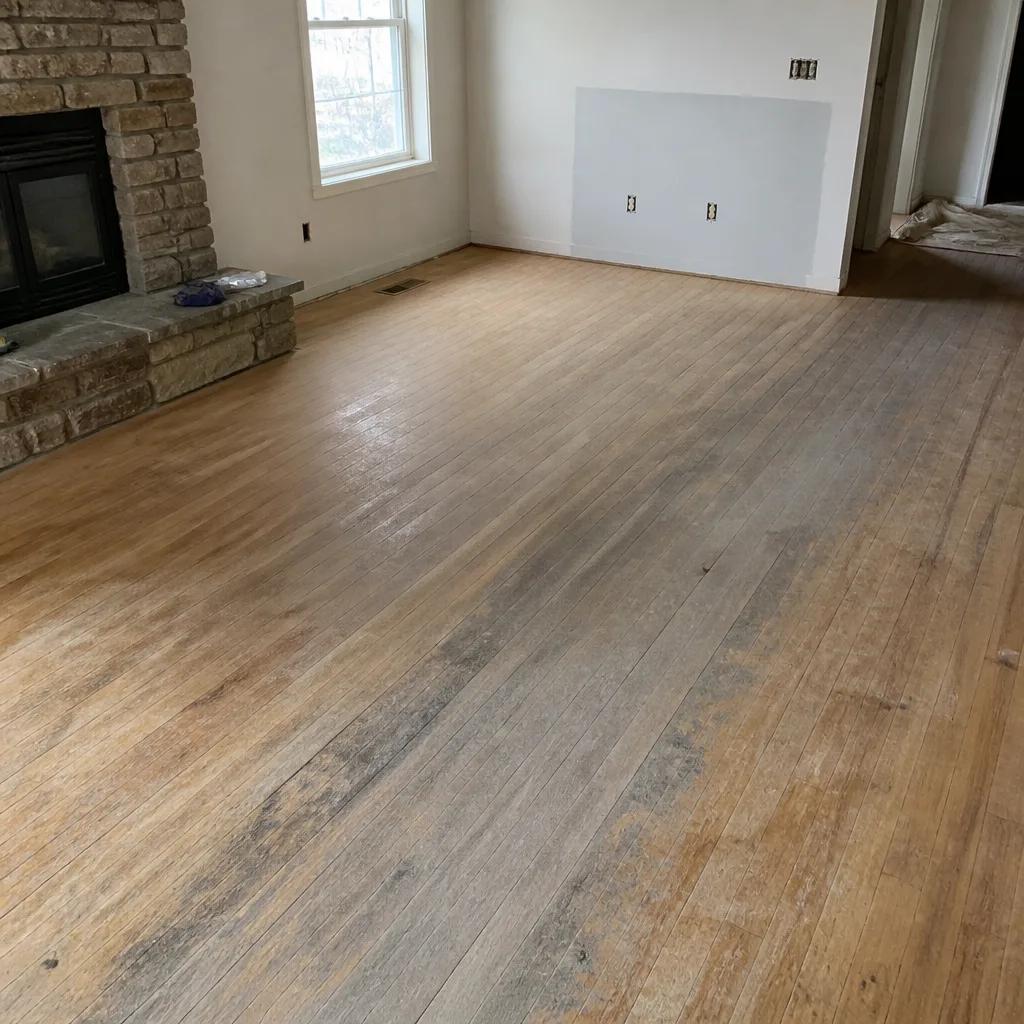 Before
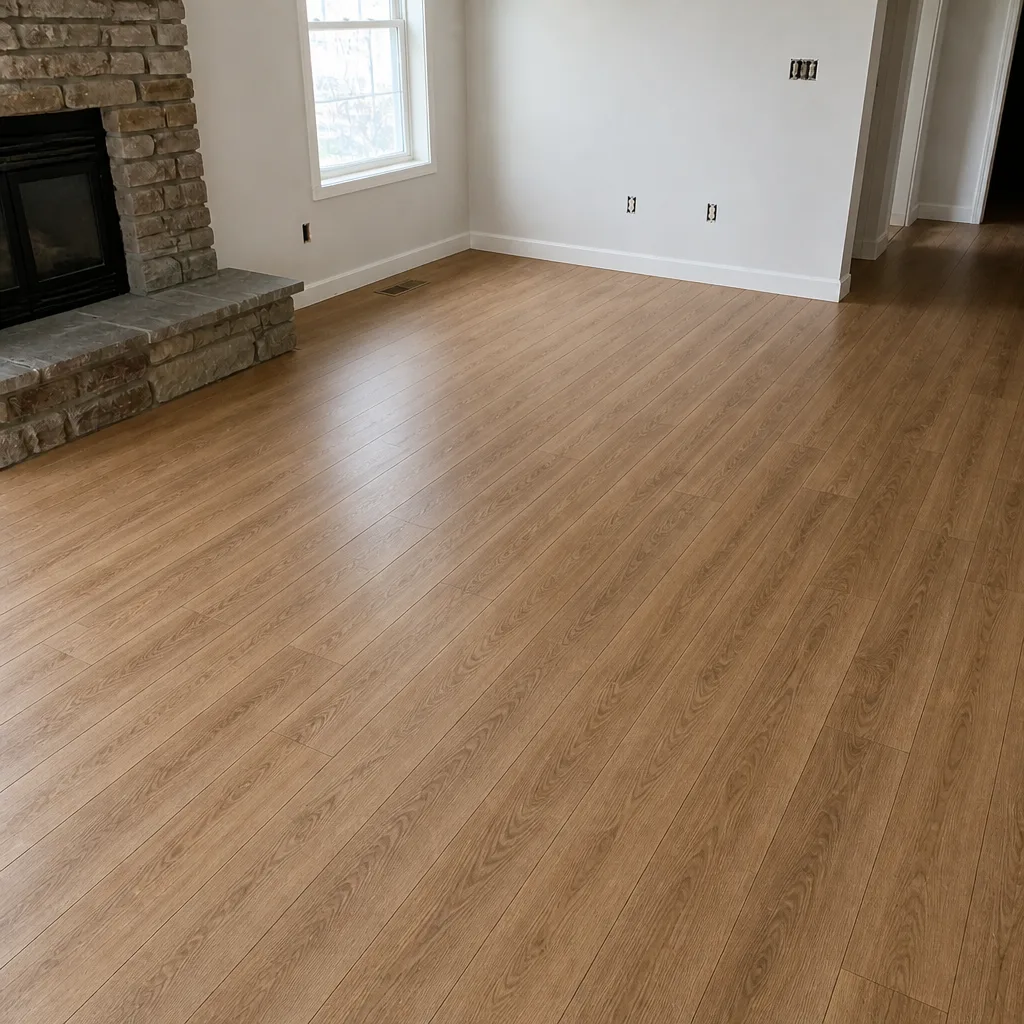 After
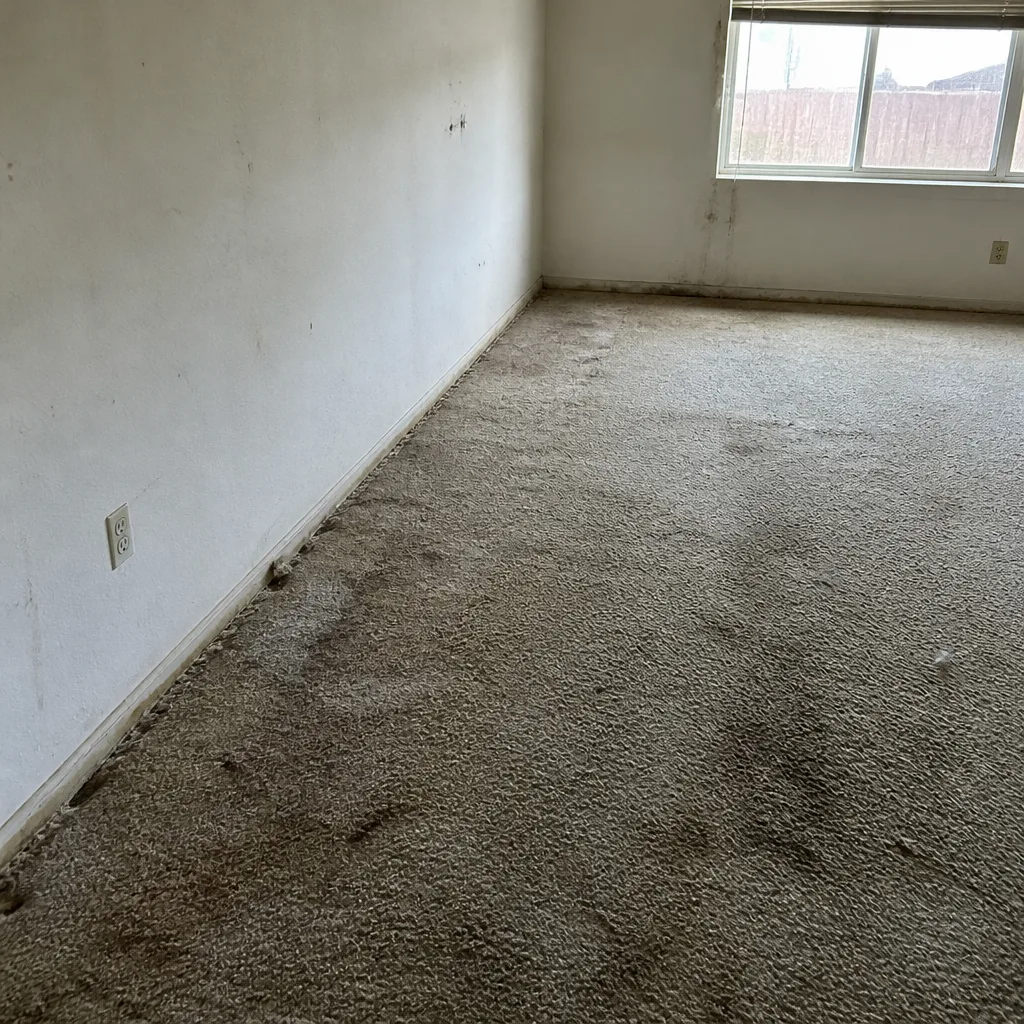 Before
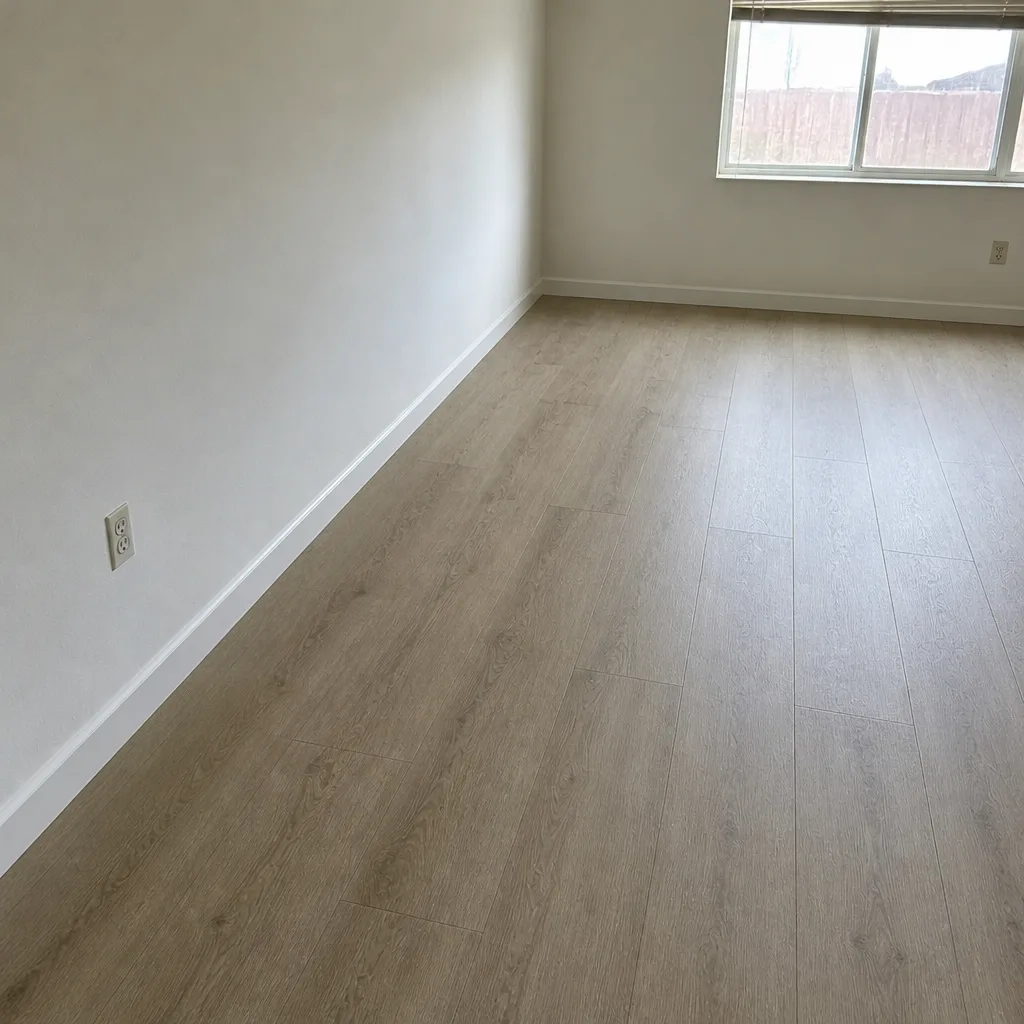 After
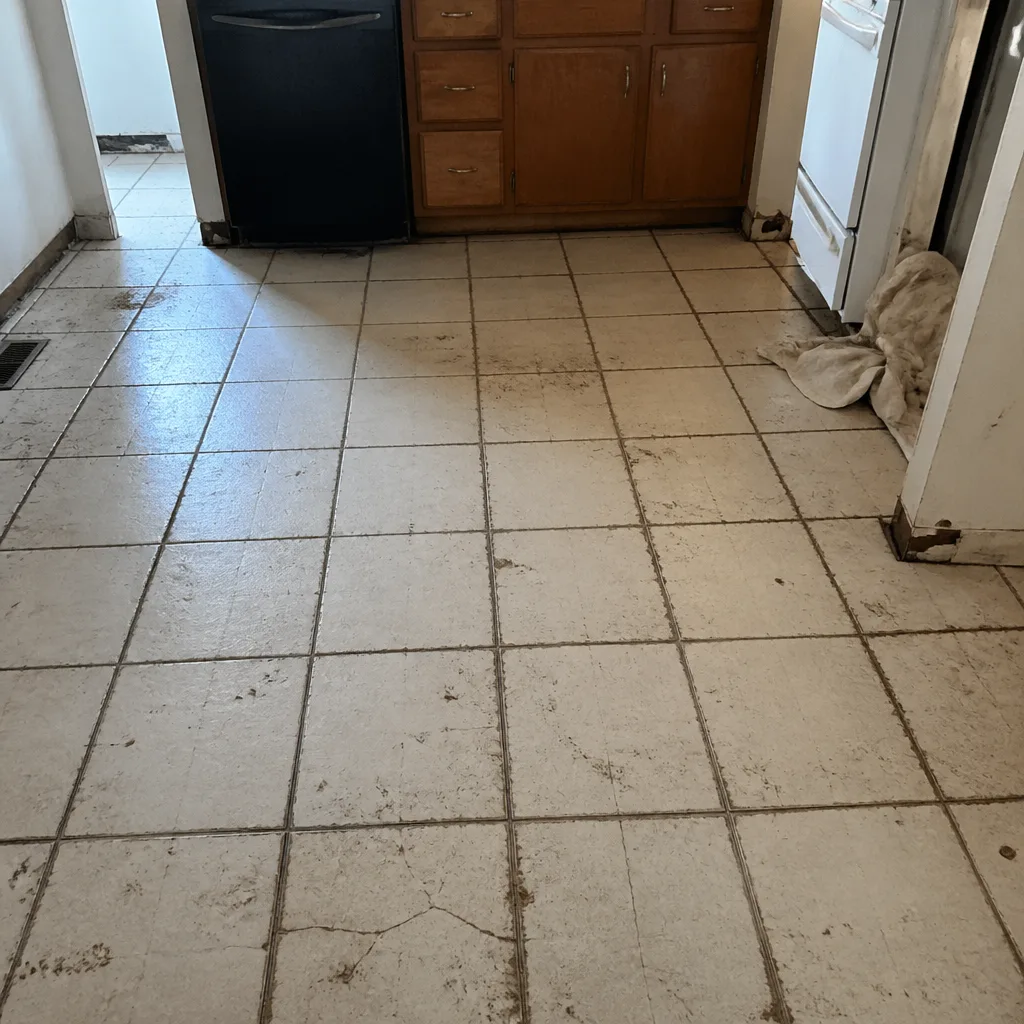 Before
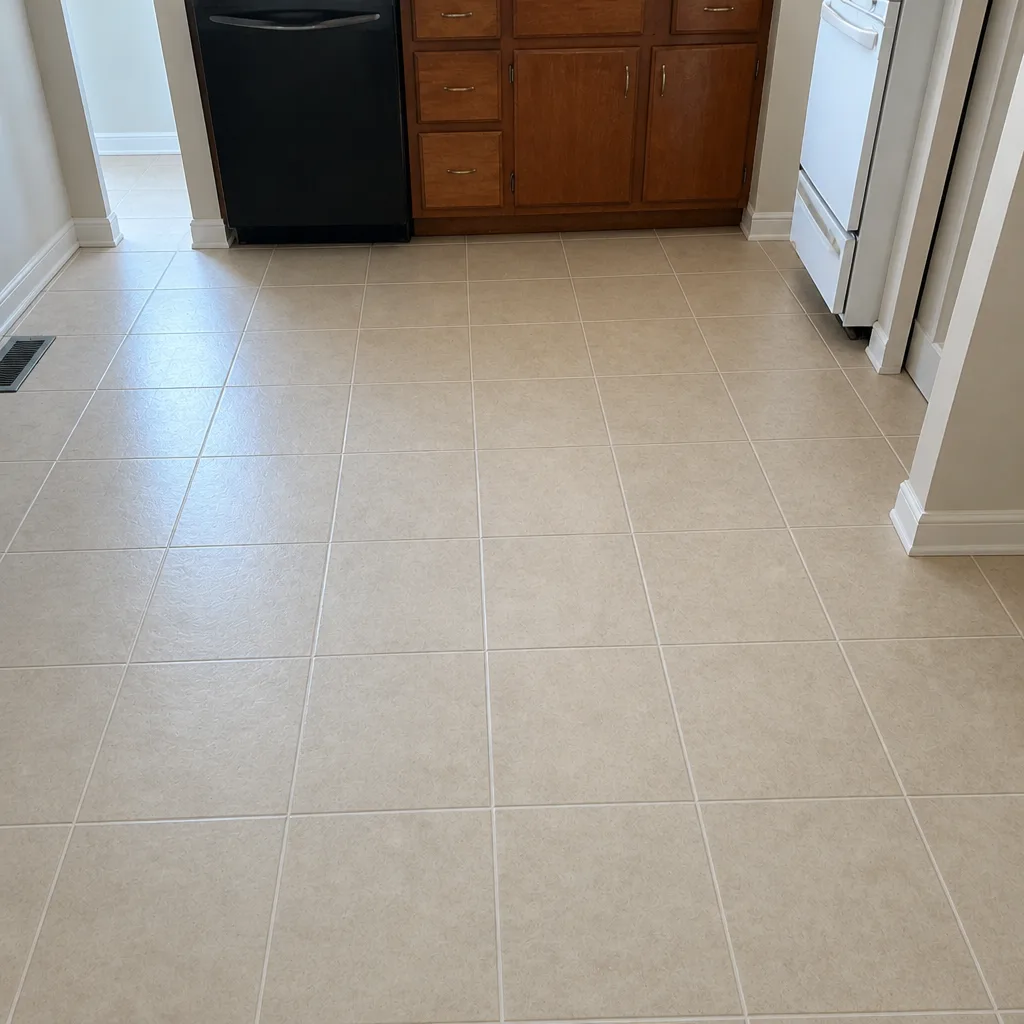 After
When to Call a Professional
Some flooring decisions benefit from a professional opinion, and these are the situations we most often hear from Enterprise homeowners about.
You need a moisture reading and a plain-language interpretation of it. You have a slab that’s flat on the surface but unknown underneath. You want a material comparison across three or four product lines from brands you recognize, not just the one a store is pushing. You want a written estimate that states what prep is included and what the flatness spec is. You want a hardwood refinishing opinion on whether the existing floor is a refinish candidate or a replacement candidate. You have a mixed-material project – carpet in some rooms, hard surface in others – and you’d rather one crew handle the whole plan.
Enterprise Flooring Installation offers free estimates in Enterprise – call (833) 620-6314. We answer 24/7. Fast dispatch from 7am to 7pm, Sunday through Friday.
Frequently Asked Questions
For most rooms in most Enterprise homes, yes: vinyl plank handles slab moisture better and stands up to water exposure that would damage hardwood. Hardwood remains the better floor for dry upper-level rooms and for homeowners who want real wood. The deciding factor is the moisture reading and the room.
Sometimes. Laminate is safe over a slab only if the moisture reading is below the manufacturer’s limit and the subfloor is flat. If the reading is high, choose tile or SPC vinyl plank instead.
SPC uses a dense mineral-filled core that stays dimensionally stable and handles a wider moisture range. WPC uses a foamed composite core that feels softer underfoot and often takes a thicker wear layer. Both are water-resistant; choose based on the flatness of your floor, the feel you want, and the wear layer that suits the room.
Yes. Both engineered and solid hardwood have moisture limits, and a slab that tests above them will cause gapping, cupping, or finish failure. The test takes a few days and costs very little compared to a redo.
Often, yes, if the wood is thick enough and in sound condition. We check top-layer thickness and overall condition at the estimate visit and tell you plainly whether refinishing is viable or replacement is the honest call.
The appraisal-level difference is usually small, because appraisers typically record flooring at the material level. The showing-level difference is real, because buyers respond to real wood when they walk in. If resale value is the deciding concern, matching materials across the main living areas matters more than species.
On price: an exact number depends on square footage, product, and prep work. Call (833) 620-6314 for an exact quote – estimates are free, and the written estimate sets the final price.
The Bottom Line
The hardwood-vs-vinyl-vs-laminate-vs-tile question in Enterprise comes down to moisture, room, and material. Get a test reading on the slab or subfloor first, because one number can eliminate two of the four options. Match the material to the room: tile and SPC vinyl for wet spaces, engineered hardwood and laminate for dry upper rooms, solid hardwood for humidified homes or second floors over plywood. Price three options in writing before you commit, and take refinishing seriously if there’s already hardwood underfoot. Nine trusted brands. One installation crew. Hard surface, soft surface, or natural wood – we install all three.
Call (833) 620-6314 for a free estimate. We answer 24/7. Fast dispatch from 7am to 7pm, Sunday through Friday.
Written by the team at Enterprise Flooring Installation.