
Last updated November 17, 2026
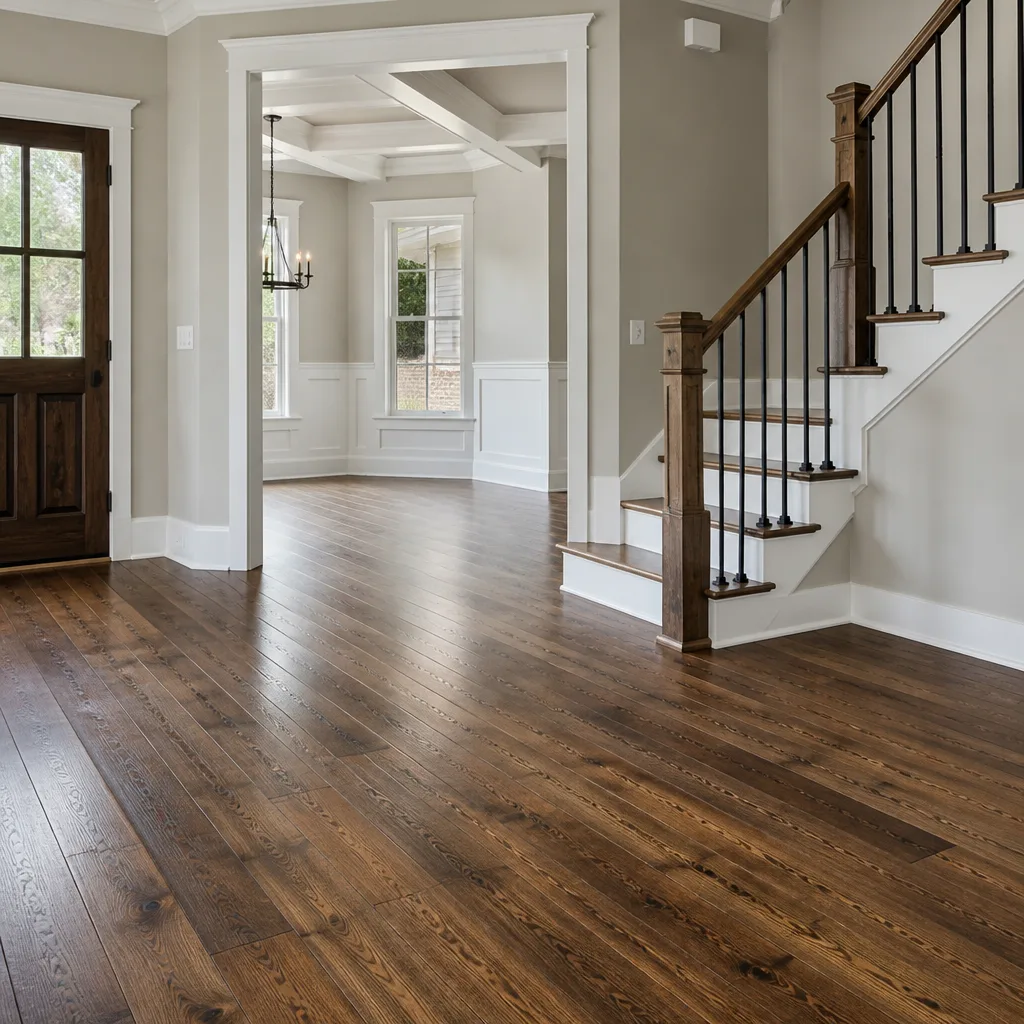 Hardwood
 Engineered hardwood
 Luxury vinyl plank
 Laminate
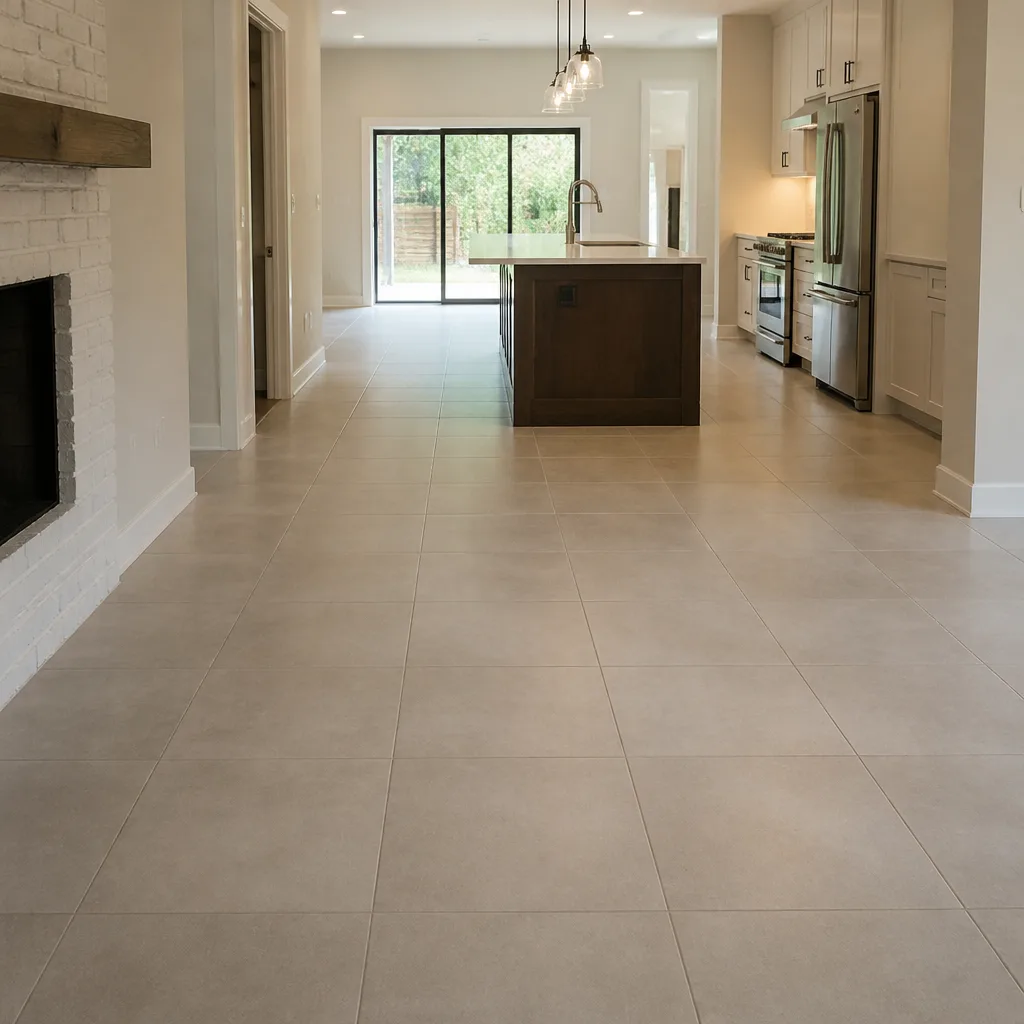 Porcelain tile
 Carpet
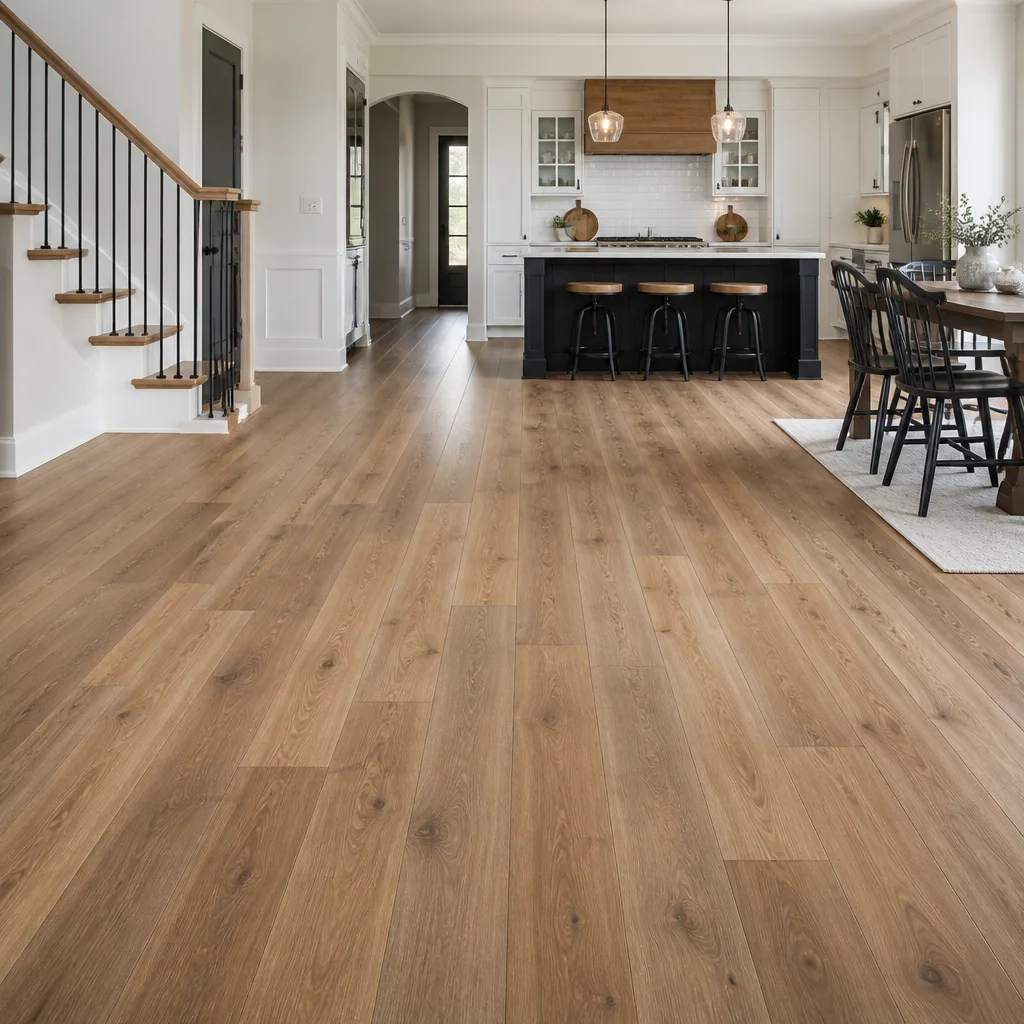 Shaw
 Mohawk
 COREtec
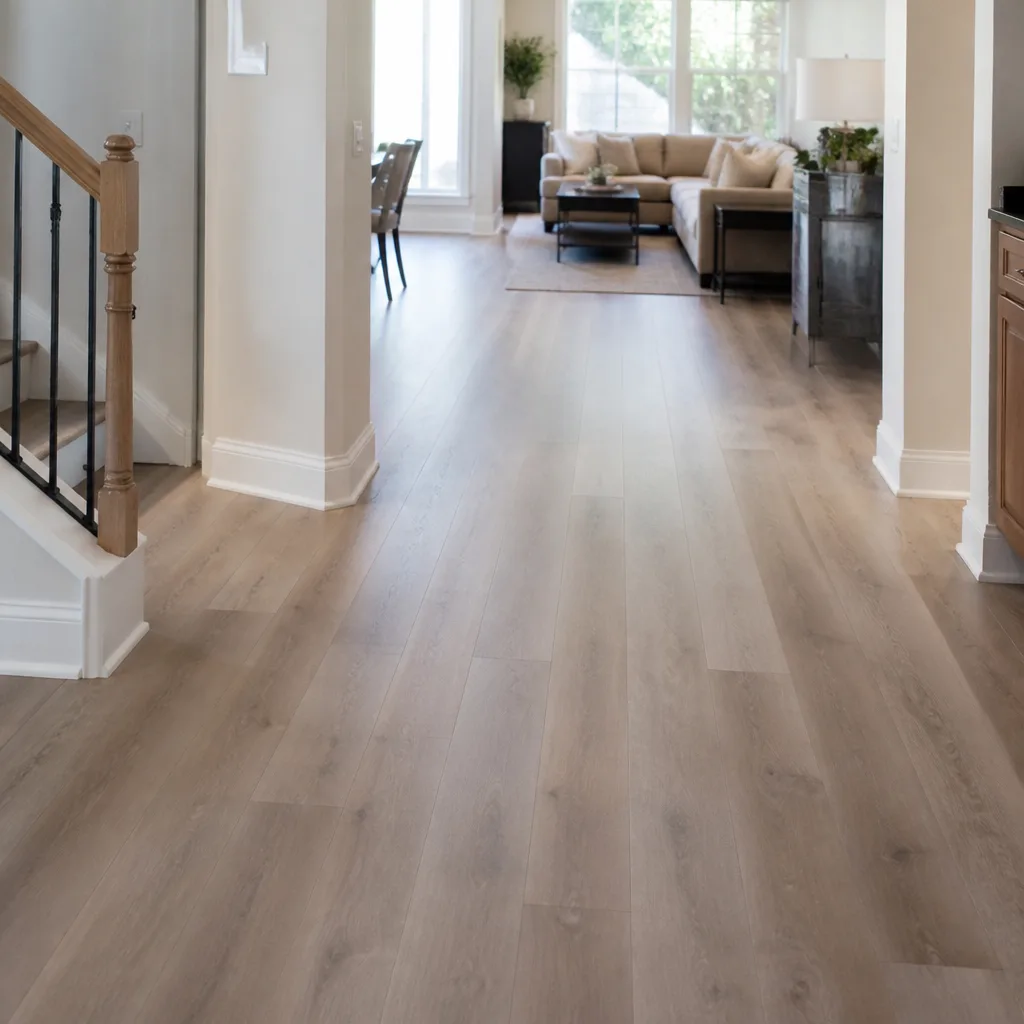 Pergo
Free in-home measure and written estimate: Shaw, Mohawk, COREtec and Pergo lines compared on your own rooms, with carpet, tile, vinyl plank, laminate and hardwood laid out side by side
Get your free estimateHow to Hire a Flooring Contractor in Enterprise: A Step-by-Step Guide
Most hiring advice tells you to collect three bids and take the middle one. That’s the wrong instinct. The bigger risk in Enterprise isn’t overpaying by a few hundred dollars. It’s hiring a specialist who installs only tile, or only carpet, and then watching them steer your whole project toward the one material they know how to lay. The bid looks clean. The recommendation sounds reasonable. And you end up with a floor that wasn’t your first choice because it was the only choice the contractor could actually deliver. This guide walks through how to vet for real multi-surface capability, starting with the license check most homeowners skip.
Quick Answer
Hire a flooring contractor in Enterprise by verifying their Nevada C-20 Flooring Contractor license through the state contractor board, confirming they install all three primary surfaces (carpet, tile, and hardwood) rather than just one, and reading the written quote for specifics on subfloor prep, acclimation, and warranty terms. A contractor who can only install one material will push you toward that material, whether they mean to or not.
Styles & brands we work with
- Hardwood
- Engineered hardwood
- Luxury vinyl plank
- Laminate
- Porcelain tile
- Carpet
- Shaw
- Mohawk
- COREtec
- Pergo
Table of Contents
- Step 1: Verify the Nevada C-20 Flooring License
- Step 2: Confirm Real Multi-Surface Capability
- The Five Questions That Reveal Subfloor Experience
- What Manufacturer Certifications Actually Signal
- Reading the Written Quote: What Should Be In It
- What a Booked Install Day Looks Like in Enterprise
- Red Flags in a Flooring Bid
Step 1: Verify the Nevada C-20 Flooring License
Nevada requires a C-20 Flooring Contractor license to install flooring for pay. It’s a specific classification, not a general handyman’s license, and it isn’t interchangeable with one. A handyman working under a general license can hang a door or patch drywall. Flooring installation, particularly tile and hardwood, falls under the C-20 classification. That distinction matters because a surprising number of bids in the Las Vegas Valley come from crews working under someone else’s license number, or under no license at all.
Checking is straightforward and free.
- Go to the Nevada State Contractors Board (NSCB) website and open the license lookup tool.
- Search by the contractor’s business name or license number.
- Confirm the license status is active, not suspended, expired, or revoked.
- Confirm the classification reads C-20 Flooring.
- Check that the name on the license matches the name on your bid and contract.
If a bidder hands you a number that belongs to a different company, or asks you to write the check to an individual rather than the licensed entity, stop. That’s the pattern unlicensed crews use to operate under someone else’s credential. Enterprise homeowners deserve a straight answer on this, and any legitimate contractor will hand over the license number without hesitation. Ask for it in writing before you sign anything.
Step 2: Confirm Real Multi-Surface Capability
A flooring contractor who installs only one or two material types will unconsciously, or consciously, steer your project toward what they know. This isn’t necessarily dishonest. It’s human. If a crew has spent years laying tile, every conversation about your living room will end with a tile recommendation because that’s the toolset they trust. The result is a floor chosen for the installer’s comfort, not your home.
Here’s how to test for genuine breadth before you commit.
- Ask what surfaces they install. The answer should cover soft-surface carpet, hard-surface tile, and natural hardwood. If one of those is missing, that’s your project risk right there.
- Ask about refinishing. A contractor who offers hardwood refinishing alongside new installation can extend the life of an existing floor instead of defaulting to full replacement. That’s a different conversation than a crew that only lays new material.
- Ask what happens when a project mixes materials. A whole-home update that runs carpet in the bedrooms, tile in the bathrooms, and hardwood in the main living area needs one crew coordinating subfloor prep across all of them. Single-trade installers usually refer that work out.
- Ask which brands they install. Name recognition matters less than the range. A contractor working with COREtec, Pergo, LifeProof, and Mannington has budget-accessible and designer-tier options to match the actual project, not just whatever’s sitting in a warehouse.
That last point is why Enterprise Flooring Installation carries nine manufacturer brands across every major flooring category. Nine trusted brands, one installation crew. Hard surface, soft surface, or natural wood, we install all three, which means the recommendation is matched to your home instead of to our inventory.
The Five Questions That Reveal Subfloor Experience
Product knowledge is easy to fake. Subfloor experience is not. These five questions separate a contractor who has actually prepped floors from one who has only read the product spec sheet.
- “How will you check the subfloor before installation?” A real answer describes moisture testing, checking for deflection or soft spots, and identifying what’s under the existing floor. A weak answer describes the new floor.
- “What’s your prep process for this specific room?” Floors don’t fail because of the material. They fail because the subfloor wasn’t flat, dry, or clean. Ask for detail on leveling compound, patching, and how they’ll handle transitions.
- “Will this be glue-down or floating?” The answer should depend on the material and the room, not on the contractor’s default. Glue-down and floating installations solve different problems.
- “How does acclimation work for the product you’re recommending?” Materials need to sit in the home before installation so they adjust to the indoor environment. The specific time depends on the product and the home; a contractor should be able to explain the general principle and reference the manufacturer instructions.
- “What happens with moisture in a bathroom or basement?” A contractor who can speak to water-resistant options and the limits of those options knows the trade. No floor is waterproof in every sense: standing water and moisture rising from below still need to be dealt with, even with products like COREtec or LifeProof.
Write the answers down. Compare them across bidders. The one who answers in specifics wins on craft, not on price.
What Manufacturer Certifications Actually Signal
Manufacturer programs like the Shaw Flooring Network or Mohawk FloorCare Elite indicate a contractor has met a manufacturer’s requirements to install and stand behind their products. What they signal most clearly is accountability: a certified installer has a direct relationship with the brand, which typically means clearer paths when warranty questions arise.
Here’s how to think about certifications without over-weighting them.
- They confirm a working relationship with the manufacturer rather than a one-off purchase from a distributor.
- They support warranty handling. Products carry their own warranty terms set by the manufacturer and the specific product. A certified installer can help you understand what’s covered and document the installation properly, which is often what warranty claims hinge on.
- They are not a quality guarantee on their own. A certification tells you the contractor has met a program’s requirements. It doesn’t tell you how they handle a crooked subfloor or a tricky transition between carpet and tile. That’s the questions in the previous section.
- They vary by brand. Shaw and Mohawk run different programs. Ask which certifications apply to the specific product you’re considering, and how the contractor handles warranty documentation.
In Enterprise, we install products from Shaw, Mohawk, COREtec, Pergo, LifeProof, Mannington, Armstrong, Daltile, and Karndean. The brand roster is the proof point. Ask any contractor you’re vetting to name the brands they work with and how they handle warranty paperwork for each.
Reading the Written Quote: What Should Be In It
A written quote should be detailed enough that you could hand it to a different contractor and they’d know exactly what the job involves. If it’s a single line item that says “install flooring,” it’s not a quote. It’s a placeholder.
Here’s what a solid quote includes.
- Specific prep language. Look for terms like subfloor leveling, patching, moisture barrier, and removal and disposal of the existing floor. Vague prep language is the single most common red flag in flooring bids.
- Acclimation mention. The quote should acknowledge that materials need time to adjust before installation. The exact time depends on the product and the home; the manufacturer’s instructions and the written estimate set it.
- Warranty terms in writing. Ask specifically whether the manufacturer warranty is transferable if you sell the home. Not all are, and the terms come from the manufacturer, not the installer. Get the answer in writing.
- Product identification. Manufacturer, product line, and color. Not just “vinyl” or “carpet.”
- An itemized breakdown covering material, labor, prep, and disposal separately so you can compare bids fairly.
The estimate is free and the price is set per job by the written estimate. If a contractor won’t put the details in writing before you sign, that tells you something about how they’ll handle problems after.
What a Booked Install Day Looks Like in Enterprise
Flooring is a scheduled job, not an emergency call. The sequence in Enterprise starts with a free in-home measure and estimate, moves to a written price, and ends with a booked install day. A contractor who promises same-day installation before ever seeing your subfloor is skipping steps.
Here’s how the process should go.
- Free in-home measure and estimate. The contractor measures the rooms, checks the subfloor, and discusses material options with you.
- Written quote. You receive a detailed price covering material, labor, prep, and disposal.
- Booked install day. The schedule is set at the estimate. You know the date before you commit.
- Prep on install day. Subfloor repair, leveling, and any needed moisture barrier happen before the new floor goes down.
- Installation. The crew lays the floor according to the product specifications and the agreed layout.
- Walkthrough. You walk the finished floor with the contractor before final payment.
Enterprise sits in the Las Vegas Valley, where the climate swings from very dry summer heat to cooler winter nights. That affects flooring more than people expect. Tile and grout expand and contract with temperature changes. Hardwood needs to adjust to indoor conditions before it’s installed. Materials that resist moisture are worth considering for bathrooms and basements, though no floor is waterproof in every sense. When you’re booking an install in Enterprise, ask the contractor how the local climate affects the product they’re recommending.
Red Flags in a Flooring Bid
A low bid can hide a lot. Here’s what to watch for.
- No license number on the written quote. Ask for the C-20 number and verify it independently through the NSCB. A legitimate contractor will provide it without hesitation.
- Vague subfloor prep language. “We’ll prep the floor” without specifics is a placeholder that will get resolved after you’ve signed.
- No mention of acclimation. Materials need time to adjust before installation. If the quote ignores this, the contractor may be planning to skip it.
- Warranty terms that aren’t documented. Ask whether the warranty transfers if you sell the home, and who holds it. If they don’t know, be wary.
- Pressure toward a single material before seeing the subfloor. The recommendation should follow the inspection, not precede it.
- A bid that’s dramatically lower than the others with no difference in scope. Something is missing from the scope. Find out what before you sign.
- Failing to schedule a free measure before quoting. A phone quote on a whole-home flooring project is a guess, not a price.
Common Mistakes to Avoid
- Hiring a single-material specialist and letting them steer the project. A carpet-only crew will recommend carpet for the whole house. A tile-only crew will recommend tile. Hire for the full job, not the contractor’s comfort zone.
- Skipping the license check. Nevada’s C-20 classification is specific. Verify it through the NSCB rather than trusting a number on a business card.
- Ignoring the subfloor conversation. Every flooring failure traces back to prep. Ask the five questions in this guide before you compare bids.
- Assuming the first bid is the whole scope. Read each quote line by line. Removal, disposal, and prep aren’t always included.
- Not asking about warranty transfer. If you plan to sell the home, the transferability of the manufacturer warranty matters more than the brand name.
- Choosing the fastest install date over the right process. The schedule should be set at the estimate, after the measure, not before the subfloor’s been checked.
- Treating “waterproof” as a guarantee. Water-resistant flooring in moisture-prone rooms is worth considering, but standing water and moisture from below still need to be handled. Ask the contractor how.
See the difference
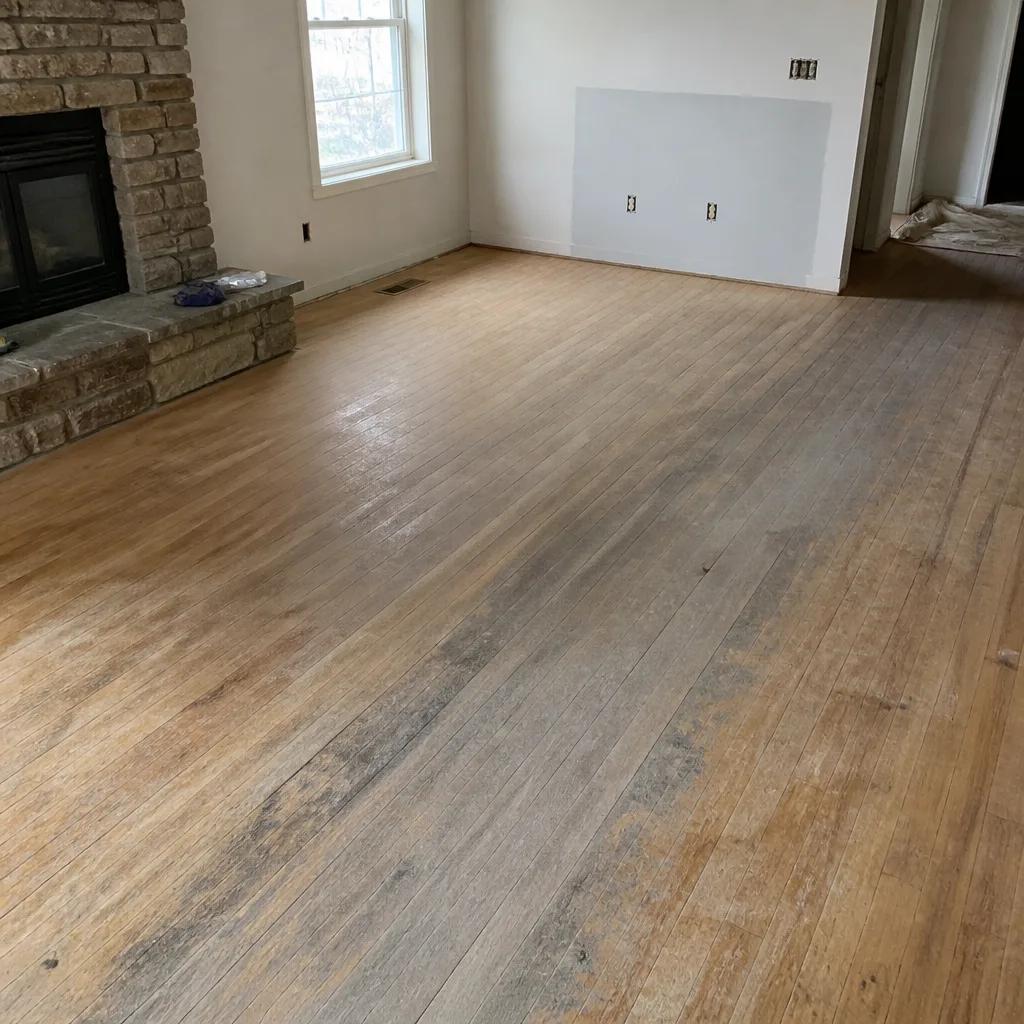 Before
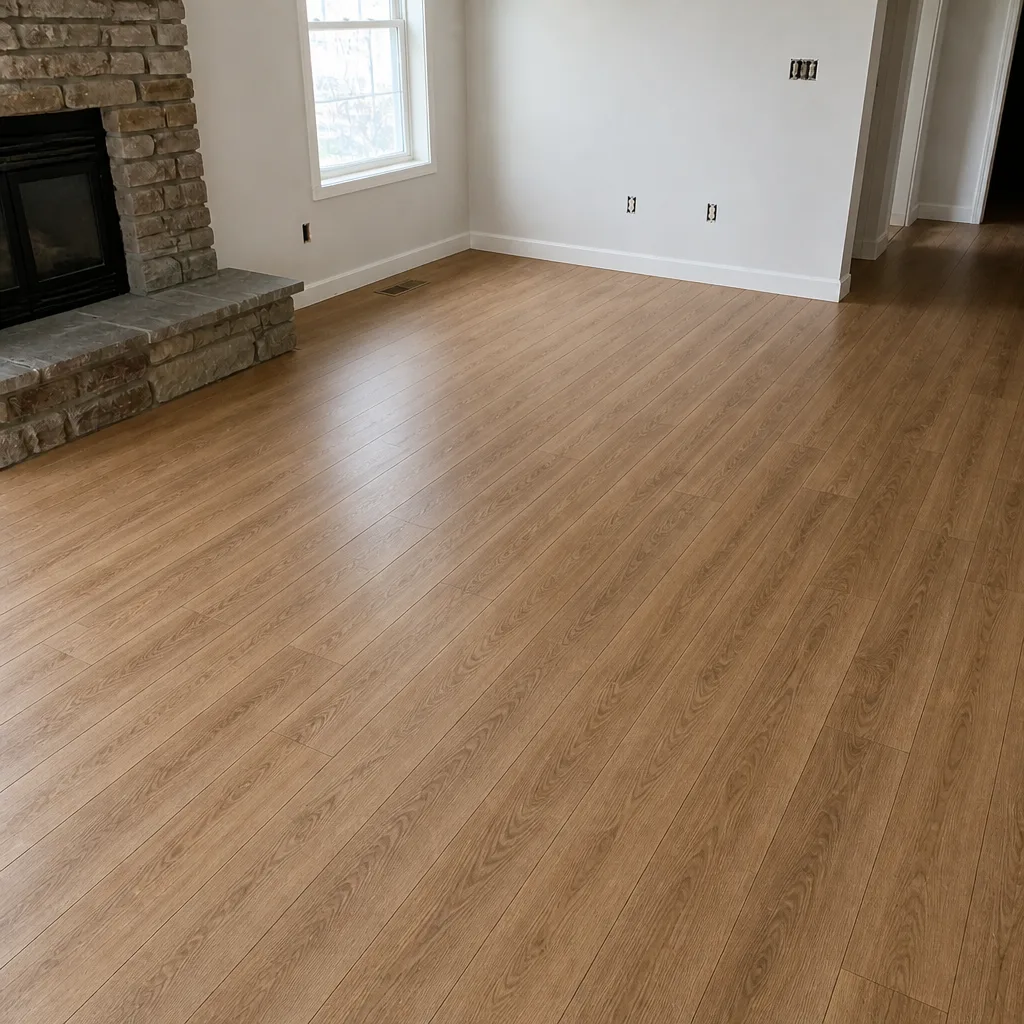 After
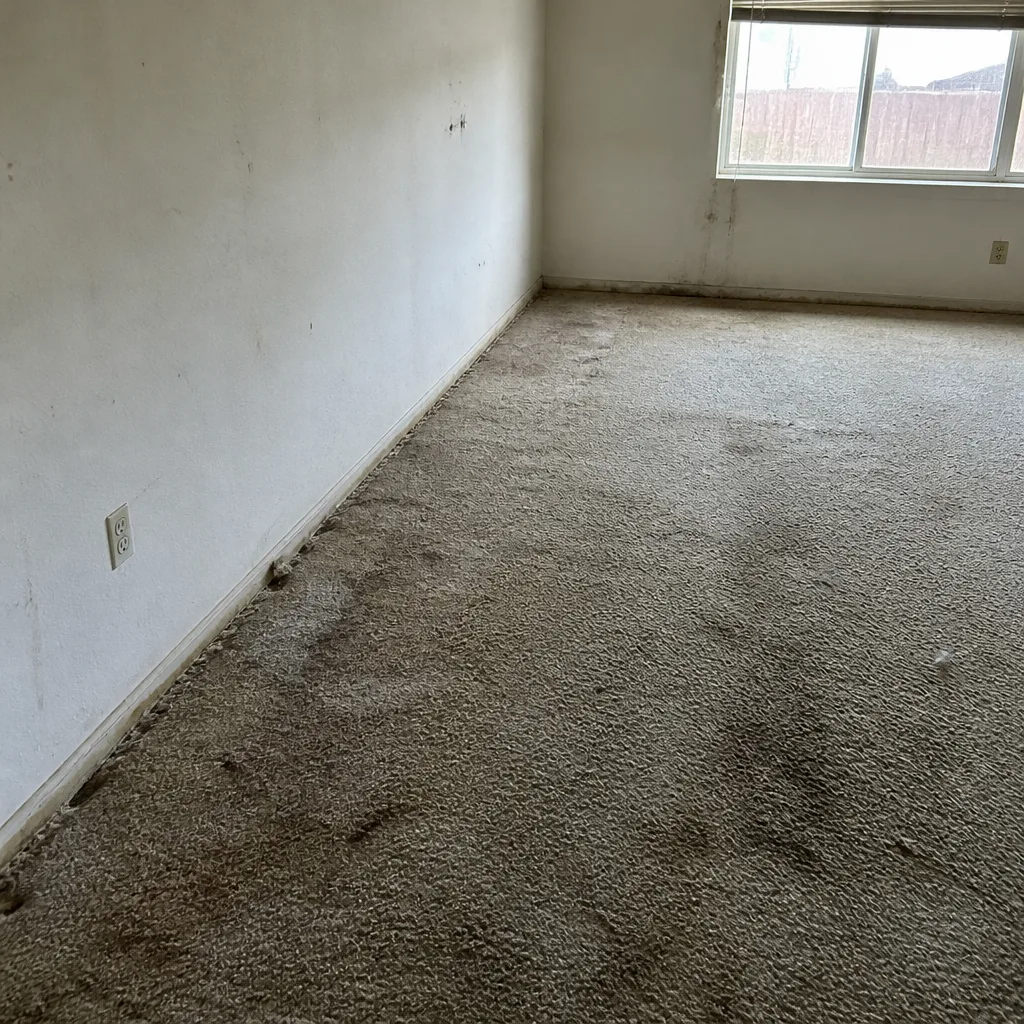 Before
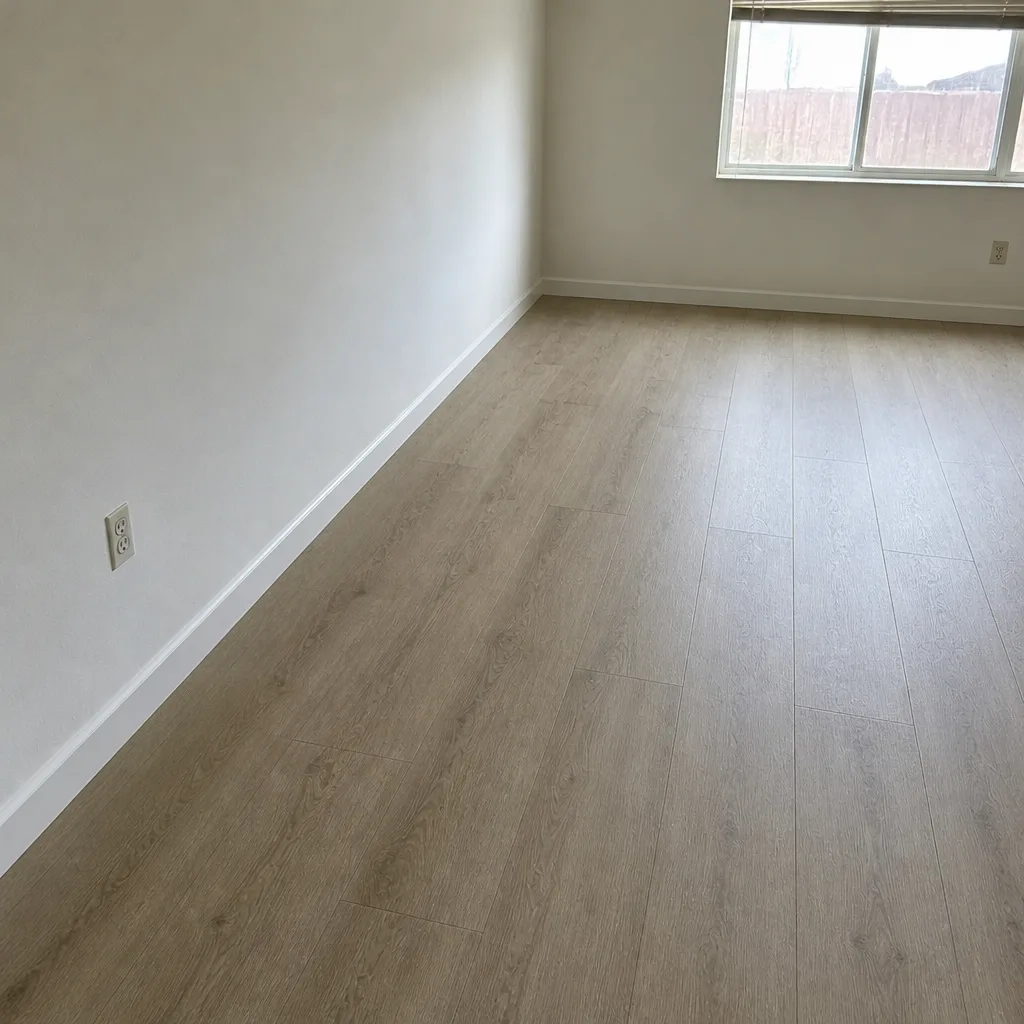 After
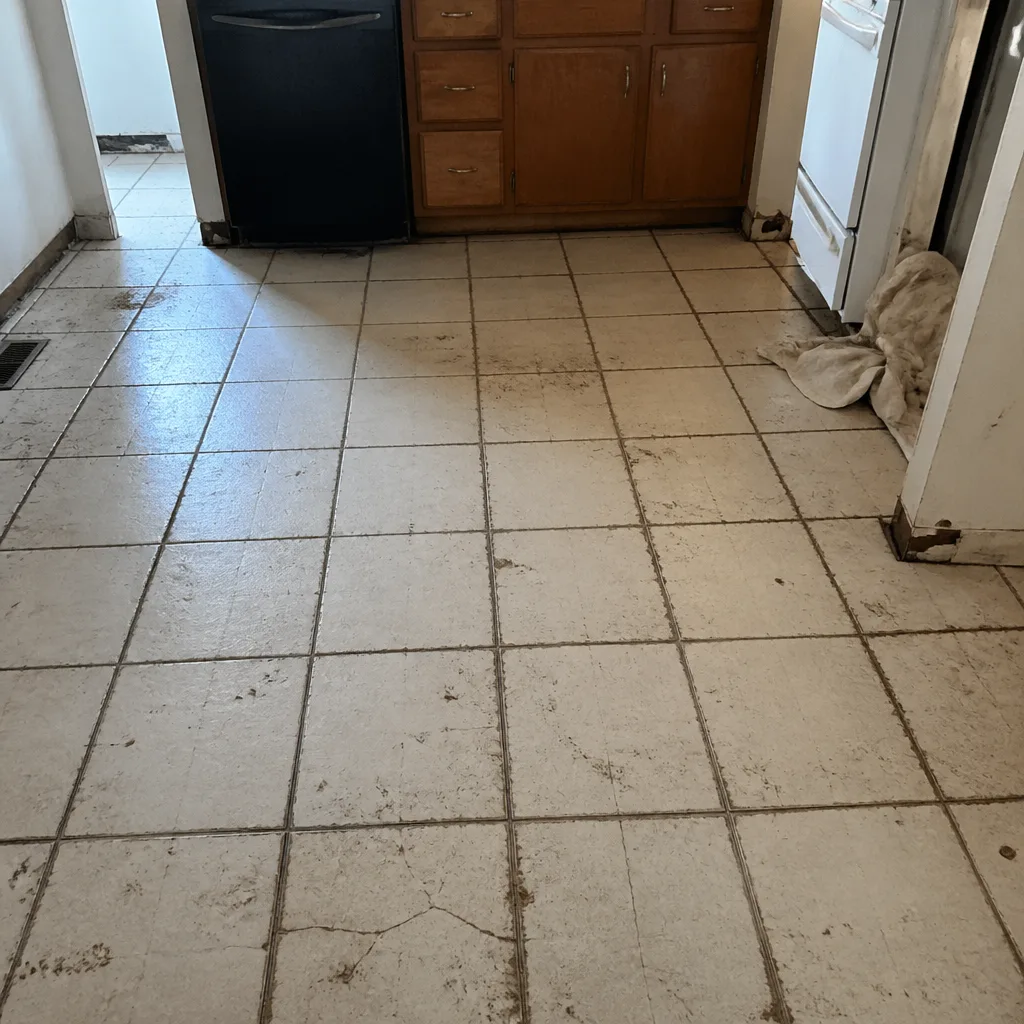 Before
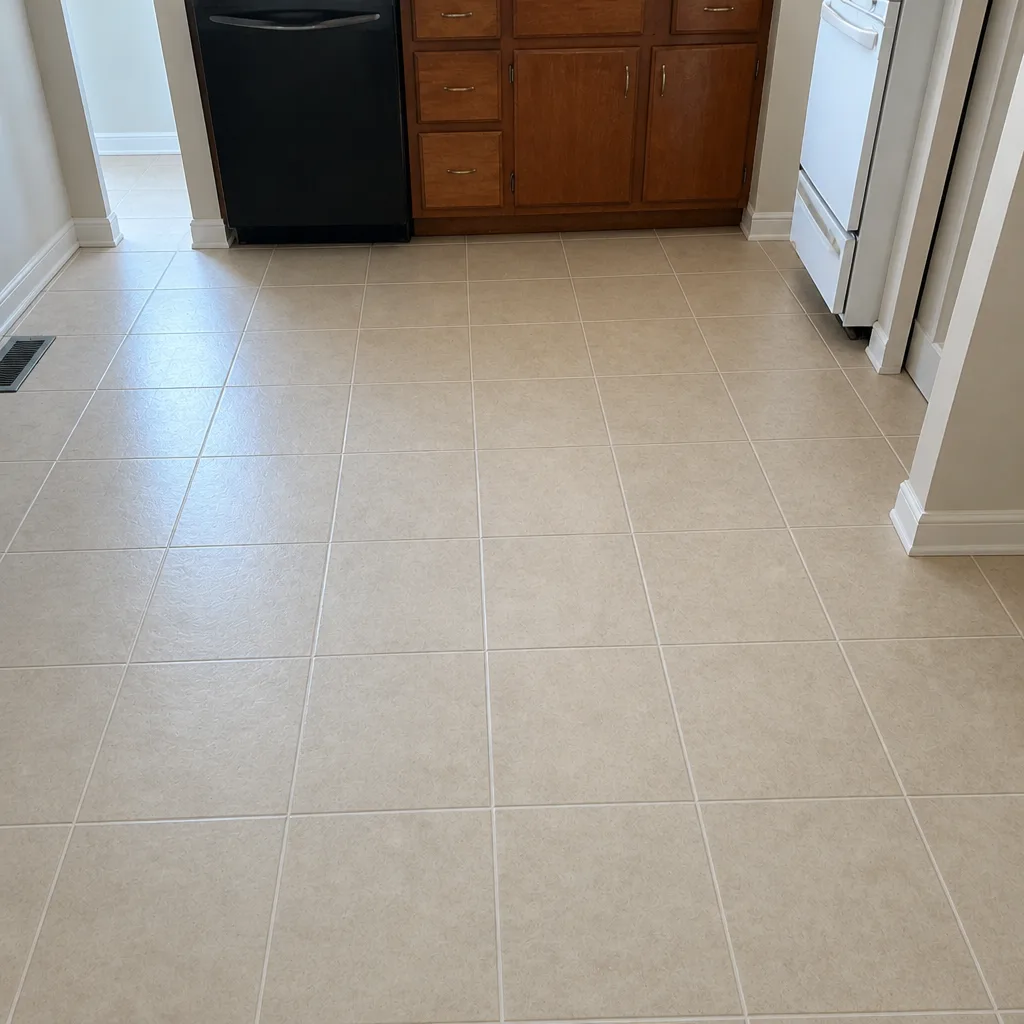 After
When to Call a Professional
Some flooring work belongs to a professional, full stop. Whole-room or whole-home installations, tile jobs with tight grout lines and layout patterns, hardwood refinishing, and any project that involves moisture-prone rooms are all work for a licensed C-20 contractor. Subfloor issues like deflection, leveling, and moisture intrusion are where most do-it-yourself flooring goes wrong, and they’re the exact areas a professional will catch during the measure. If you’re comparing bids and the subfloor conversation hasn’t happened, that’s a sign to call us. carpet installation, tile flooring installation, and hardwood refinishing are all part of the work we do. Enterprise Flooring Installation offers free estimates in Enterprise. Call (833) 620-6314 to schedule yours. We answer 24/7, fast dispatch from 7am to 7pm, Sunday through Friday. Our technicians have up to 12 years of experience.
Frequently Asked Questions
Flooring installation in Enterprise is priced per job by the written estimate, which is why we don’t quote from the phone. The price depends on the material, the square footage, the condition of the subfloor, and whether removal and disposal of the old floor are included. The measure and estimate are free, so the first step is scheduling one. Call (833) 620-6314 for an exact quote; estimates are free.
Yes. Nevada requires a C-20 Flooring Contractor license to install flooring for pay, and that’s a specific classification, not a general handyman’s license. Verify any contractor’s license through the Nevada State Contractors Board before signing. Ask for the number in writing and match the license name to the name on your contract.
Yes, and that’s exactly the capability you should be vetting for. A contractor who installs all three surfaces can coordinate a mixed-material project without referring parts of it out or pushing you toward one material. Enterprise Flooring Installation installs carpet, tile, and hardwood, and offers refinishing on existing hardwood, so a whole-home update runs through one crew. Call (833) 620-6314 to schedule a free estimate.
Yes. The estimate is free and there’s no obligation. You get a free in-home measure and a written price before anything is booked. The written estimate sets the final price for the job. Call (833) 620-6314 to schedule yours.
The installation length depends on the material, the square footage, and the subfloor condition; the timeline is set at the estimate visit, not before. That’s why the free measure comes first. Prep, acclimation, and installation all factor into the schedule. Call (833) 620-6314 to book the measure and get a timeline in writing.
Refinishing is often the better call when the wood is thick enough and in good enough condition to sand; that’s checked at the estimate visit, not over the phone. Refinishing extends the life of the existing floor instead of defaulting to full replacement, which saves on material and keeps the original wood in place. Not every floor can be refinished, and a stain won’t always match a sample, so the inspection decides. Call (833) 620-6314 for a free estimate.
The Bottom Line
Hiring a flooring contractor in Enterprise comes down to three checks: verify the C-20 license through the NSCB, confirm real multi-surface capability so nobody talks you into the material they happen to install, and read the written quote for specifics on prep, acclimation, and warranty terms. The questions in this guide do the work. A contractor who answers them in specifics is the one to hire. A contractor who dodges them isn’t, no matter how the bid compares. When you’re ready, Enterprise Flooring Installation offers free estimates in Enterprise. Call (833) 620-6314. We answer 24/7, fast dispatch from 7am to 7pm, Sunday through Friday.
Written by the team at Enterprise Flooring Installation.