
Last updated November 17, 2026
 Hardwood
 Engineered hardwood
 Luxury vinyl plank
 Laminate
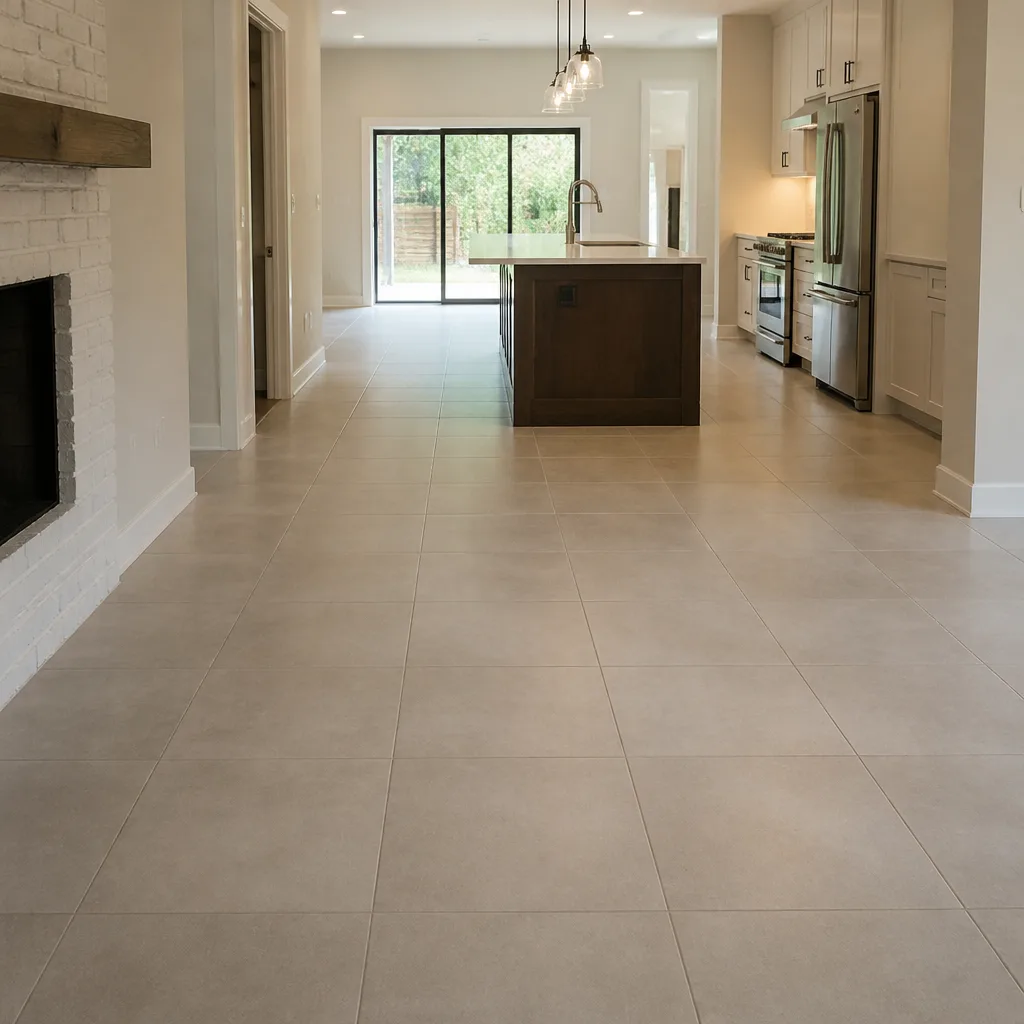 Porcelain tile
 Carpet
 Shaw
 Mohawk
 COREtec
 Pergo
Free in-home measure and written estimate: Shaw, Mohawk, COREtec and Pergo lines compared on your own rooms, with carpet, tile, vinyl plank, laminate and hardwood laid out side by side
Get your free estimateFlooring Installation Questions to Ask Before You Sign
Most homeowners walk into a flooring showroom with two questions: how much, and will it match the cabinets. That’s the wrong list. In our experience, the terms that actually decide whether a flooring project goes well or turns into a fight are buried in the paperwork you sign before the first plank comes off the pallet. Who is responsible if the subfloor turns out to be out of flat? Which company honors the warranty in year twelve? Will the crew measuring your room be the same crew installing it? This guide gives you the exact questions that surface those answers, in plain language, from a company that installs flooring in Enterprise, Nevada every week. We’ll cover the contract, the warranty chain, the subfloor scope, acclimation, crew structure, and how change orders should be handled.
Quick Answer
Ask your flooring contractor six things before signing: who holds the manufacturer warranty and what happens if the installer closes, exactly how out-of-flat subfloor conditions are handled and billed, the specific acclimation process for your material, whether the same crew measures and installs, how change orders are authorized, and what the written estimate does and does not include. In our experience, a flooring warranty claim that gets denied is most often denied because the subfloor wasn’t prepped to spec, the product wasn’t acclimated, or the homeowner cleaned and maintained it out of spec. All three failures are preventable with the right questions before the contract is signed.
Styles & brands we work with
- Hardwood
- Engineered hardwood
- Luxury vinyl plank
- Laminate
- Porcelain tile
- Carpet
- Shaw
- Mohawk
- COREtec
- Pergo
Table of Contents
- Who Actually Backs Your Flooring Warranty?
- What Does the Installer’s Subfloor Prep Actually Cover?
- How Will Your Flooring Be Acclimated Before Install?
- Will the Crew That Measures Also Install?
- How Are Unexpected Costs Handled Mid-Job?
- What Enterprise, NV Conditions Mean for Your Floor
- What Should the Written Estimate Include Line by Line?
- How Do You Match Material to the Room?
Who Actually Backs Your Flooring Warranty?
Ask your flooring contractor two separate warranty questions before you sign: who issues the product warranty, and who stands behind the labor. Those are almost never the same party. The manufacturer covers the material. The installer covers the workmanship. If you don’t know which is which, a claim in year three is going to bounce between two phone numbers while you stand on a floor that’s failing.
Here’s how the chain usually works. A brand like Shaw or Mohawk warrants the flooring itself against manufacturing defects. A product like COREtec covers its own material under the manufacturer’s terms. The installing company warrants the installation – that the seams are tight, the transitions are set, the tile is bonded, the trim is finished. If a plank buckles because the room was too humid, the manufacturer points at the install. If a tile pops loose, the installer has to answer for it. The question you need answered before signing: which party handles which side of the claim, and in writing?
Then ask the uncomfortable one. What happens if the installing company closes before a warranty claim comes due? On a floor with a long product warranty, that’s a real risk. Some states require registration of home-improvement contracts, and some manufacturers require a registered installer for the product warranty to transfer. If your installer goes out of business, the manufacturer may still stand behind the material – but the labor warranty can vanish overnight. Ask the contractor to put their labor warranty in the contract, and ask whether the manufacturer warranty requires a specific installer designation to remain valid.
One last yes-or-no question worth asking: does the company subcontract the install? If so, the warranty may sit with the subcontractor, not the company you’re paying. That’s usually fine – you just need to know before you sign. At Enterprise Flooring Installation, our written agreements spell out the product warranty on the material side and the labor side separately so you can see who answers for what.
What Does the Installer’s Subfloor Prep Actually Cover?
Ask the installer for the exact flatness tolerance they guarantee, and what happens in the contract if the slab doesn’t meet it. Subfloor prep is where most flooring projects get expensive after the deal is closed. The worst version of this story goes like this: the crew shows up, pulls the old carpet, finds a slab with a low spot, tells the homeowner the job costs more to finish, and the homeowner has no way to argue because the estimate said “prep included” without a definition.
Here’s what you’re trying to pin down:
- The tolerance the installer will actually hold to. Ask for it in writing – flatness figures depend on the product. Your installer should state which tolerance they’d use for the material you selected.
- What the base install price includes. Typical baseline prep covers light scraping, standard transition removal, and vacuum of the subfloor. Deeper work is separate.
- What counts as an add-on. Grinding high spots, patching low spots, moisture mitigation on a slab, repairing a damaged wood subfloor, or lifting and replacing rotted underlayment are common add-ons. Ask what each costs – not as a fixed number, but as a clearly defined scope you can review before the work starts.
- Moisture testing on slabs. In Enterprise, most homes sit on a concrete slab. Slabs and moisture don’t always get along, and the product has a moisture limit that the manufacturer sets. Ask whether the estimate includes a moisture check and what the installer does if the reading is over the product’s stated limit.
We’ve seen this go well and we’ve seen it go badly, and the difference is whether the prep scope was in writing before the crew started. If the answer is “we’ll figure it out when we get there,” you’re not looking at a scope – you’re looking at a starting price. Ask for the scope in the contract and ask how an unexpected subfloor condition is priced and approved before any add-on work begins.
How Will Your Flooring Be Acclimated Before Install?
Ask the installer to describe their acclimation process by material – and listen for whether the answer changes when you switch from solid hardwood to engineered to LVP. A qualified installer will give you three different answers, because the products respond differently to the climate in your home. Anyone who gives you one answer for all three hasn’t thought it through.
- Solid hardwood. Solid wood expands and contracts with humidity and needs to sit in the space at the room’s working conditions before install. The right timing depends on the wood species and thickness – ask the installer to explain their process and how they verify the material is ready.
- Engineered hardwood. The layered construction moves differently than solid wood, and the acclimation window is usually shorter but the humidity range still matters. Ask what the manufacturer’s instructions say and how the installer follows them for your product.
- Rigid-core LVP. COREtec and similar rigid-core products tolerate more temperature swing than natural wood, but they still need to sit in the room before install, and the manufacturer always has a temperature range that must be met at install time. Ask the installer what temperature the room needs to be during installation.
- Carpet. Carpet acclimates too, but the bigger issue is the day-of temperature – adhesive and stretch need a room at a stable temperature. Ask what the installer expects on install day.
- Tile. Tile itself is stable, but the setting materials and grout want a specific temperature range while curing. Ask the installer whether they’ll control the room temperature during install and cure.
Why this matters in Enterprise specifically: our summers pull indoor humidity down hard, and a floor installed in dry conditions can move when a monsoon pushes humidity back up. A floor installed without acclimation can gap at the seams in winter, buckle in summer, or sound hollow underfoot within the first year. This isn’t a “we care about quality” speech – acclimation failure is one of the three most common reasons a flooring warranty claim gets denied, and it’s the one most easily prevented by asking one question before signing.
Will the Crew That Measures Also Install?
Ask whether the person who walks your home with the tape measure is the person responsible for installing the floor. The answer affects everything from the warranty to what happens when the tile doesn’t line up with the outlet covers.
There are three common models in this market, and you’ll want to know which one you’re buying:
- In-house measure, in-house install. A single company measures, writes the estimate, and installs. The installer who wrote the estimate can be held accountable for what the estimate said. This is how we work at Enterprise Flooring Installation.
- In-house measure, subcontract install. The company writes the estimate and hands the install to a subcontractor. This is common and can work fine – but the warranty on the labor side may sit with the subcontractor, not the company you paid. Ask before signing.
- Independent bid, independent install. A sales rep sells the job, and an unknown crew runs it. Lowest accountability of the three. Avoid for any project that includes subfloor prep or natural wood.
Why does the crew matter beyond trust? Because a crew that didn’t measure the room doesn’t know the room. They don’t know the doorway has a lip, that the toilet flange will need a spacer, that the sliding glass door track sits an inch lower than the interior slab, or that there’s a low spot near the hallway. Each of those becomes a change order or an argument. A crew that measured the room already accounted for them.
It’s also worth asking how many rooms the crew will handle in a single job. If the same crew is running two houses on install day, neither job gets full attention. Ask the company to describe how many installers will be on your project and for how many days it’s booked. The schedule is set at the estimate, so the answer should be clear before you sign. Learn more about how we handle Enterprise Flooring Installation jobs on our home page.
How Are Unexpected Costs Handled Mid-Job?
Ask the installer to describe their change-order policy, in writing, before you sign. This is the single biggest source of flooring-related complaints, and it’s also the easiest to prevent. Unexpected costs come up on almost every non-trivial install: hidden water damage under the carpet padding, a failing toilet seal that rotted the underlayment, a slab crack that runs through a tile line, or a layer of old vinyl tile under a carpet tack strip that may or may not contain asbestos.
The right policy looks like this:
- Stop the work. The crew halts and calls the homeowner the moment they uncover a condition outside the estimate.
- Document what was found. Photos and a written description of the condition.
- Quote the add-on in writing. A specific number and a specific scope – not “we’ll add it to the total.”
- Get written approval before continuing. An email, a text, a signature – something on the record.
- Re-start work only after approval. No surprise invoices at the end of the job.
The question to ask before signing: “What is your policy if my crew finds something under the floor?” If the answer is hazy, ask for the policy in writing. A good installer will have one ready. A great installer will have already mentioned it during the estimate walk-through.
On the asbestos question specifically, most flooring contractors are not licensed to test or remove asbestos. If your home was built before the 1980s and may have vinyl flooring or mastic that could contain asbestos, ask the contractor how they handle it. The honest answer usually involves a licensed abatement company and a separate clearance process before the new floor goes down. Anyone who says they’ll “just pull it up” without addressing the risk is telling you something about how they handle the rest of the job too.
What Enterprise, NV Conditions Mean for Your Floor
The desert swing – dry spring and summer, monsoon humidity in July and August, mild winters – is the context your contract needs to reflect. In our experience, homeowners in Enterprise run into three predictable flooring issues here: hardwood that gaps at the seams in early summer, tile that loses bond over a slab crack, and LVP whose expansion joints have been installed too far apart for the room’s seasonal movement. Each has a specific pre-signing question attached.
Hardwood. Solid wood moves with humidity, and here it moves more than most places. Ask the installer how they account for seasonal movement: are they recommending a specific humidity range for the home, and are expansion gaps at the walls sized for the room’s width and the product’s range? If the homeowner is going to run the HVAC in summer to a specific humidity level, that has to be part of the plan before the floor goes down.
Tile on slab. Tile floors in Enterprise commonly sit on concrete slabs, and slabs crack. Ask the installer how they handle existing cracks: is crack isolation membrane part of the standard scope, or is it an add-on? Get that in writing before signing – it’s the difference between a tile floor that lasts and one that telegraphs the crack a season later.
LVP in high-moisture rooms. Kitchens, baths, and finished basements have standing moisture issues that a floating LVP should never have to absorb. COREtec and similar rigid-core lines are water-resistant products, but water from below – an unaddressed slab moisture issue, a slow leak – still has to be dealt with before any floor goes down. Ask the installer to describe their moisture check for the room you’re flooring.
Carpet. Carpet in Enterprise gets dry, dusty air most of the year, and that means a quality carpet pad and a proper stretch matter more than the fiber brand. Ask how the carpet will be stretched and whether the pad is in the written estimate. More on our carpet installation approach is on the service page.
What Should the Written Estimate Include Line by Line?
Ask for a written estimate that separates material, labor, prep, and disposal into distinct lines – and if the estimate comes back as a single number, ask for it to be itemized. The estimate is the contract’s material spec, and a lump-sum number tells you nothing about what’s included and what isn’t.
Here’s the list of items a proper written estimate should show:
- Material brand and product. Not just “LVP” – the actual brand and the product line. When we quote a job, the estimate names the brand from our roster, which includes Shaw, Mohawk, COREtec, Pergo, LifeProof, Mannington, Armstrong, Daltile, and Karndean. You can then compare exact products across bids.
- Square footage and waste allowance. Ask how much extra square footage is being ordered for cuts and future repairs. Standard is a percentage, and the percentage should be stated.
- Demo and haul-away. Is the old floor being removed? Is it being hauled off-site? Both are separate line items and both should be priced.
- Subfloor prep, itemized. Base scraping, patching, grinding, moisture mitigation, and any other item should be priced separately so you can see what’s in and what’s not.
- Transition strips and trim. Doorway transitions, baseboard removal and reinstall, quarter round, and shoe molding all have labor attached. Ask whether each is in or out.
- Furniture moving. Will the crew move furniture, or do you need to empty the room? Get the answer in writing.
- Tax and permit fees, if applicable. Most residential flooring installs don’t require a permit, but if the project touches structural subfloor repair, ask your city’s building department whether a permit applies.
- Payment schedule. How much is due at signing, at material delivery, and at completion. Never pay 100% up front for a residential install.
The written estimate sets the final price. Ask for it before you sign anything – a verbal ballpark isn’t a floor, it’s a starting point that moves.
How Do You Match Material to the Room?
Ask the installer to walk you through the choice of material room by room, not all at once. A homeowner refreshing a whole house often wants “the same floor everywhere,” but the right answer is rarely one product for every room. Each surface category answers a different problem.
Carpet belongs in bedrooms and on stairs where warmth underfoot and sound absorption matter. It is not the choice for a bathroom or a laundry room.
Tile belongs in bathrooms, kitchens, mudrooms, and entryways where water and traffic meet. The tile itself handles water; the setting materials and grout lines handle the design, and grout line width affects both look and long-term upkeep.
Hardwood belongs in living spaces, dining rooms, and anywhere a natural floor matters. And here’s the piece most homeowners miss: hardwood refinishing is often the right answer where the floor is already wood. A refinish sands the existing wood down and restores the finish – a cost-effective alternative to a full replacement, provided the wood has enough thickness to be sanded and the boards are in condition to be refinished. We check both before quoting a refinish.
Rigid-core LVP like COREtec and Karndean goes anywhere you want a hard surface without wood’s humidity sensitivity. Water-resistant, straightforward to install, easy to maintain. Not waterproof, though, and standing water still has to be dealt with.
Ask the installer to state which product they’d pick for each room and why. If they recommend the same floor for every room without discussing moisture or traffic, they’re selling stock, not a project. Hard surface, soft surface, or natural wood – tile flooring installation sits alongside carpet and hardwood in the toolkit for exactly this reason.
Common Mistakes to Avoid
- Signing a lump-sum estimate. A single number hides the subfloor scope, the prep, and the disposal. Ask for it itemized before signing – a flooring contract in Enterprise should read line by line.
- Not asking who holds the labor warranty. The manufacturer covers the material. The installer covers the labor. If those two parties aren’t both named in writing, a claim in year five is going to bounce.
- Assuming “prep included” means “prep is solved.” Ask for the exact tolerance the installer guarantees and what’s billed as an add-on when the slab doesn’t meet it. This is the difference between an estimate and a starting price.
- Skipping the acclimation question. A floor that goes down before it’s acclimated can gap in one season and buckle in the next. Ask the installer to describe acclimation by material – solid wood, engineered, and LVP should produce different answers.
- Not knowing who’s on the install crew. If the sales rep isn’t connected to the crew, the warranty terms may not be either. Ask before signing.
- Ignoring the moisture check on a slab. Enterprise homes sit on slabs, and slabs carry moisture. If the estimate doesn’t include a moisture check for a wood or tile install, ask why.
- Not asking about pre-1980s flooring underneath. Older vinyl or mastic may contain asbestos – that’s a licensed abatement job, not a scrape. Ask how the installer verifies before demo starts.
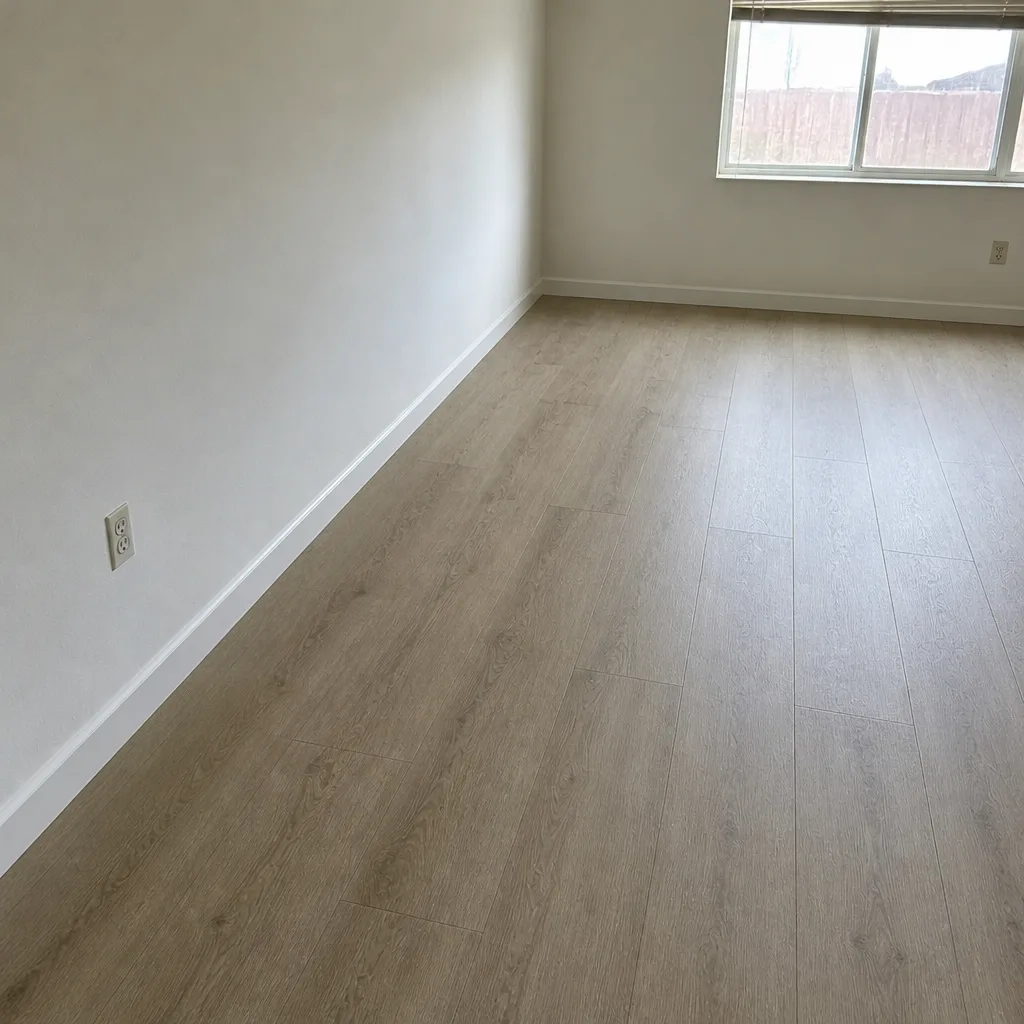
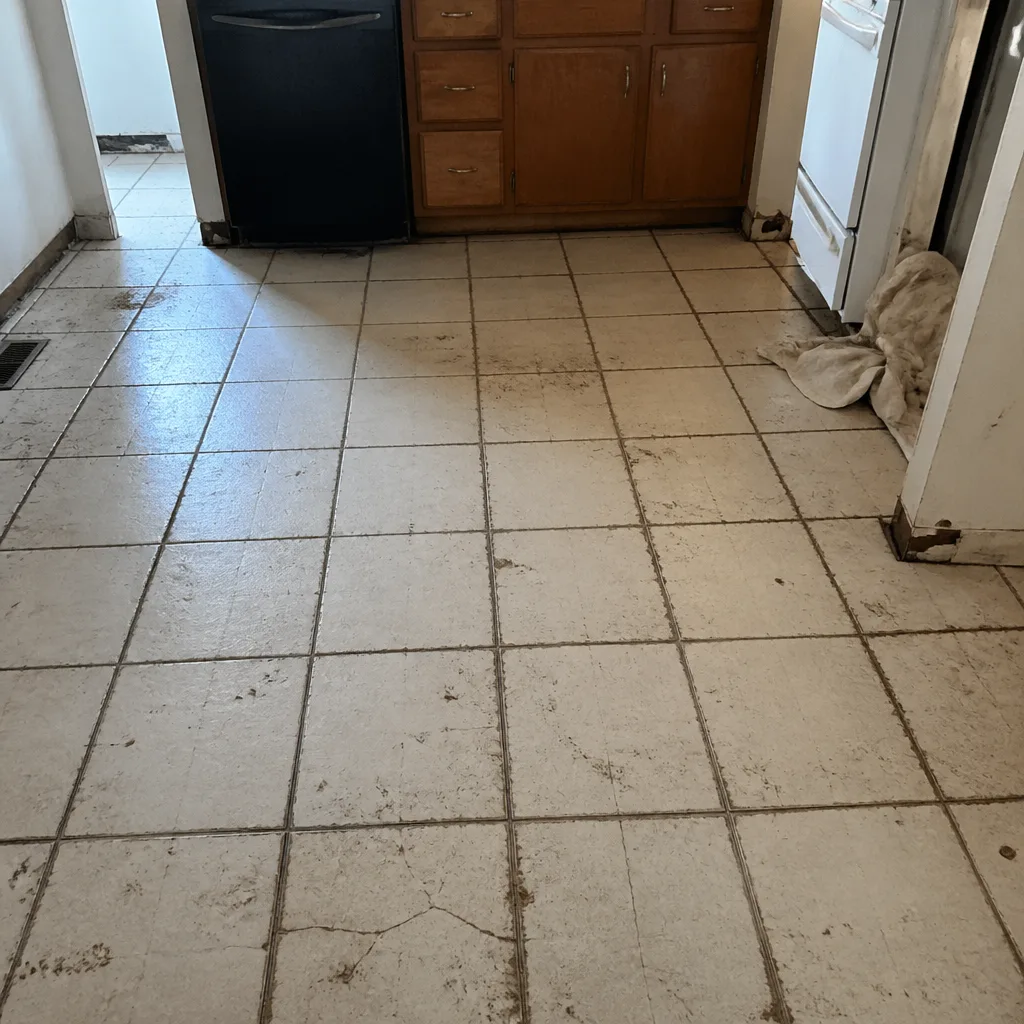
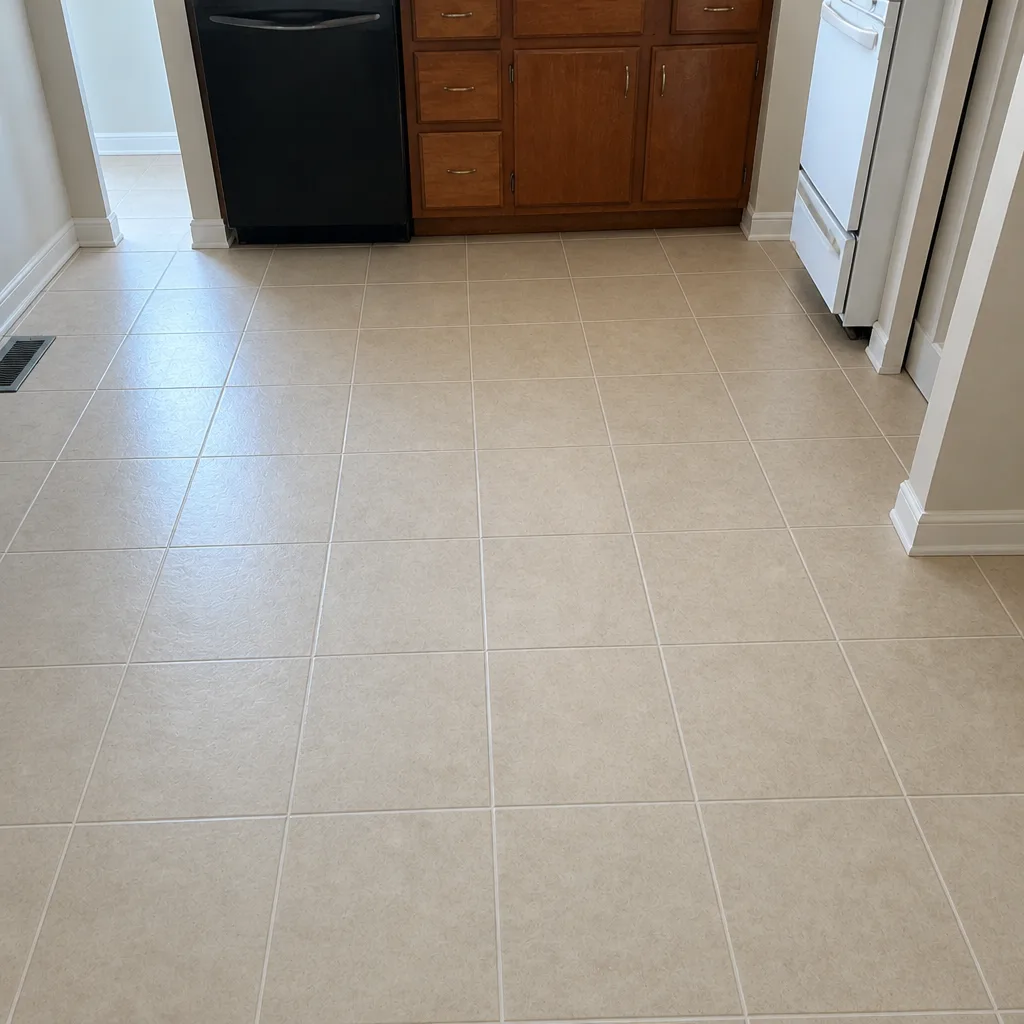
See the difference
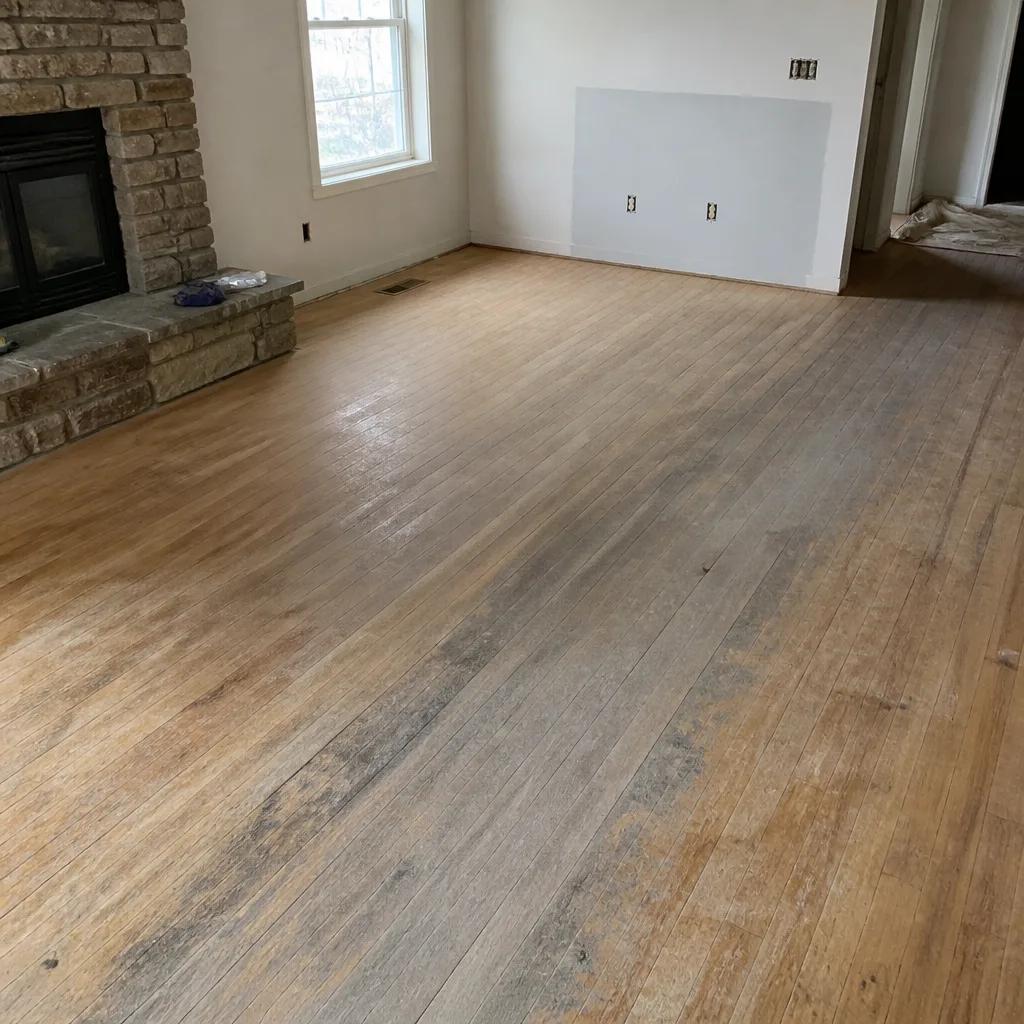 Before
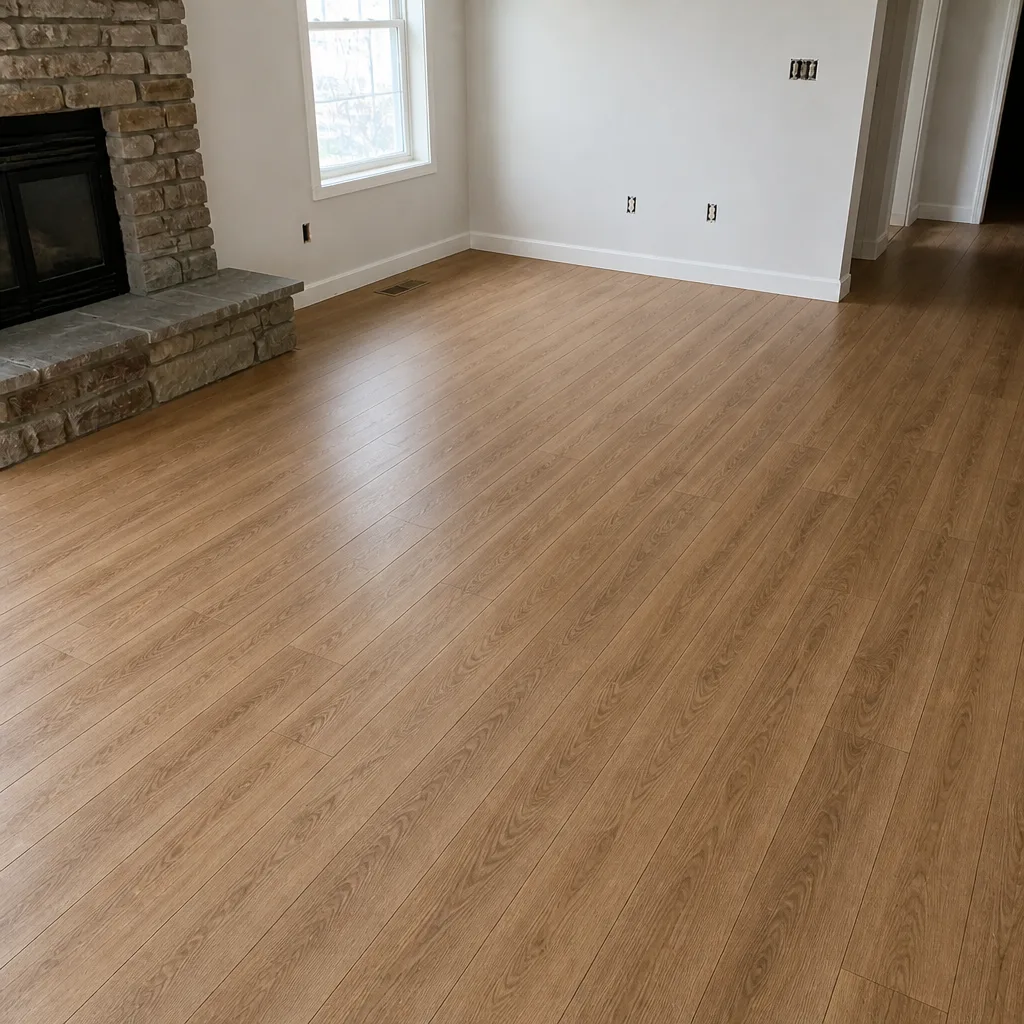 After
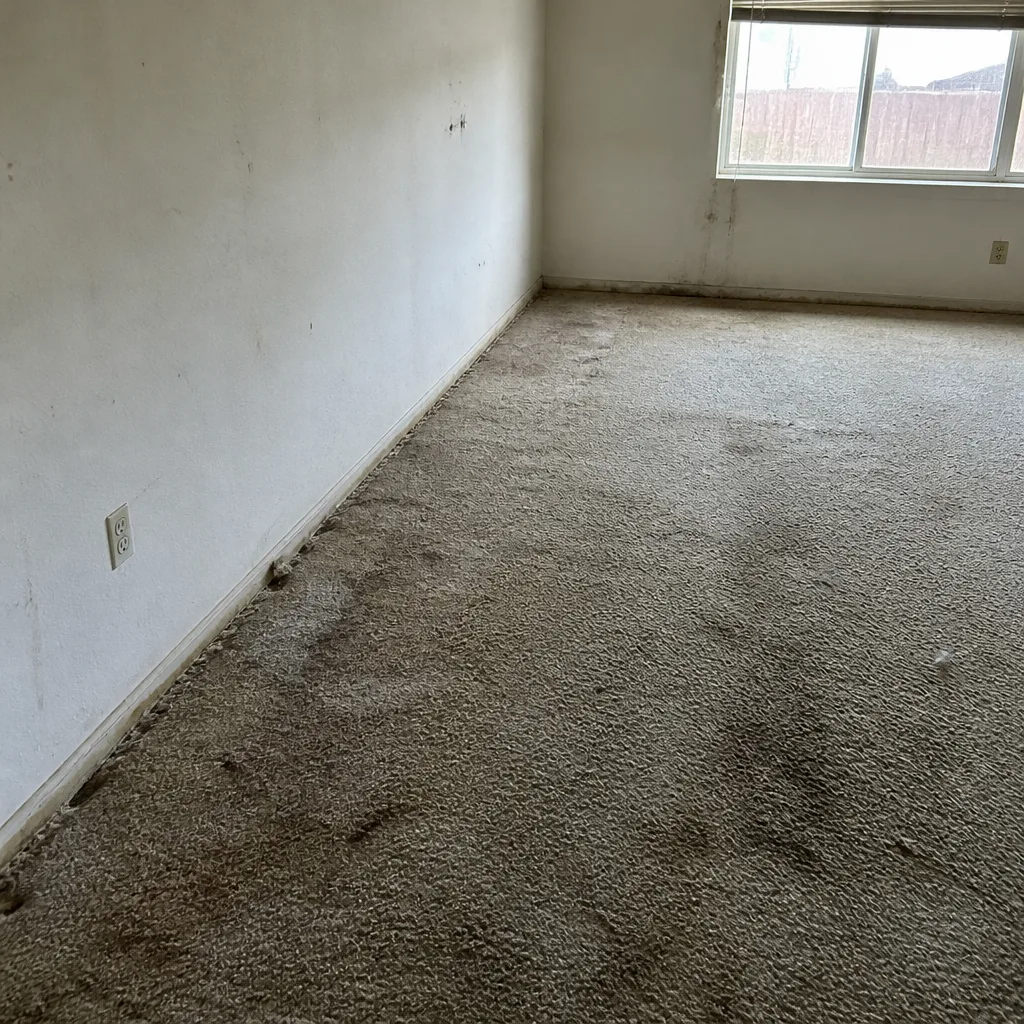 Before
 After
 Before
 After
When to Call a Professional
Some flooring projects are genuinely DIY-able – a small floating LVP install over a clean, flat subfloor, or a single-room carpet tile refresh. Where it stops being a reasonable DIY job: any install that requires subfloor prep beyond light scraping, any install over a slab with unknown moisture, any natural hardwood install or refinish, any tile install with a layout pattern, and any project with a subfloor that has visible damage. Refinishing is also a professional job – the sanders are heavy, the dust control matters, and an incorrectly set finish can be a permanent problem on a wood floor you can’t easily replace.
Enterprise Flooring Installation offers free estimates in Enterprise – call (833) 620-6314. We’ll walk your rooms, quote the prep scope in writing, and put the product warranty and the labor warranty on the same document so you can see who covers what. Our technicians have up to 12 years of experience, and we install carpet, tile, and hardwood from nine manufacturer brands.
Frequently Asked Questions
Two different warranties apply to a flooring install: the manufacturer covers the product itself, and the installer covers the labor. Ask the contractor to state both, in writing, and ask specifically what happens if the installing company closes before a long product warranty claim comes due. The material warranty from a brand like Shaw or Mohawk usually survives the installer going out of business; the labor warranty may not. Call (833) 620-6314 for an exact quote – estimates are free.
The tolerance varies by product, and the installer should state the one they’ll hold to for the material you select. The bigger question is what happens when a slab doesn’t meet it. Ask what base prep covers, what counts as an add-on (grinding, patching, moisture mitigation), and how each add-on is priced before it’s approved. Call (833) 620-6314 to schedule a free estimate.
Acclimation time depends on the product and the home, and it varies by material – solid hardwood, engineered wood, and rigid-core LVP each have different guidelines. The manufacturer’s instructions for the specific product set the standard. Ask your installer to describe their acclimation process for the material you chose and how they verify the material is ready before install. Estimates are free – call (833) 620-6314.
Sometimes, yes – but the answer depends on what’s under it and what’s going on top. Tile usually has to come up; a floating LVP or engineered floor sometimes goes over a clean existing hard surface; carpet almost always comes out first. Ask the installer to check the existing floor’s condition, thickness, and moisture before deciding. Call (833) 620-6314 for a free walk-through.
Most residential flooring replacements don’t require a permit, but structural subfloor repair or work that touches framing sometimes does. Ask your installer how they handle permitting on your specific project, and check with the City of Enterprise building department if the scope includes anything beyond covering an existing subfloor. Call (833) 620-6314 to schedule an estimate.
The install pauses. Most flooring installers are not licensed for asbestos abatement, so the correct process is to stop, have the material tested if there’s reason to suspect it (homes built before the 1980s are the common case), and bring in a licensed abatement company for removal and clearance before any new floor goes down. Ask any contractor how they handle this before signing. Call (833) 620-6314 for a free estimate on your project.
Yes, the estimate is free. We walk the rooms, check the subfloor, discuss material options across the nine brands we install, and leave you with a written estimate that itemizes material, labor, prep, and disposal. The written estimate sets the final price. Call (833) 620-6314. We answer 24/7. Fast dispatch from 7am to 7pm, Sunday through Friday.
A single room usually books as a one-day install; a whole-home project books across multiple days depending on square footage and material. The exact schedule is set at the estimate visit once the scope is confirmed. Ask for the booked install days in writing before signing so you know what you’re planning around. Call (833) 620-6314 – estimates are free.
The Bottom Line
The flooring contract you sign locks in three things: the material spec, the warranty chain, and the subfloor prep scope. Ask about all three before you sign. Get the exact flatness tolerance the installer guarantees and what counts as an add-on. Get the manufacturer warranty and the labor warranty on the same page, and ask what happens if the installer closes. Ask for the acclimation process by material. Ask who’s on the install crew. Ask how change orders are authorized. Ask for an itemized estimate that separates material, labor, prep, and disposal. A contractor who answers all of those clearly in writing is the right one – and one who doesn’t has just told you what the rest of the project will feel like. Enterprise Flooring Installation offers free estimates in Enterprise – call (833) 620-6314. We answer 24/7. Fast dispatch from 7am to 7pm, Sunday through Friday.
Written by the team at Enterprise Flooring Installation.