
Last updated November 17, 2026
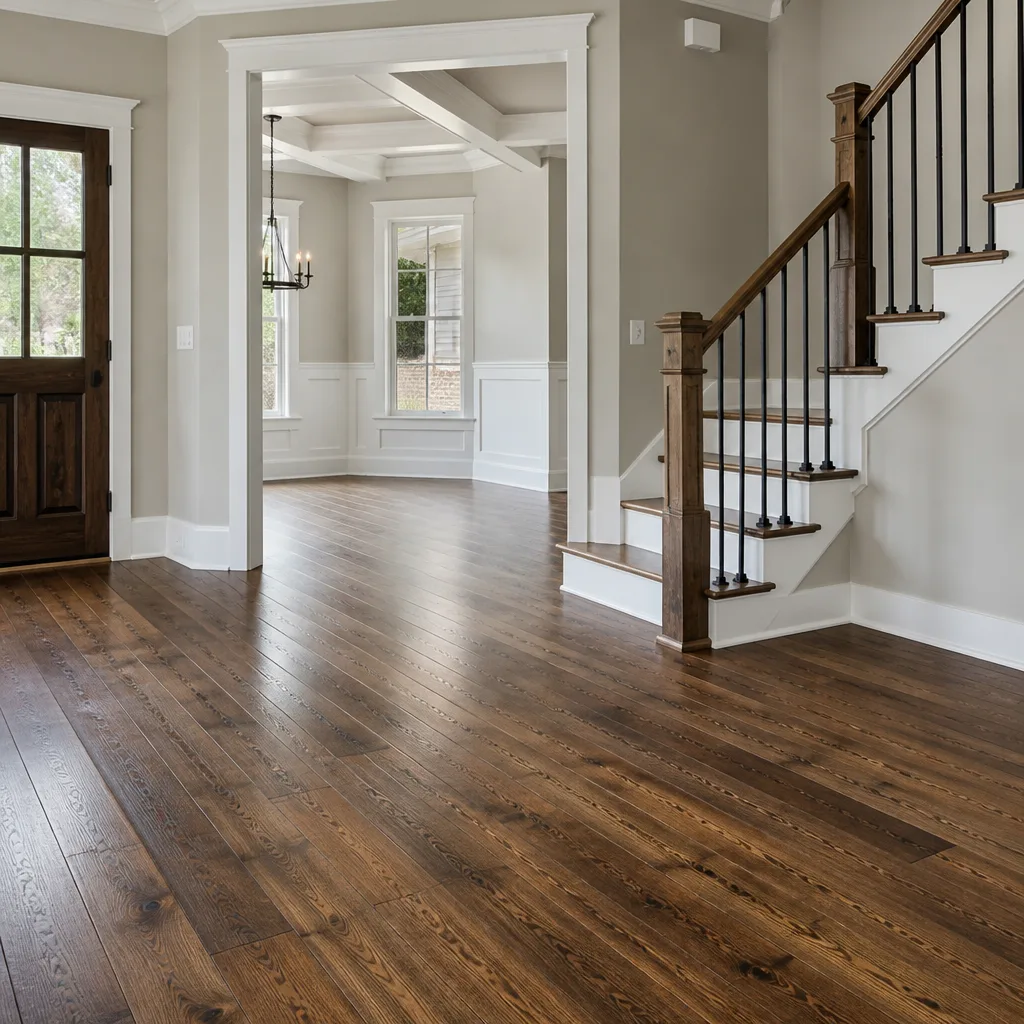 Hardwood
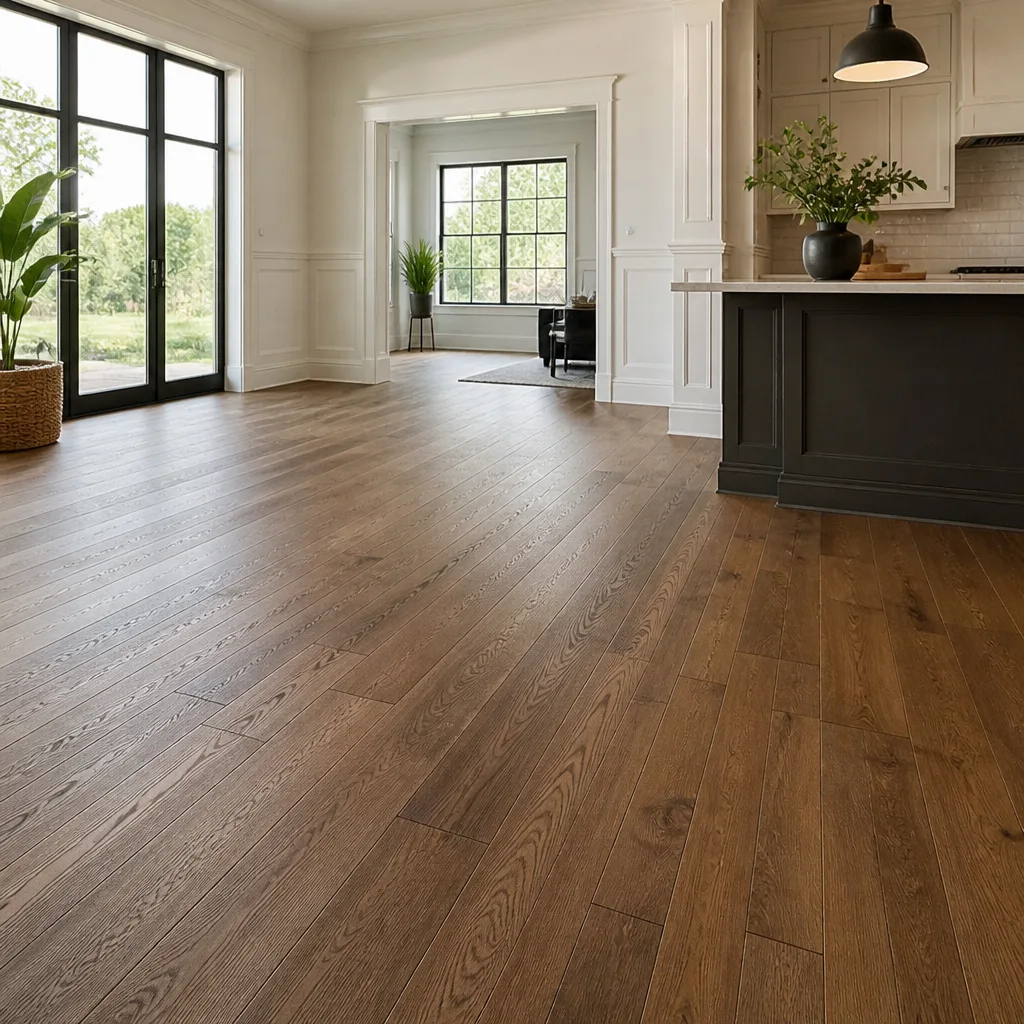 Engineered hardwood
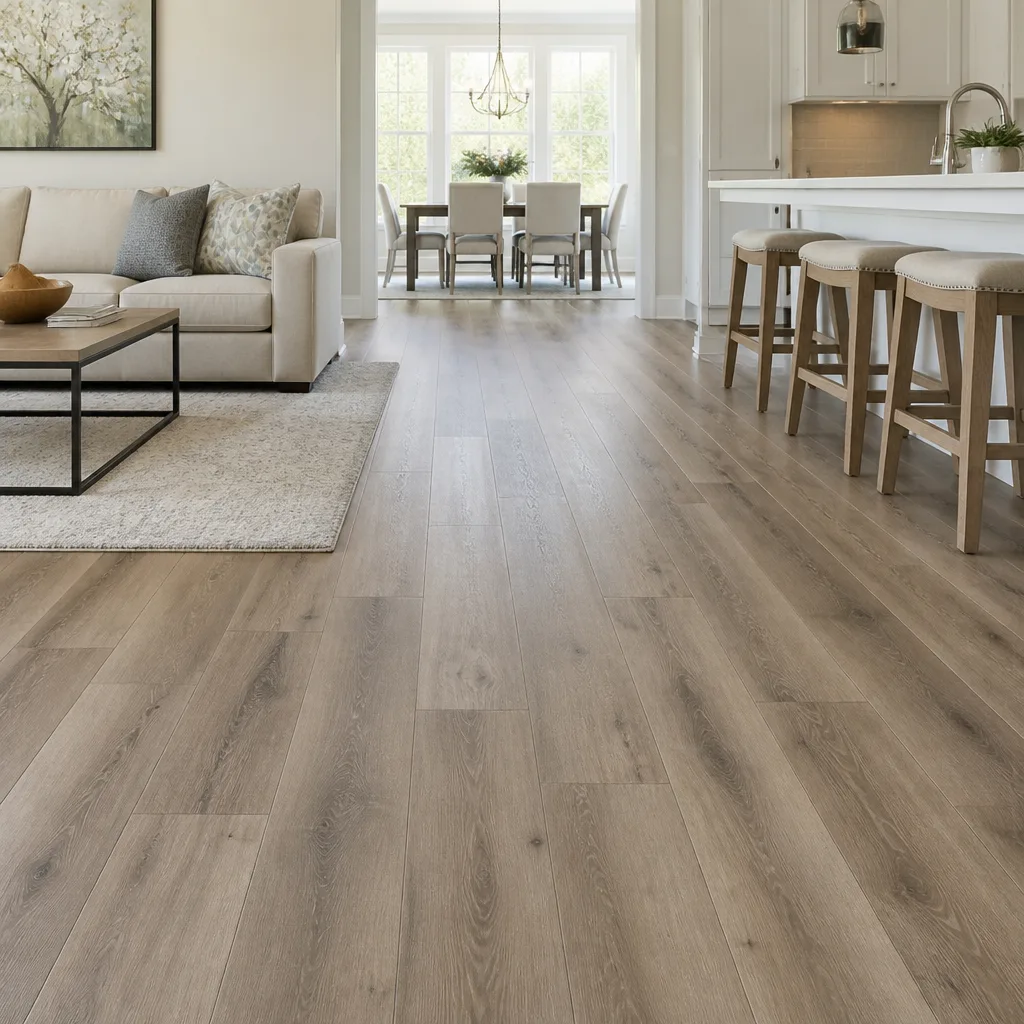 Luxury vinyl plank
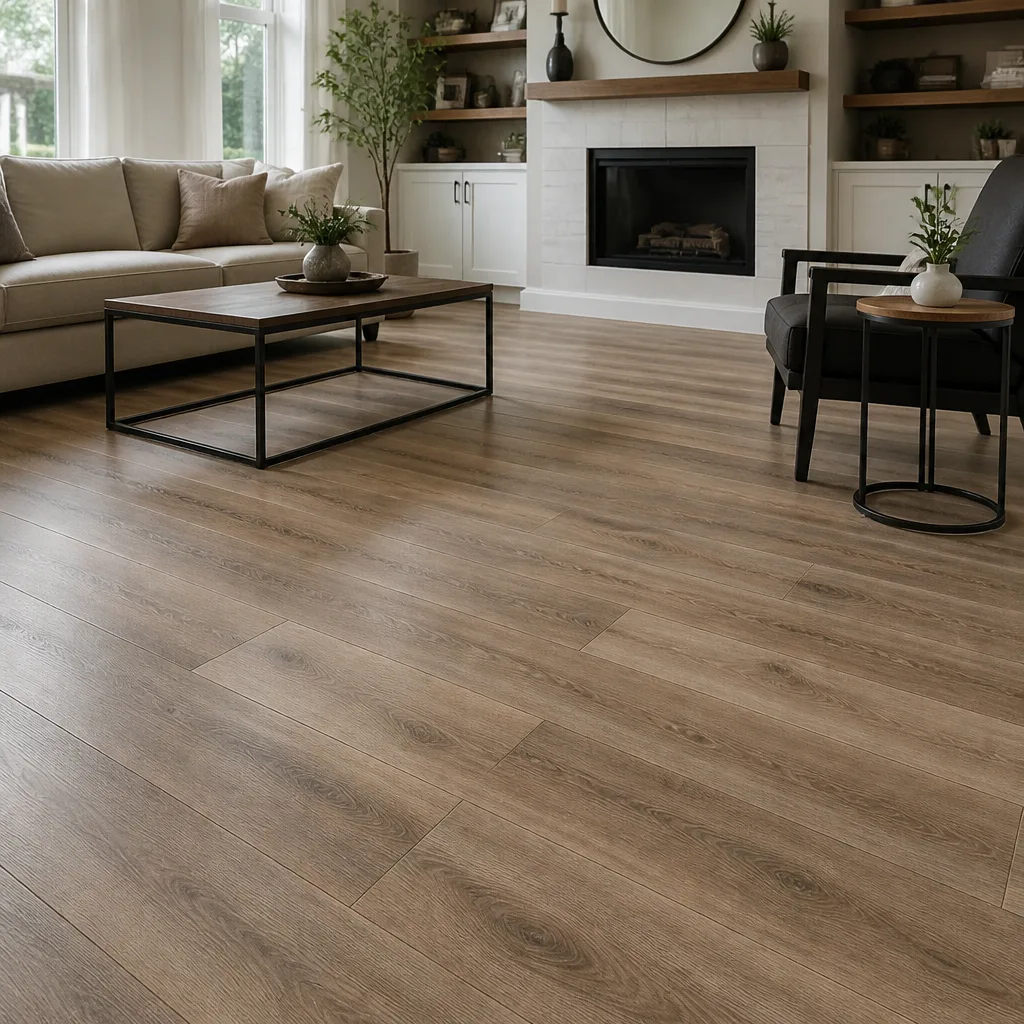 Laminate
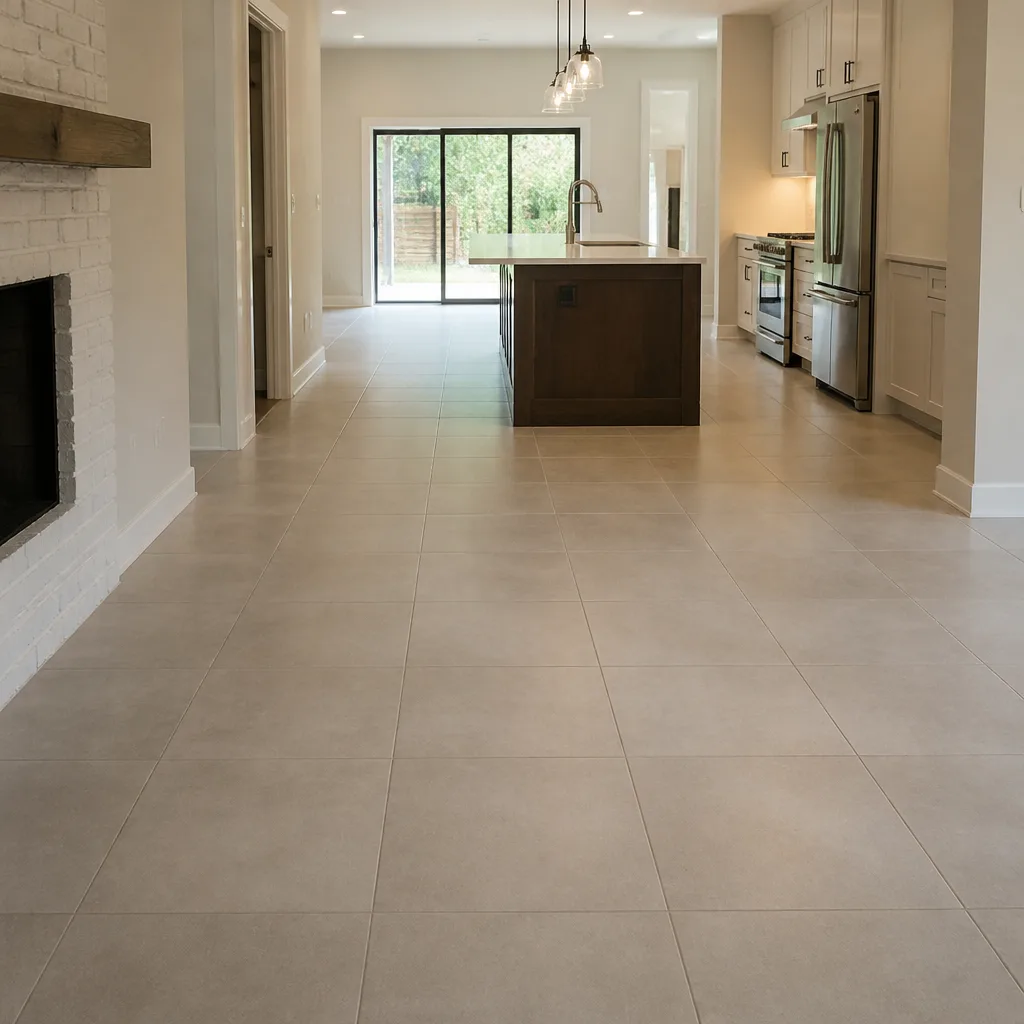 Porcelain tile
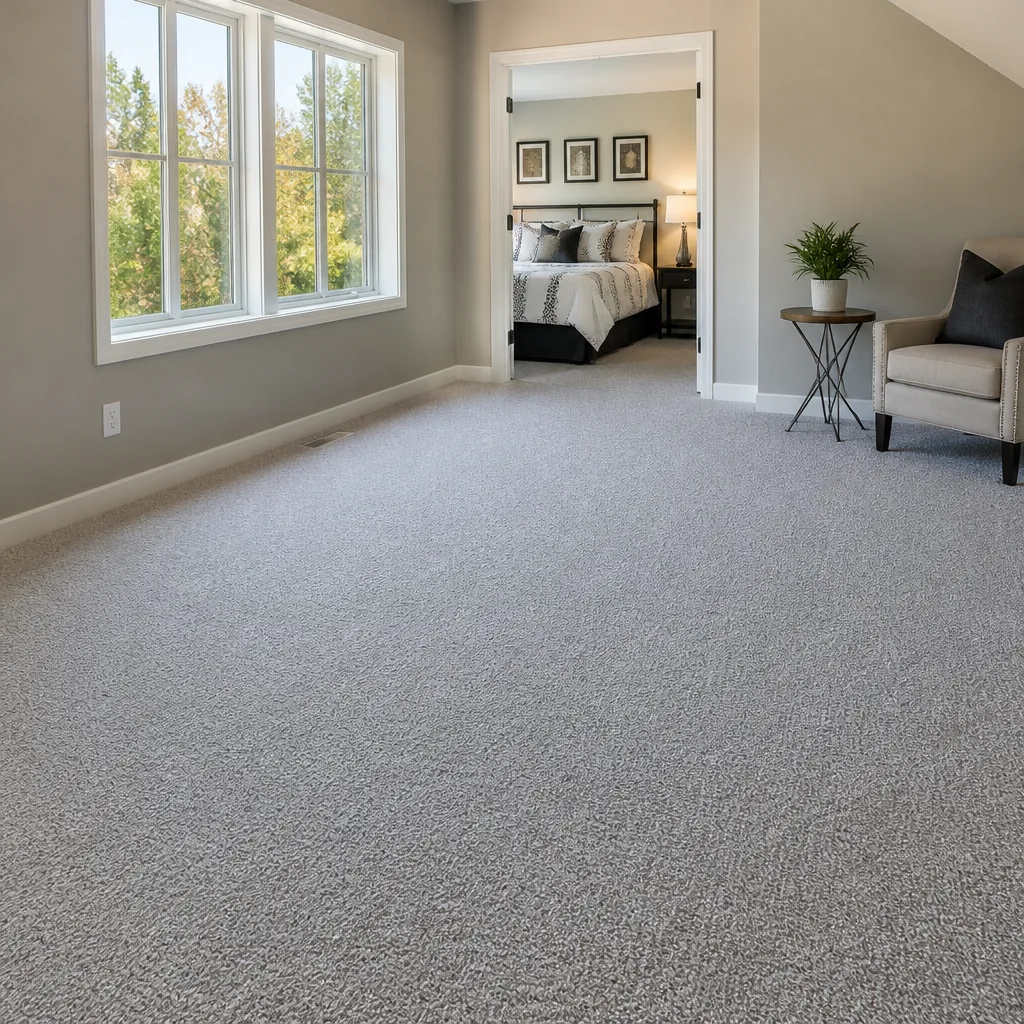 Carpet
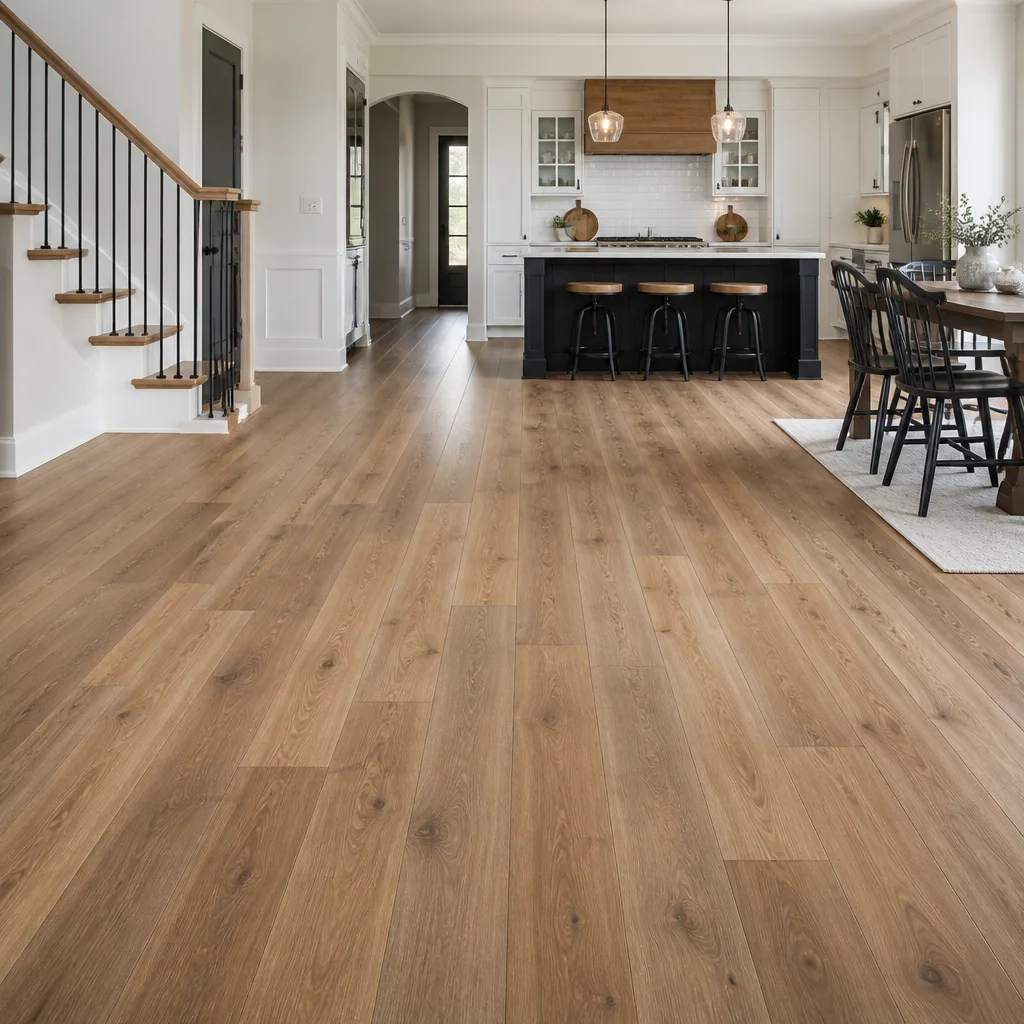 Shaw
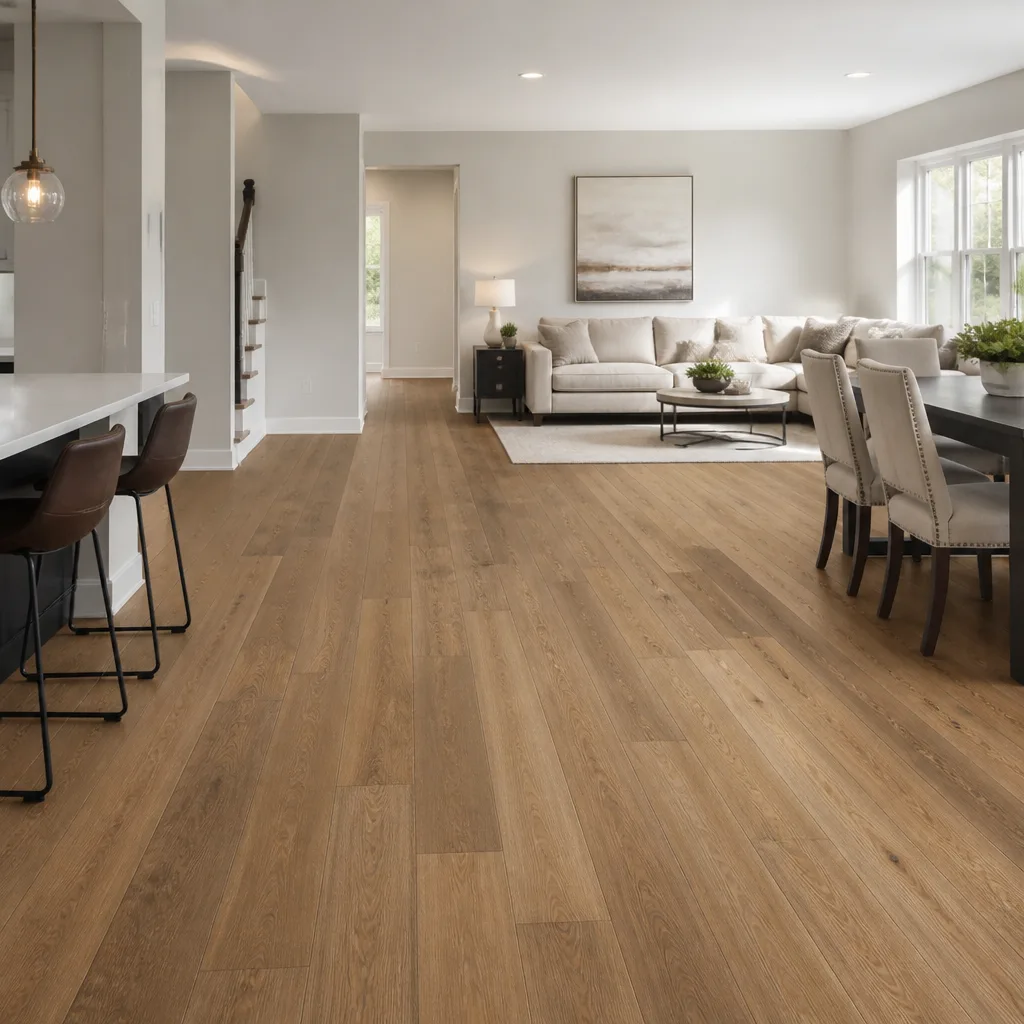 Mohawk
 COREtec
 Pergo
Free in-home measure and written estimate: Shaw, Mohawk, COREtec and Pergo lines compared on your own rooms, with carpet, tile, vinyl plank, laminate and hardwood laid out side by side
Get your free estimateChoosing the Right Flooring for Every Room in Enterprise Homes
A solid red oak floor in an Enterprise master bedroom looks stunning on day one – and can show edge gaps wide enough to lose a dime by February if the homeowner runs forced-air heat without humidity control. The room matters, but so does the microclimate inside it. Most flooring guides hand you a single chart: carpet in bedrooms, tile in baths, wood in living rooms. That chart ignores the three variables that actually decide whether a floor survives in southern Nevada: how close the room sits to the exterior slab edge, whether the house has a whole-house humidifier, and how the local resale market scores different finishes at appraisal. This guide walks through each room of an Enterprise home and explains which floor holds up, which one fails early, and why.
Quick Answer
The right flooring for each room in an Enterprise home depends on moisture exposure and slab conditions more than on style. For kitchens, laundry rooms, and bathrooms, porcelain tile or rigid-core LVP handles the desert slab and occasional plumbing moisture far better than standard vinyl or broadloom. For bedrooms and living areas, engineered hardwood, quality carpet, or brand-name LVP perform well – but in rooms along an exterior slab edge, tile and rigid-core products resist the seasonal movement that causes gaps and cupping. In appraisal terms, hard surface in main living areas and carpet in bedrooms is the combination Las Vegas-area appraisers reward most consistently.
Styles & brands we work with
- Hardwood
- Engineered hardwood
- Luxury vinyl plank
- Laminate
- Porcelain tile
- Carpet
- Shaw
- Mohawk
- COREtec
- Pergo
Table of Contents
- Why the Microclimate Inside an Enterprise Home Matters More Than the Room Name
- Kitchen and Laundry: Tile or Rigid-Core LVP Over Slab
- Master Bedroom: Engineered Hardwood That Handles Humidity Swings
- Home Office and Bonus Rooms: When Carpet Tile Beats Broadloom
- Bathrooms: Grout and Tile Size Combinations That Prevent Cracking
- How the Las Vegas MLS Appraisal System Values Carpet vs. Hard Surface
- Room-by-Room Recommendation Table for Enterprise Homes
- Common Mistakes to Avoid
Why the Microclimate Inside an Enterprise Home Matters More Than the Room Name
Enterprise sits in the Mojave’s transition zone, and the practical consequence for flooring is a house that swings between very dry heated air and brief but real humidity from summer monsoons and plumbing. Three variables determine how a given floor reacts.
1. Proximity to the exterior slab edge
Slabs in Enterprise homes can be large, and the exterior edge of a slab runs noticeably cooler and damper than the interior. A room along that edge – a front bedroom, a corner office – sees more seasonal movement than a room in the middle of the house. Solid hardwood and thin standard vinyl are the products most sensitive to that movement. Engineered hardwood, rigid-core LVP, and tile are far more forgiving.
2. Whole-house humidifier
Homes here often run forced-air heat for long stretches without humidity control. That dry air pulls moisture out of wood and causes shrinkage – which is exactly where the edge gaps in the opening scenario come from. A whole-house humidifier doesn’t make wood floors immune, but it keeps interior relative humidity from dropping as far, which reduces the seasonal gap. If a home doesn’t have one, wood floors in that home need a forgiving construction (more on that below).
3. Neighborhood construction types
Enterprise covers a wide range of housing – from established neighborhoods around the Mountain’s Edge and Southern Highlands edges to newer developments in the south and west. Newer builds often have freshly cured slabs, and post-tension slabs are common in this part of the valley. Both affect which installation method (floating vs. glue-down) makes sense and how much subfloor prep is needed.
None of these three variables shows up in a generic “best flooring for each room” chart. They’re the reason a room-by-room guide for Enterprise looks different from one written for, say, the Pacific Northwest.
Kitchen and Laundry: Tile or Rigid-Core LVP Over Slab
For kitchens and laundry rooms over slab in Enterprise, 12×24 porcelain tile or rigid-core LVP are the two correct calls. Standard vinyl plank and laminate are not. The difference is what happens at the slab, not on top of it.
Why 12×24 porcelain works here
Large-format porcelain over a properly prepared slab gives you a floor that tolerates the slab’s natural moisture vapor movement, cleans easily, and won’t cup, gap, or delaminate from seasonal swings. A 12×24 format means fewer grout lines, which in a kitchen means less to scrub. The tradeoff is that large-format tile requires a flatter subfloor to avoid lippage, so subfloor prep at the estimate stage is not optional – it’s the step that decides whether the installation succeeds.
Why rigid-core LVP beats standard LVP
If the homeowner wants the warmth and quiet of a plank floor rather than tile, rigid-core LVP is the right specification. Rigid-core products like LifeProof build the plank around a rigid core instead of a flexible one, which is what lets them bridge minor slab irregularities and hold their shape through temperature swings. Standard (flexible) vinyl plank can telegraph slab imperfections and react more to heat. In a laundry room or a kitchen with a dishwasher and washing machine, the rigid core is the difference between a floor that stays flat and one that develops visible ridges over time.
Water-resistant is the accurate word for these products, and it’s worth being precise. Standing water from a burst supply line and moisture rising from below the slab still have to be dealt with – no floor product changes that. What rigid-core LVP and porcelain do well is handle the everyday spills, pet accidents, and humidity swings that come with kitchen and laundry use.
What installation involves
- Estimate visit: measure the room, check the slab for moisture and flatness, and confirm the installation method.
- Subfloor prep: grind, patch, or float the slab as needed so the tile or plank sits flat.
- Layout: set expansion gaps at the perimeter for floating plank, or lay out tile so cuts fall where they work.
- Install and finish: set tile with the specified grout, or click/glue the LVP and install baseboard or trim.
For kitchens and laundry rooms, our tile flooring installation covers the prep and grout decisions that make the installation last.
Master Bedroom: Engineered Hardwood That Handles Humidity Swings
A master bedroom in an Enterprise home is where wood flooring feels best and where it’s most likely to misbehave. Engineered hardwood with a 5-ply or 9-ply core, in a wire-brushed finish, is the safest choice when the house doesn’t have a whole-house humidifier. Solid red oak in that same room is where the February edge gaps come from.
Why construction matters more than species
Engineered hardwood is built from layers of wood glued in cross-grain directions – that’s what makes it stable. A 5-ply core is the entry point for stability and does fine in rooms with moderate humidity swings. A 9-ply core is more dimensionally stable still, which is why it’s the better call in a bedroom along the exterior slab edge or in a house where forced-air heat runs hard through winter. The top wear layer determines how many times the floor can be refinished, and that is something the estimate visit checks against the actual floor.
Why wire-brushed
A wire-brushed finish gives the surface a subtle texture that hides the small marks any floor picks up over time and doesn’t show dust or pet hair the way a smooth, glossy finish does. In a desert climate where dry air carries dust, that’s not just cosmetic – it’s a floor that looks the same after a light cleaning as it did the day it went down.
Refinishing as an alternative to replacement
If the bedroom already has wood in reasonable condition, refinishing may be the smarter move than tearing it out. Our Enterprise Flooring Installation team treats refinishing as a real option, not an upsell – extending the life of an existing floor instead of defaulting to replacement. A refinish can’t promise every floor can be sanded or that a new stain will match a sample exactly; that depends on the thickness of the wood and its condition, checked at the estimate visit.
For bedrooms where the homeowner wants carpet rather than wood – and there are good resale reasons for that, covered below – carpet installation across a range of Shaw and Mohawk products gives the room a soft surface and quiet.
Engineered hardwood checklist for the master bedroom
- 5-ply core is workable for a well-controlled room; 9-ply is safer along the exterior slab edge.
- Wire-brushed finish holds up to dry-air dust and light traffic better than a smooth gloss.
- Keep the relative humidity in the house from swinging wildly – a whole-house humidifier helps.
- Confirm whether the existing floor can be refinished before pricing a full replacement.
Home Office and Bonus Rooms: When Carpet Tile Beats Broadloom
For a home office or bonus room in Enterprise that doubles as pet space, commercial-grade carpet tile from lines like Shaw Contract or Interface outperforms broadloom. Carpet tile handles the two things that ruin broadloom in these rooms: localized pet accidents and high-traffic wear patterns.
Why carpet tile
Broadloom is one continuous piece. A stain, a burn, or a pet accident means either living with it or replacing a large section. Carpet tile is individual tiles. If one is damaged, it can be pulled and replaced without touching the rest of the floor. In a bonus room where the dog spends time and the kids use the space for play, that’s the difference between an easy fix and a major project.
Commercial-grade density
Commercial-grade carpet tile has a denser construction than residential broadloom, which is what lets it hold up to a desk chair rolling back and forth and to the constant foot traffic of a room that serves multiple uses. The tradeoff is a firmer hand underfoot – not the plush feel of residential carpet, but a surface that stays put instead of matting. That’s usually the right trade in a home office, and it’s a better long-term value for a bonus room.
Where broadloom still wins
Carpet tile isn’t the answer everywhere. In bedrooms where comfort underfoot matters most and pet accidents aren’t a factor, plush broadloom in a Shaw or Mohawk line is the better feel. The recommendation depends on how the room is actually used, which is the conversation the estimate visit is for.
Bonus room carpet tile decisions
- Assess the room: is it primarily pets, kids, or adult workspace? That decides the pile and backing.
- Measure and set layout: carpet tile goes down in a repeating grid; confirming the grid at the estimate prevents waste.
- Choose the tile: commercial-grade lines from Shaw Contract or Interface, matched to the room’s use.
- Install: tackless or adhesive method as specified for the chosen product and subfloor.
Bathrooms: Grout and Tile Size Combinations That Prevent Cracking
For a bathroom over slab in Enterprise, porcelain tile with a flexible modified grout, in a format larger than 12×12, is the combination most resistant to cracking. The two failure points in a slab bathroom are tile size (smaller formats and mosaics concentrate the slab’s minor flex) and grout type (rigid grout cracks; flexible modified grout moves with the slab).
Why slab flex matters
Even a well-poured slab moves slightly – from temperature changes, from the settling of a house, and from the concentrated weight of a bathroom’s plumbing fixtures. Small tile and small grout lines concentrate that movement into narrow joints that can crack. Larger tile spreads the stress across fewer, wider joints. That’s why a bathroom floor over slab in Enterprise is usually better in a larger format than the decorative mosaic look, even though mosaics photograph well.
Grout type
Cementitious grout cures hard and rigid, and when the slab underneath flexes even slightly, that grout has nowhere to go. A modified flexible grout (often called a flexible modified or single-component grout) has some give. On a slab with any minor flex, that’s the difference between a floor that stays tight for years and one that develops hairline cracks. In a bathroom, cracks matter more than anywhere else because that’s where water intrusion starts.
Waterproofing layer
Tile and grout are not waterproof on their own. In a shower or a full bathroom, the waterproof membrane underneath the tile system is the actual barrier. That’s a separate decision from the tile itself, and it’s one worth confirming explicitly at the estimate rather than assuming.
Bathroom tile checklist
- Larger format (12×24 or larger) reduces grout line count and concentrates flex across fewer joints.
- Flexible modified grout moves with the slab better than rigid cementitious grout.
- Confirm the waterproofing membrane as an explicit line item in the estimate.
- Check the slab for flatness before laying – particularly in older Enterprise bathrooms.
How the Las Vegas MLS Appraisal System Values Carpet vs. Hard Surface
In the Las Vegas-area appraisal market that Enterprise homes are sold through, the combination most consistently rewarded is hard surface in main living areas and carpet in bedrooms. A whole-home hard surface finish can appraise well, but it’s not automatically worth more than a mixed floor plan – and in some cases, over-flooring a home works against the appraisal.
What appraisers actually note
Appraisers record floor covering as part of the property condition assessment. They typically differentiate between carpet, hard surface (tile, wood, laminate, vinyl), and mixed. A mixed finish – carpet in bedrooms, hard surface in living areas, kitchen, and baths – reads as a well-maintained, appropriately finished home. A home with carpet in main living areas and tile in bedrooms reads as a mismatch, and that can affect the appraisal as a functional issue.
Why bedrooms often stay carpeted
Buyers in the Las Vegas-area market generally expect carpet in bedrooms. Sound absorption, warmth underfoot, and the softer feel are the reasons. A home with hard surface throughout can sell, but it can also prompt a buyer to price in carpet replacement. That’s why a mixed finish – carpet in bedroom areas, hard surface everywhere else – is the safer resale decision for most Enterprise homes.
What doesn’t show up in appraisal value
Brand names and specific product lines don’t usually factor into appraisal value on their own. An appraiser notes “tile” or “wood” or “carpet,” not the manufacturer. But quality matters for the inspection side of a sale: a floor that’s gapping, cupping, or visibly worn can get flagged as deferred maintenance. Choosing a floor from a brand with a strong service reputation – Mannington, Armstrong, Shaw, or Daltile, all of which we install – protects that inspection outcome.
Resale-focused flooring decisions
- Default to mixed finish: carpet in bedrooms, hard surface in living, kitchen, and baths.
- Match grade to price point: budget-accessible lines (Pergo entry-level, for example) are fine in a mid-market home; designer vinyl (Karndean) in a higher-tier home.
- Fix problem floors before listing: a gapping or cupping floor is deferred maintenance an appraiser will note.
- Avoid whole-home customization that doesn’t match buyer expectations in the area.
Room-by-Room Recommendation Table for Enterprise Homes
Here’s the short version by room, using the brand names we install. Nine trusted brands. One installation crew – that’s the reason a mixed-material project across a whole Enterprise home is easier with one installer than several.
- Kitchen: 12×24 porcelain tile (Daltile) or rigid-core LVP (LifeProof). Why: slab moisture tolerance and easy cleaning.
- Laundry: rigid-core LVP (LifeProof) or porcelain (Daltile). Why: same moisture reasons as kitchen.
- Master bedroom: engineered hardwood (5-ply or 9-ply, wire-brushed) or plush carpet (Shaw, Mohawk). Why: engineered core for RH swings; carpet for warmth and resale.
- Secondary bedrooms: plush carpet (Shaw, Mohawk). Why: consistent with appraisal expectations.
- Living areas: engineered hardwood, rigid-core LVP (COREtec, Karndean), or tile (Mannington, Armstrong). Why: hard surface where traffic is heaviest.
- Home office / bonus room: commercial-grade carpet tile (Shaw Contract, Interface). Why: replaceable tiles, dense construction for multi-use rooms.
- Bathrooms: large-format porcelain (Daltile) with flexible modified grout. Why: resists slab flex; waterproofing layer handles the rest.
Every price is set per job by a written estimate after the estimate visit. If you’re curious about service in the broader area, our Enterprise page covers the local side.
Common Mistakes to Avoid
- Choosing solid hardwood for a bedroom without humidity control. Solid red oak in a heated Enterprise room with no whole-house humidifier is where winter edge gaps come from. Engineered hardwood with a 5-ply or 9-ply core handles the swings far better.
- Specifying standard (flexible) vinyl plank in a kitchen or laundry. Standard LVP can telegraph slab irregularities and react to heat. Rigid-core products like LifeProof are built for these rooms.
- Skipping the subfloor prep line item. Large-format tile over a slab needs a flat surface. If the estimate doesn’t include prep, the installation is at risk.
- Choosing a mosaic bathroom floor for looks over slab flex. Smaller formats and rigid grout crack first. A larger format with flexible modified grout is the better call over slab.
- Over-flooring a home before resale. A whole-home hard surface look isn’t automatically a value bump in the Las Vegas-area appraisal market. Mixed finish – carpet in bedrooms, hard surface elsewhere – is the safer default.
- Installing broadloom in a bonus room with pets. A single stain or accident in broadloom means living with it. Carpet tile can have one tile replaced.
- Assuming a wood floor can be refinished without checking thickness and condition. Not every floor can be sanded, and a stain won’t always match a sample. Confirm at the estimate visit before pricing replacement.
See the difference
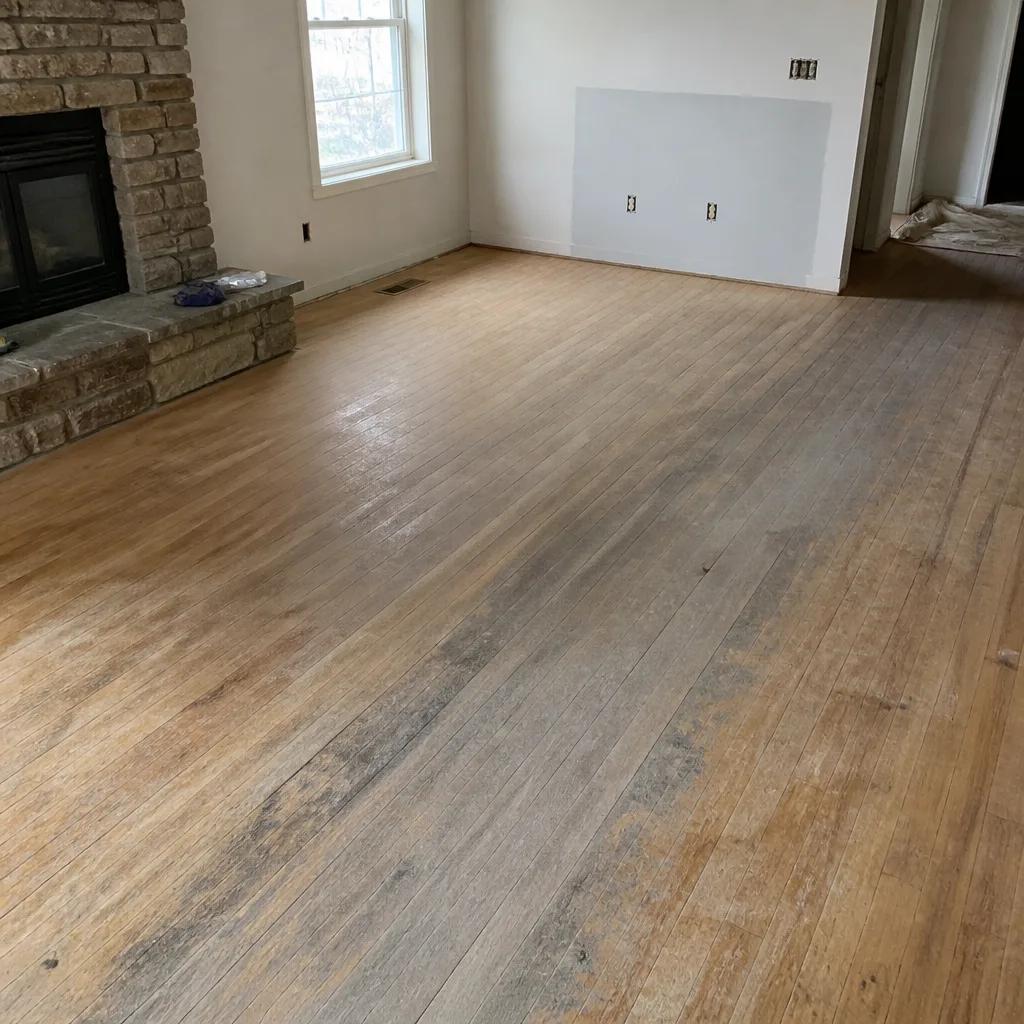 Before
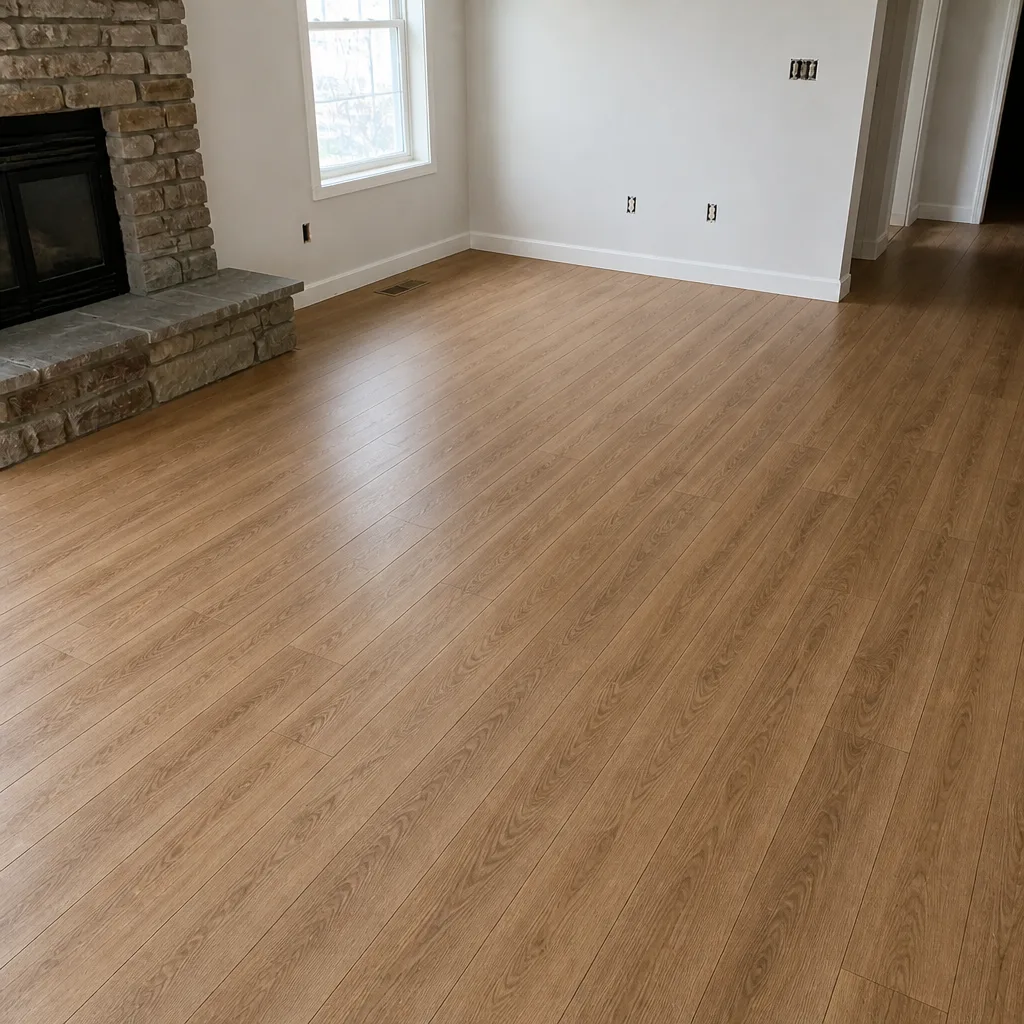 After
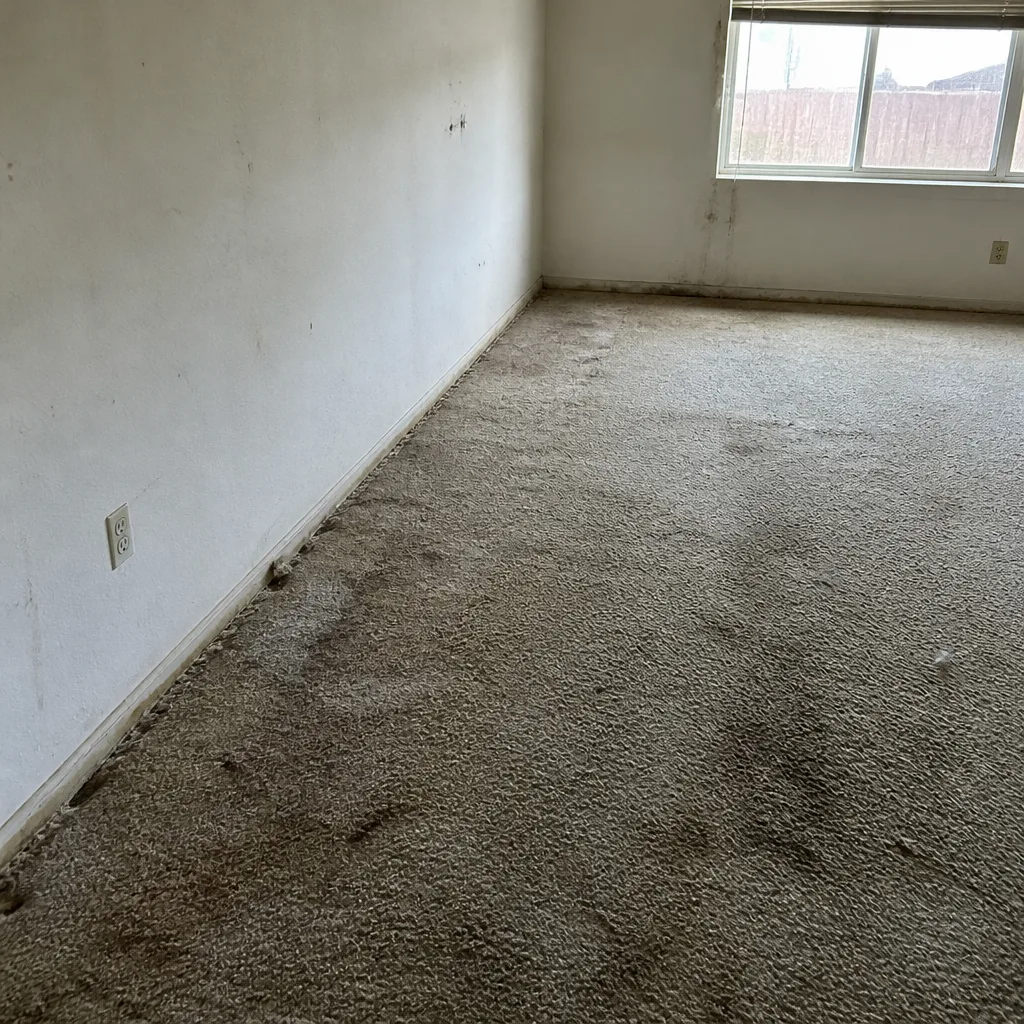 Before
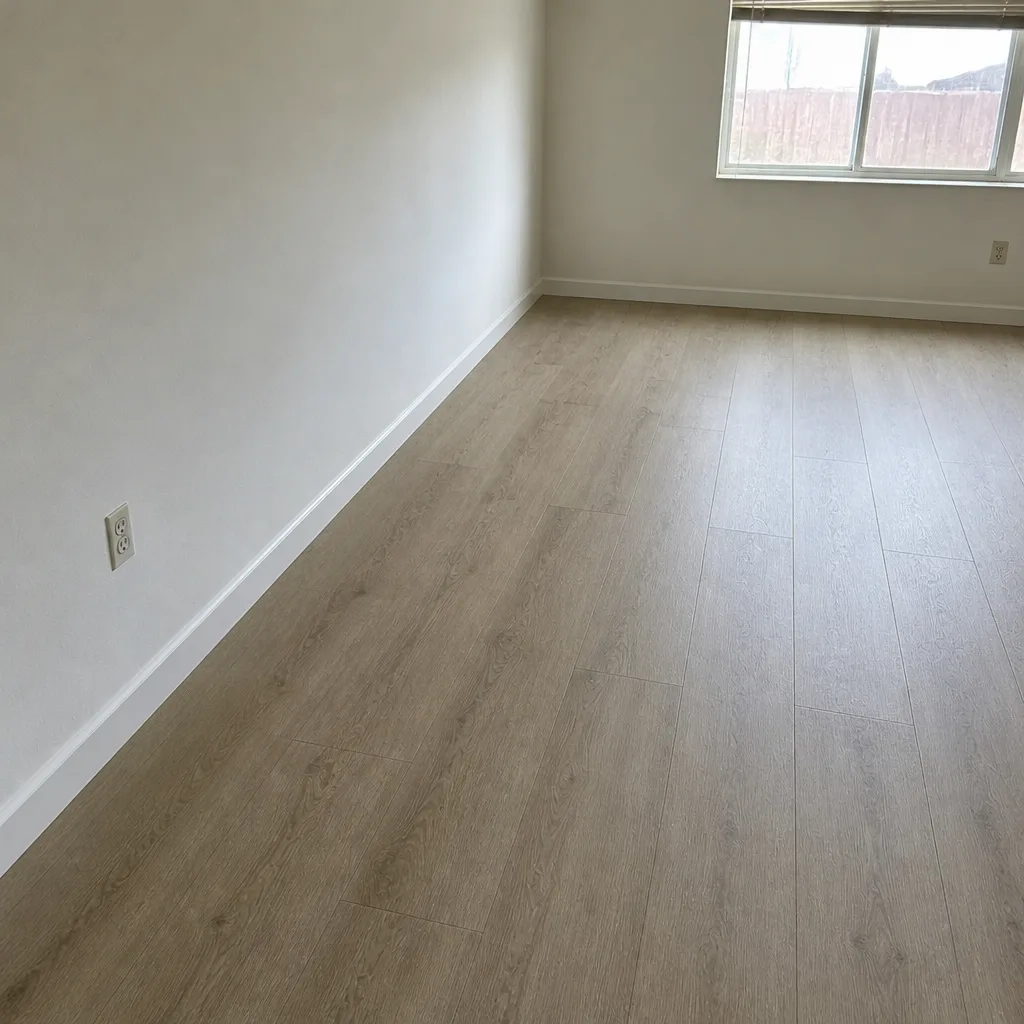 After
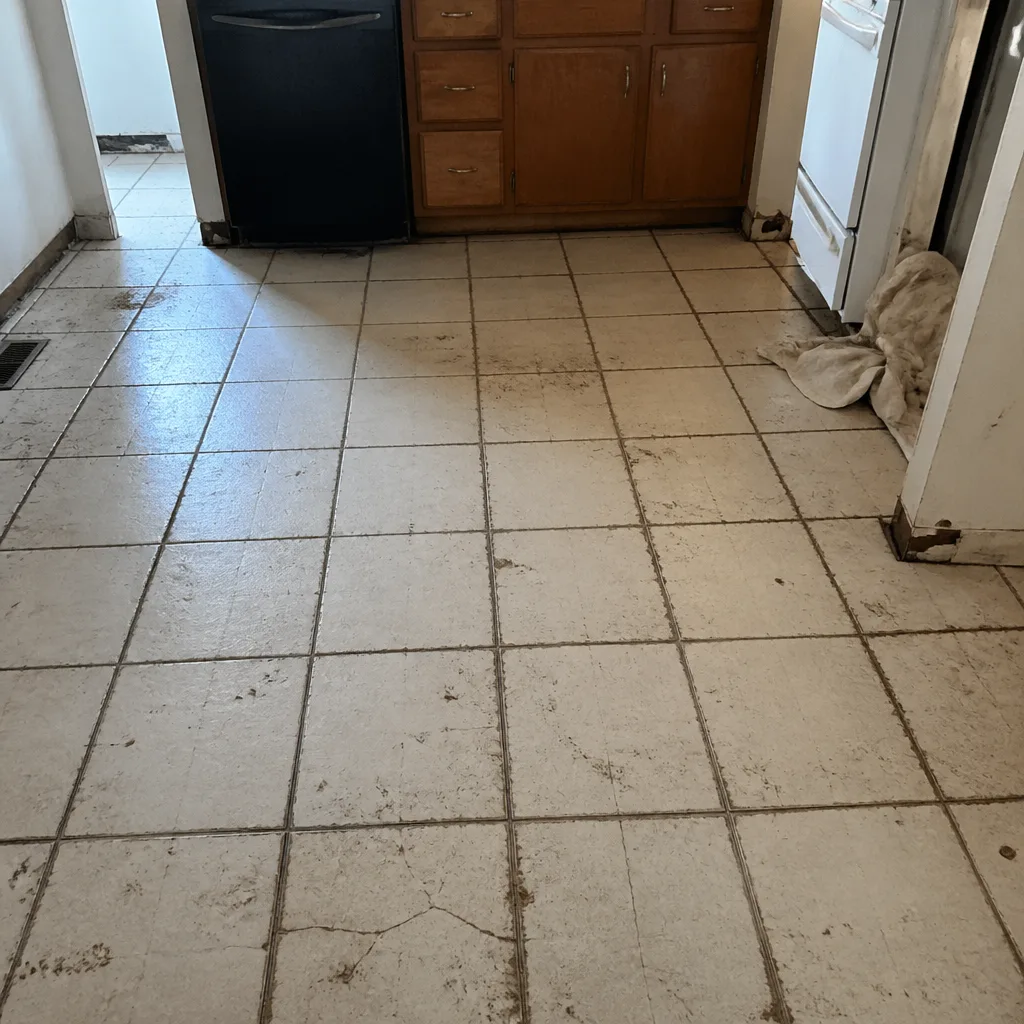 Before
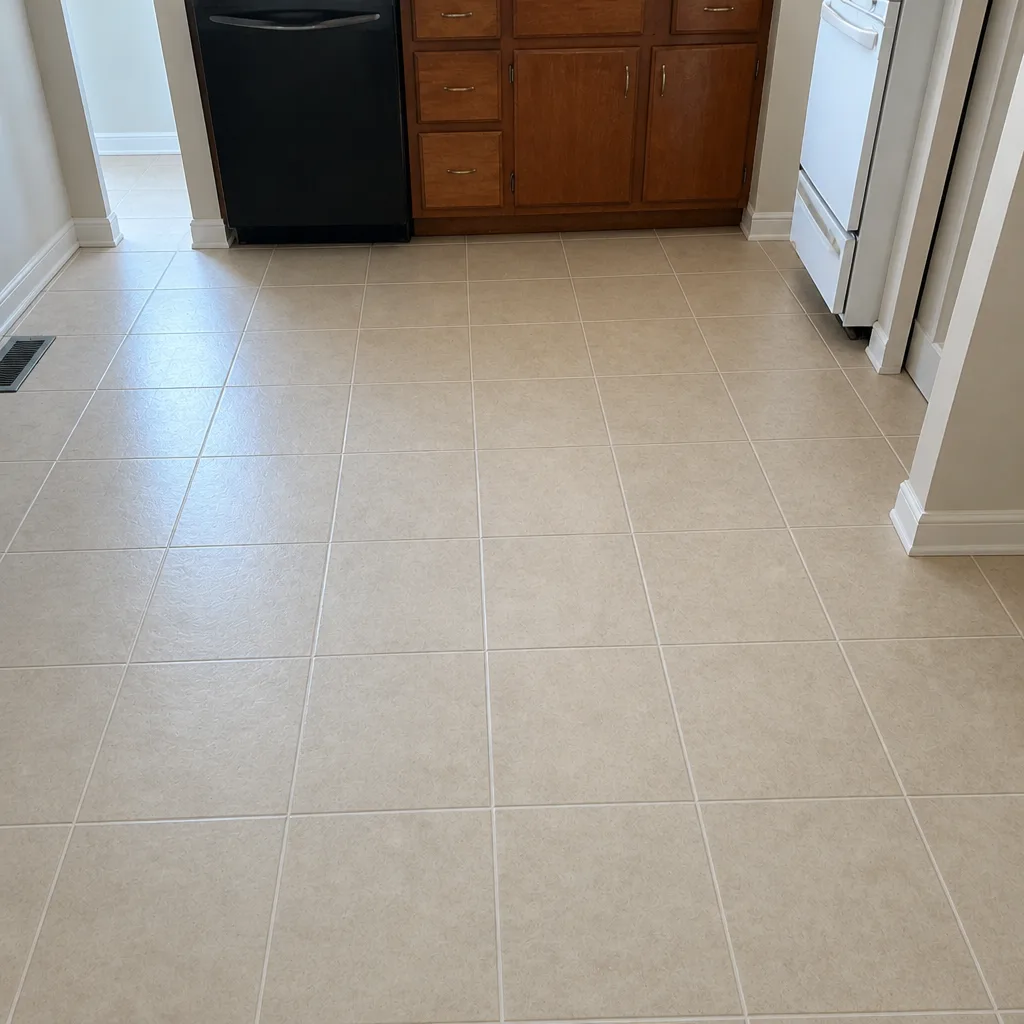 After
When to Call a Professional
Call a professional when the floor is gapping, cupping, or lifting, when the subfloor needs prep before tile, when a mixed-material project spans several rooms, or when a refinish decision needs an honest condition check. Those are the cases where an estimate visit pays for itself. Enterprise Flooring Installation offers free estimates in Enterprise – call (833) 620-6314. We install carpet, tile, and hardwood from nine manufacturer brands including Shaw, Mohawk, COREtec, Pergo, LifeProof, Mannington, Armstrong, Daltile, and Karndean. Our technicians have up to 12 years of experience, so a room-by-room scope gets a real recommendation rather than a single template answer. Same-day service is available in some cases, and the estimate sets the final price.
Frequently Asked Questions
The best kitchen flooring in Enterprise is 12×24 porcelain tile or rigid-core LVP over a properly prepared slab. Porcelain tolerates slab moisture movement and cleans easily; rigid-core products like LifeProof resist heat and hold their shape where standard vinyl plank can’t. Call (833) 620-6314 for an exact quote – estimates are free.
Yes, carpet in bedrooms is the expectation in most Enterprise homes. Appraisers typically record mixed finish – carpet in bedrooms, hard surface in living, kitchen, and baths – as well-finished. A home with hard surface everywhere can sell, but buyers may price in carpet replacement. Call (833) 620-6314 for a free estimate.
Rigid-core LVP is the correct call for a laundry room over slab. Standard flexible vinyl plank can telegraph slab irregularities and react more to heat, while rigid-core products bridge minor slab imperfections and hold their shape through temperature swings. Call (833) 620-6314 for an exact quote – estimates are free.
It can if the home runs forced-air heat without humidity control. Dry heated air pulls moisture out of solid wood, causing shrinkage and edge gaps. Engineered hardwood with a 5-ply or 9-ply core and a wire-brushed finish handles the humidity swings far better. Call (833) 620-6314 to talk through the room.
Yes, and for a bonus room that doubles as pet space, commercial-grade carpet tile from lines like Shaw Contract or Interface generally outperforms broadloom. Individual tiles can be replaced when damaged, and the denser construction handles high-traffic wear. Call (833) 620-6314 to learn more.
Cost varies by material, room size, and subfloor prep requirements, which is why we set the price per job after the free estimate visit rather than quoting a flat rate. The written estimate sets the final price. Call (833) 620-6314. We answer 24/7. Fast dispatch from 7am to 7pm, Sunday through Friday.
The Bottom Line
Room-by-room flooring in Enterprise comes down to slab conditions and climate, not a generic chart. Kitchens, laundry, and baths want porcelain tile or rigid-core LVP. Bedrooms want engineered hardwood with a stable core or plush carpet from Shaw or Mohawk. Home offices and bonus rooms benefit from commercial-grade carpet tile. And in the Las Vegas-area appraisal market, mixed finish – carpet in bedrooms, hard surface everywhere else – is the safest resale choice. Nine trusted brands. One installation crew, covering carpet, tile, and hardwood refinishing across every room of an Enterprise home.
Ready to price your project? Call (833) 620-6314 to schedule your free estimate. We answer 24/7. Fast dispatch from 7am to 7pm, Sunday through Friday. Every recommendation starts with an in-home estimate visit and a written price, and the written estimate sets the final price.
Written by the team at Enterprise Flooring Installation.