
Last updated November 17, 2026
 Hardwood
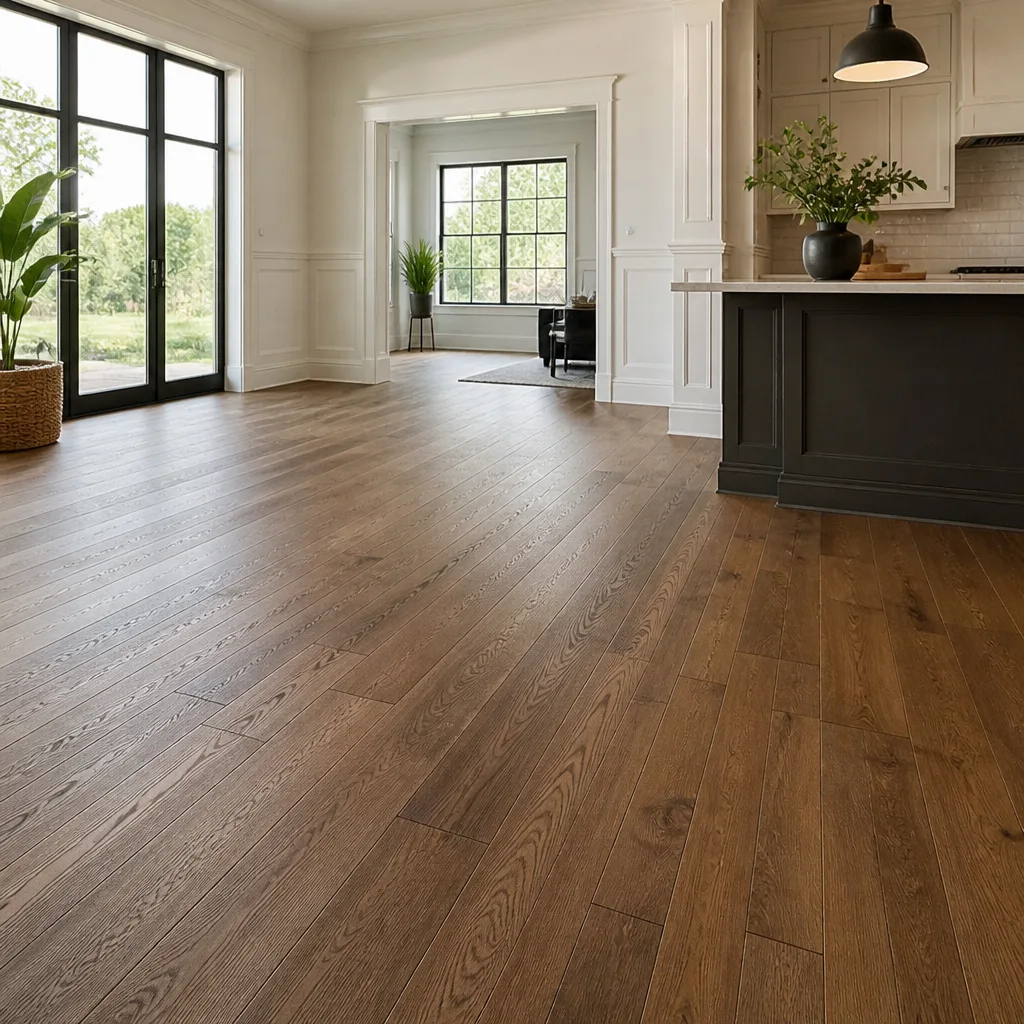 Engineered hardwood
 Luxury vinyl plank
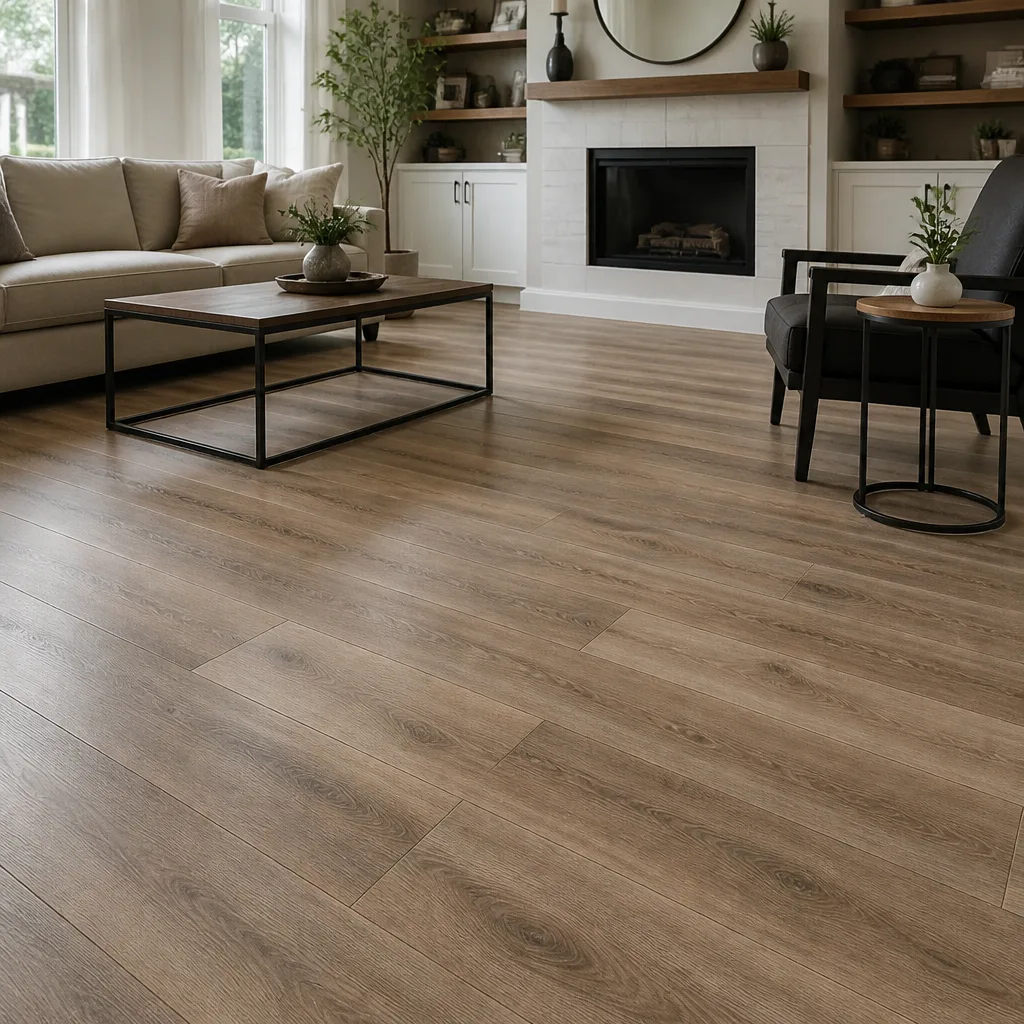 Laminate
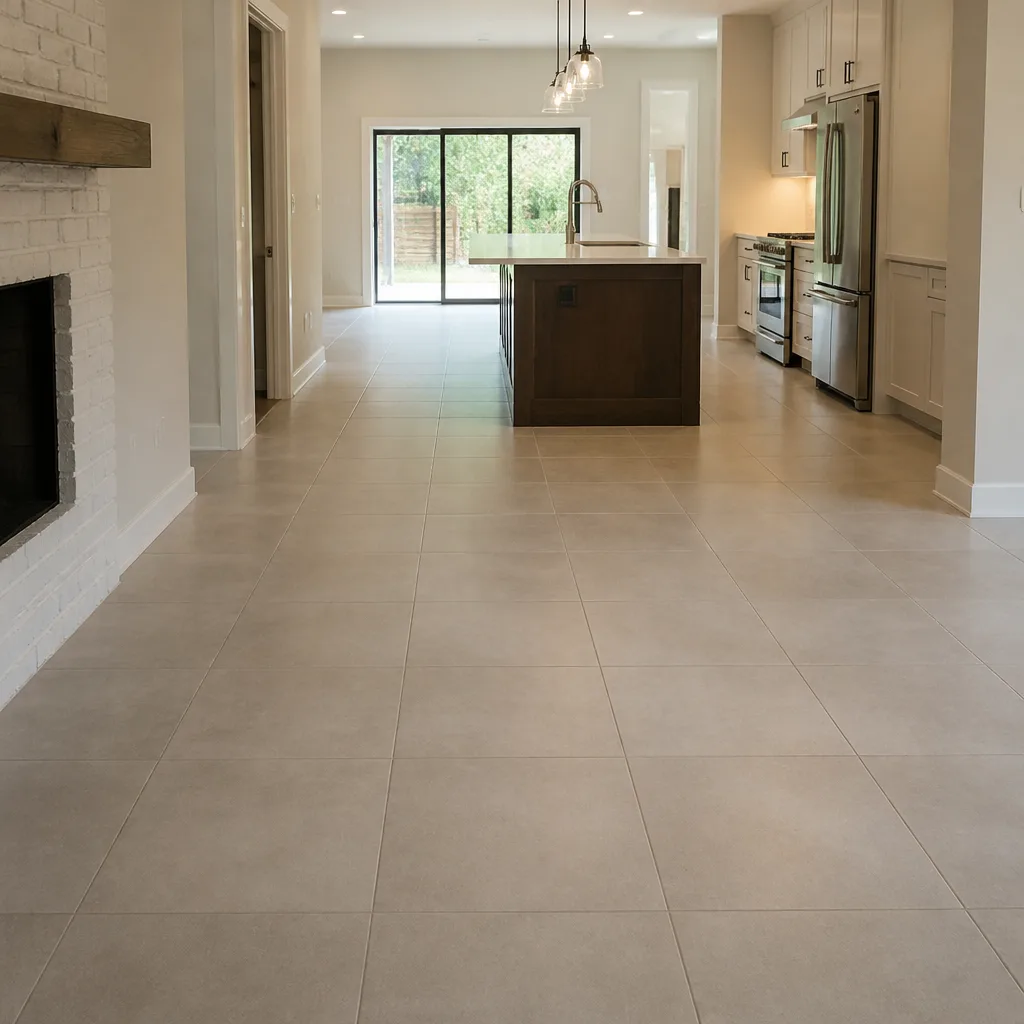 Porcelain tile
 Carpet
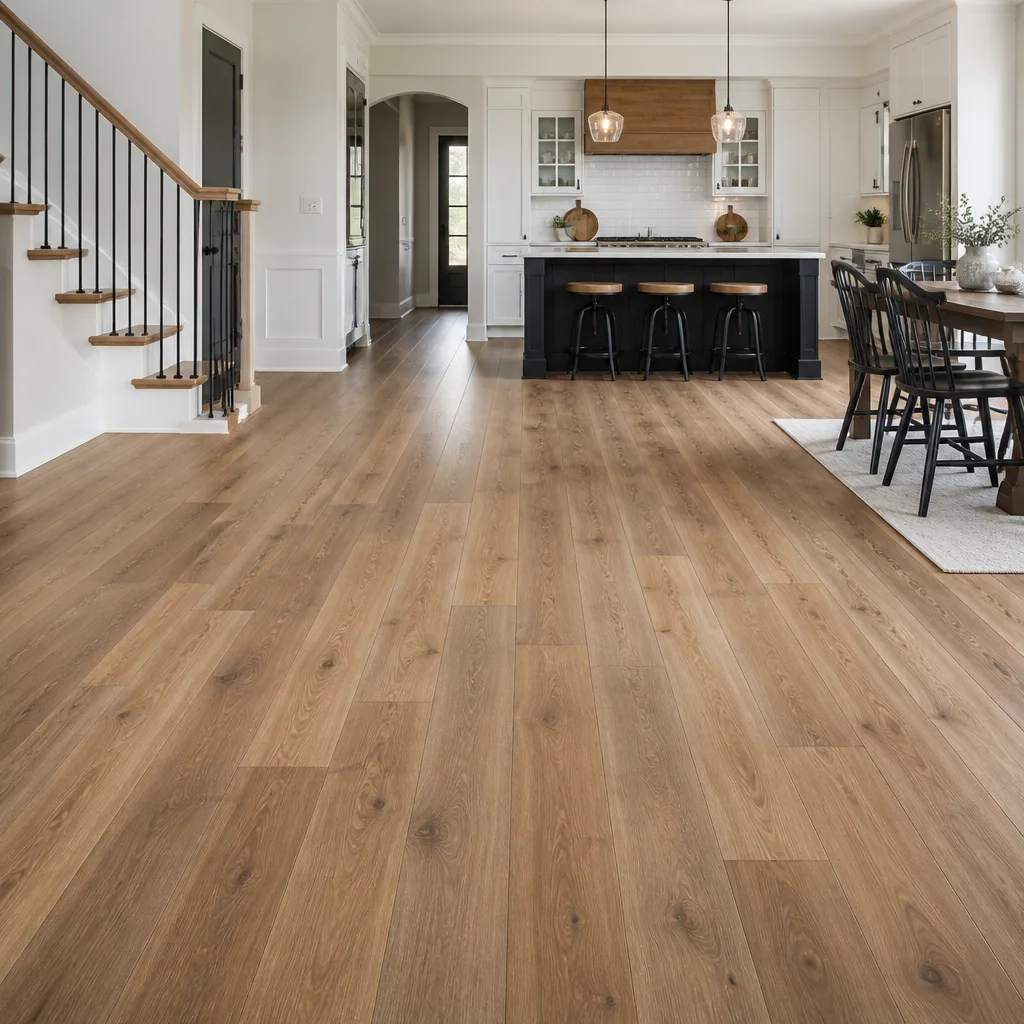 Shaw
 Mohawk
 COREtec
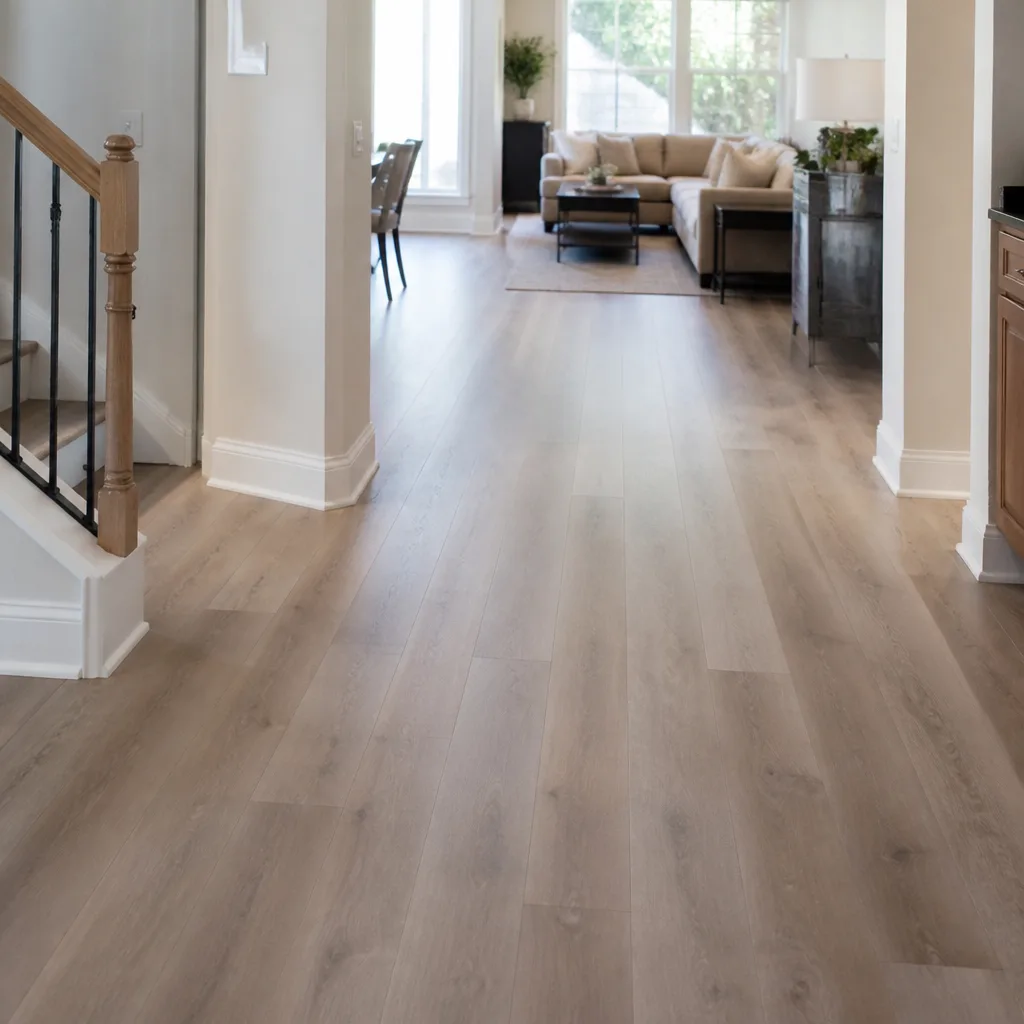 Pergo
Free in-home measure and written estimate: Shaw, Mohawk, COREtec and Pergo lines compared on your own rooms, with carpet, tile, vinyl plank, laminate and hardwood laid out side by side
Get your free estimateHow to Care for New Flooring: Hardwood, Vinyl, Laminate, Tile and Carpet
Most flooring advice tells you to worry about foot traffic. In Enterprise, that’s rarely what ends a floor early. Two quieter forces do the damage: ultraviolet light pouring through south- and west-facing windows, and a humidity swing that runs from monsoon-muggy summers to bone-dry winters once the furnace starts cycling. A hardwood floor can be installed perfectly and still gap at the seams by February, and a vinyl plank in a sun-baked family room can fade years before its wear layer gives out. None of that is a manufacturing defect. It’s a maintenance gap. This guide walks through the care routine for each surface we install – hardwood, luxury vinyl and SPC, laminate, tile and grout, and carpet – with the climate of Enterprise baked into every recommendation.
Quick Answer
Keep indoor relative humidity between 35% and 55% year-round, block direct sun on wood and vinyl with film or shades, vacuum carpet often enough to lift abrasive desert dust before it grinds into the fiber, seal grout on a yearly schedule, and clean laminate only with products made for laminate. Those five habits prevent the vast majority of premature flooring failure in an Enterprise home. Everything below explains how to do each one properly.
Styles & brands we work with
- Hardwood
- Engineered hardwood
- Luxury vinyl plank
- Laminate
- Porcelain tile
- Carpet
- Shaw
- Mohawk
- COREtec
- Pergo
Table of Contents
- Why Humidity Control Comes Before Everything Else
- Hardwood Care: Holding 35-55% RH Through an Enterprise Winter
- Luxury Vinyl and SPC Care: UV Film Is Maintenance, Not Luxury
- Laminate Care: The Wrong Cleaner Does More Damage Than Water
- Tile and Grout Care: A Sealing Schedule That Actually Holds
- Carpet Care in a High-Dust Desert Home
- A Seasonal Care Calendar for Enterprise Homes
- Common Mistakes to Avoid
Why Humidity Control Comes Before Everything Else
Wood moves. It takes on moisture and swells, gives it up and shrinks. That’s normal, and every hardwood floor is built to tolerate some movement. What it isn’t built to tolerate is a home that swings from humid summer air to furnace-dried winter air with nothing in between. When indoor relative humidity sits well below 35% for weeks, wood shrinks and the seams open into visible gaps. When it climbs too high, boards cup at the edges. Both are care problems, and both are fixable before they start.
The dry stretch is the one that catches Enterprise homeowners off guard. Once the heat runs from November into March, indoor air in a typical forced-air home dries out fast, and a homeowner never notices until the floor tells them. Here’s how to hold a stable range:
- Buy a hygrometer. An inexpensive digital humidity gauge in the main living area tells you what’s actually happening instead of what you assume. Check it weekly through the heating season.
- Add moisture deliberately in winter. A whole-home bypass or steam humidifier tied into the forced-air system delivers the most consistent humidity room to room. Portable console humidifiers work for a single large room, but they need refilling and they struggle to keep up in an open floor plan. Avoid the small ultrasonic units marketed for bedrooms; they put out a narrow plume and won’t move the needle on a whole floor.
- Pull moisture out in monsoon season. Late-summer humidity pushes indoor levels up. Run the air conditioning and, where needed, a dehumidifier to keep the house under 55%.
- Keep the gauge honest. If a room reads 28% in January, the floor in that room is shrinking. Fix the humidity, not the floor.
We install hardwood across Enterprise, from the older established neighborhoods near the civic center out to newer builds on the valley’s edges, and the pattern holds everywhere: homes with a humidity plan keep tight floors, and homes without one call us about gaps. New installations are only the start of the story – proper care keeps them looking right.
Hardwood Care: Holding 35-55% RH Through an Enterprise Winter
Hardwood care is 80% climate management and 20% cleaning. Get the humidity right and the floor largely takes care of itself. The target is 35% to 55% relative humidity, held as steady as you can manage. Below that, expect gapping. Above it, expect cupping and, eventually, finish problems.
Everyday care for a hardwood floor
- Dry-mop or dust-mop often. Desert dust is abrasive. A microfiber mop picks it up without scratching; a broom pushes some of it around.
- Wipe spills promptly. Standing water on a wood floor is never fine, even on a factory finish. Blot, don’t soak.
- Use a cleaner made for sealed hardwood. Never a steam mop, never a wet string mop, never an all-purpose spray cleaner.
- Felt pads under every leg of furniture. And lift furniture to move it, don’t slide it.
- Keep grit off the floor at entries. A walk-off mat at every exterior door keeps the worst of the dust and grit from ever reaching the wood.
What refinishing can and can’t fix
Refinishing is the alternative to tearing out a floor you’re unhappy with. Sanding back the old finish and applying a new one restores color and sheen and can solve a lot of superficial wear. Whether your specific floor can be refinished depends on the thickness of the wood above the tongue and its overall condition – that’s something we check at the estimate visit, not something anyone can promise over the phone. The same rule applies to a stain match: a sample helps, but no responsible installer guarantees an exact color match to a photo or a swatch on a different species. We offer Enterprise Flooring Installation services across carpet, tile, and hardwood, and refinishing sits alongside new installs as a service we take on.
Luxury Vinyl and SPC Care: UV Film Is Maintenance, Not Luxury
Luxury vinyl plank is the most forgiving floor in this climate, but that doesn’t make it maintenance-free. Vinyl and rigid-core SPC floors are susceptible to color fade from direct sunlight, and in an Enterprise home with a big west-facing window, sun-exposed LVP will fade faster than the same floor in a shaded hallway. UV-blocking window film is not an upgrade you add for aesthetics – it’s a maintenance item, and it belongs on any window that puts direct sun on a vinyl floor for hours a day.
COREtec’s rigid core and similar products are water-resistant, which makes them a sensible pick for kitchens, bathrooms, laundry rooms, and basements. Water-resistant is not waterproof, though. Standing water and moisture wicking up from a damp slab still need to be dealt with, not ignored. A slow leak under a dishwasher can still get into the seams of a rigid-core plank if it runs for weeks.
Caring for vinyl and SPC
- Add UV window film to sun-exposed windows. This protects the vinyl, and it protects hardwood and carpet too.
- Sweep or vacuum often. Vinyl hides dust until it scratches; grit is the enemy.
- Clean with a damp mop and a pH-neutral cleaner. No steam mops, no abrasive pads, no bleach-heavy products.
- Wipe spills promptly, and don’t let water pool at seams or under appliances.
- Use felt pads under furniture. Yes, even on “tough” vinyl. Scratches happen.
If you’re still deciding on a floor type, our team installs brands across the spectrum, from COREtec to Karndean and Shaw, and we’ll walk you through which fits your sun exposure and moisture risk. If you’ve already selected a floor, carpet installation, or tile, the care routines on this page are the ones to follow from day one.
Laminate Care: The Wrong Cleaner Does More Damage Than Water
Ask what ruins a laminate floor faster than a spilled glass of water, and the answer isn’t water. It’s the wrong cleaner. A laminate wear layer is built around an aluminum oxide surface, which handles scuffs and daily traffic well but is vulnerable to the wrong chemistry. Ammonia-based glass cleaners, bleach-heavy disinfectants, oil-based “floor polish” and any product labeled for “shine restoration” on vinyl can dull or strip the wear layer and leave a streaky, hazy finish that can’t be buffed back. Once the wear layer is compromised, the floor can’t be restored.
Safe to use on laminate
- A pH-neutral laminate-safe cleaner, diluted per label.
- A barely-damp microfiber mop. The floor should dry in seconds.
- Plain water on a nearly dry mop for touch-ups.
Not safe on laminate
- Anything with ammonia (most glass cleaners).
- Bleach-based disinfectant sprays and wipes.
- Oil-based polishes or “shine” products.
- Steam mops, wet string mops, or any cleaner you pour on the floor.
- Abrasive scrubbing pads.
Beyond cleaning, laminate care is about keeping liquid off the seams and humidity in its normal indoor range. Laminate core boards swell at the seams if water sits, which is a much harder problem to fix than a scratched finish. A mat at the kitchen sink and a quick wipe-up at any spill go a long way.
Tile and Grout Care: A Sealing Schedule That Actually Holds
Tile itself is close to indestructible. Grout is the soft spot, and grout care in Enterprise has its own wrinkle: the water here runs hard and tends to be alkaline, which shapes what you clean with and how often you reseal. Sanded grout is more porous and absorbs more, so it schedules differently than unsanded grout.
A grout sealing schedule
- Sanded grout in a floor or shower: reseal every 12 months. Sanded grout has more surface area and more absorption, so it needs attention once a year.
- Unsanded grout in a kitchen backsplash or dry area: reseal every 18 to 24 months. Less traffic, less absorption, longer interval.
- Water-test before you reseal. Sprinkle a few drops of water on the grout. If it beads, the seal is still working. If it soaks in, it’s time.
- Clean before sealing. A tile-and-grout cleaner, a soft brush, and a thorough rinse and dry. Sealing over soil is worse than not sealing.
- Choose a penetrating sealer, not a topcoat. Penetrating sealers go into the grout; film-forming topcoats sit on the surface and peel.
Cleaners that hold up with hard water
Alkaline cleaner residue and hard-water scale are the two things that haze grout fastest. Use a tile-and-grout cleaner meant for grout, avoid oil-based cleaners that leave a film, and use a mildly acidic descaler for hard-water deposits. Avoid bleach-heavy cleaners on a regular basis – they can degrade sealers over time. The tile-flooring side of our business handles installs across the full slate of brands including Daltile, but sealing is a homeowner maintenance task that starts the day the tile is installed. For more on tile flooring installation and the materials we work with, this is where attention to grout pays off.
Carpet Care in a High-Dust Desert Home
Carpet in Enterprise takes dirt the way a filter takes it: daily. Dust moves into a home from outside all year, and once it’s in the carpet fiber, every footstep grinds it deeper. The single most important carpet care habit isn’t stain removal – it’s vacuuming often enough to lift the abrasive dust before it abrades the fiber.
Vacuuming by fiber type
- Nylon carpet (common in Shaw and Mohawk lines) holds up well and holds soil less stubbornly than polyester. Vacuum high-traffic areas two to three times a week, and the whole floor once a week.
- Polyester carpet is softer underfoot but crushes and holds soil more easily. Vacuum at least as often as nylon, and add a mid-week pass through entry areas and hallways.
- Wool or wool-blend carpet needs a gentler vacuum setting and no beater-bar scrubbing on loose piles. Vacuum weekly, in slower passes.
Stain and spot care
Blot, don’t rub. Blotting lifts the stain out of the fiber; rubbing works it in. Use a carpet-safe spot cleaner, test in a hidden corner first, and work from the outside of the spot inward. For anything large or set in, call a professional extractor rather than scrubbing harder with a home product.
Hot-water extraction
Deep cleaning is not optional in a desert home. Hot-water extraction every 12 to 18 months in a normal household, and sooner in homes with pets or heavy traffic, keeps the pile from matting and gets out the fine dust a vacuum can’t reach. Schedule it before the dry winter stretch so the carpet isn’t holding dust through the driest months. We install carpet from brands like Shaw and Mohawk – see our carpet installation page for what’s available – but the care routine after install is the homeowner’s daily job.
A Seasonal Care Calendar for Enterprise Homes
Flooring care in Enterprise doesn’t follow a one-size schedule because the weather doesn’t. Here’s how the year breaks down in practical terms:
- Late October: Pull the humidifier out and put it online before the furnace runs hard. Check the hygrometer. Vacuum and deep-clean carpet before the dry season so dust doesn’t set into the pile.
- November through March: Watch indoor humidity weekly. If it falls below 35%, run the humidifier. This is the stretch when every wood floor in the valley lives or dies by that gauge.
- April: Check grout joints. Reseal any sanded grout in wet areas. Inspect window film for bubbling or hazing and replace as needed.
- May and June: Clean vinyl and laminate floors thoroughly before the monsoon season pushes humidity up. Check seals and seams around kitchen sinks and dishwashers.
- July through September: Keep humidity under 55% with AC and a dehumidifier where needed. This is when cupping can start in wood if the indoor humidity goes too high.
- October: A hot-water extraction for the carpet before the dry season runs again. Reseal tile if the year has been a busy one.
If you’re planning a floor update or refinish in Enterprise, the Enterprise page describes the projects we take on, and a written estimate from us will set the price on the work. Our technicians have up to 12 years of experience, and every install we do comes with care guidance matched to the product and the room.
Common Mistakes to Avoid
- Ignoring the hygrometer in winter. Most floor failures we see could have been prevented with a $20 humidity gauge and a working humidifier. If the gauge says 30% in January, don’t wait to fix it.
- Cleaning laminate with a general-purpose spray. Ammonia, bleach, and “shine” products strip the aluminum oxide wear layer faster than any spill. Read the label.
- Steam-mopping a wood, vinyl, or laminate floor. Steam forces moisture into seams and edges that were never meant to see it. Even “waterproof” vinyl has seams.
- Skipping UV window film on sun-exposed rooms. The sun will fade Karndean, COREtec, laminate, and hardwood over time. Film and shades are the cheap insurance.
- Letting grout go unsealed for years. A once-a-year reseal on sanded grout is a two-hour job. Left alone, the grout stains, cracks, and needs regrouting.
- Rubbing stains into carpet instead of blotting. Rubbing works the stain into the fiber, and it abrades the pile surface. Blot, always.
- Sliding furniture across any floor. Felt pads and lifting beats a scratched floor every time.
See the difference
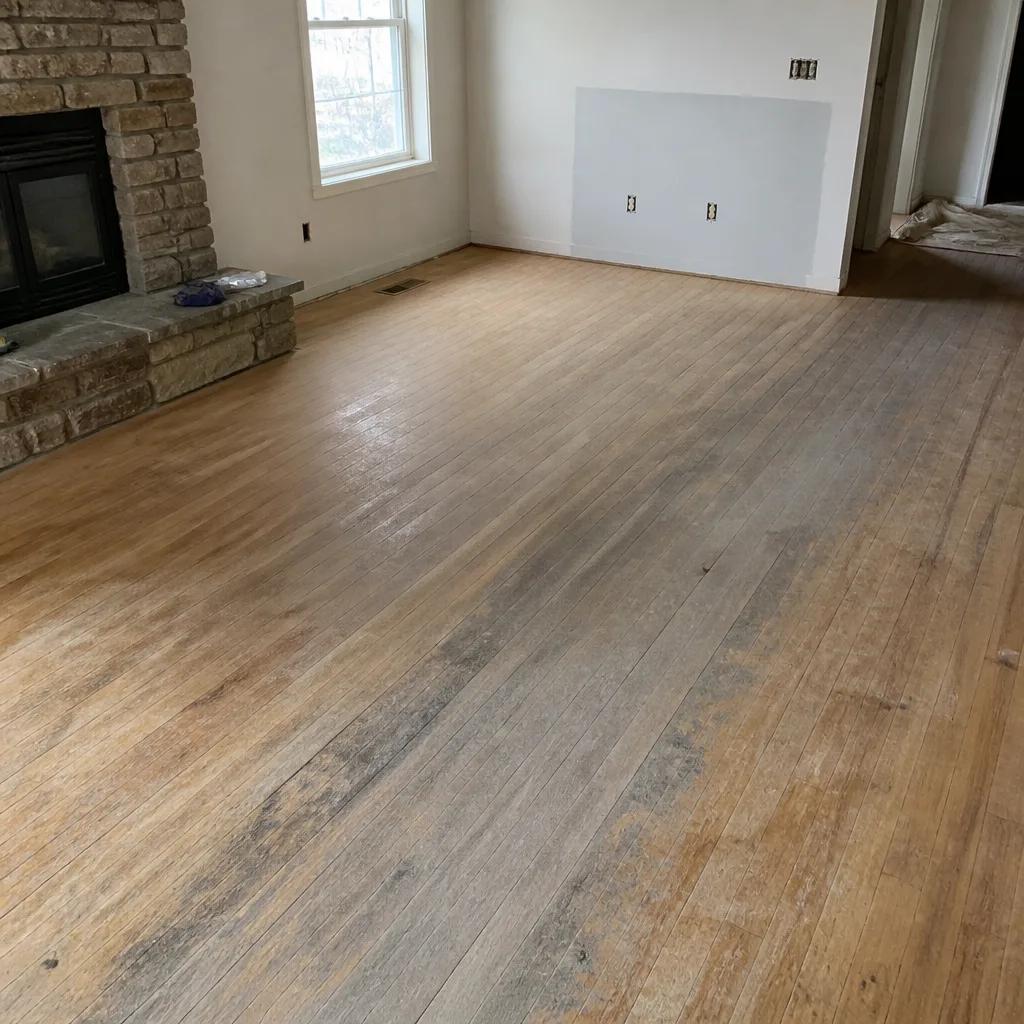 Before
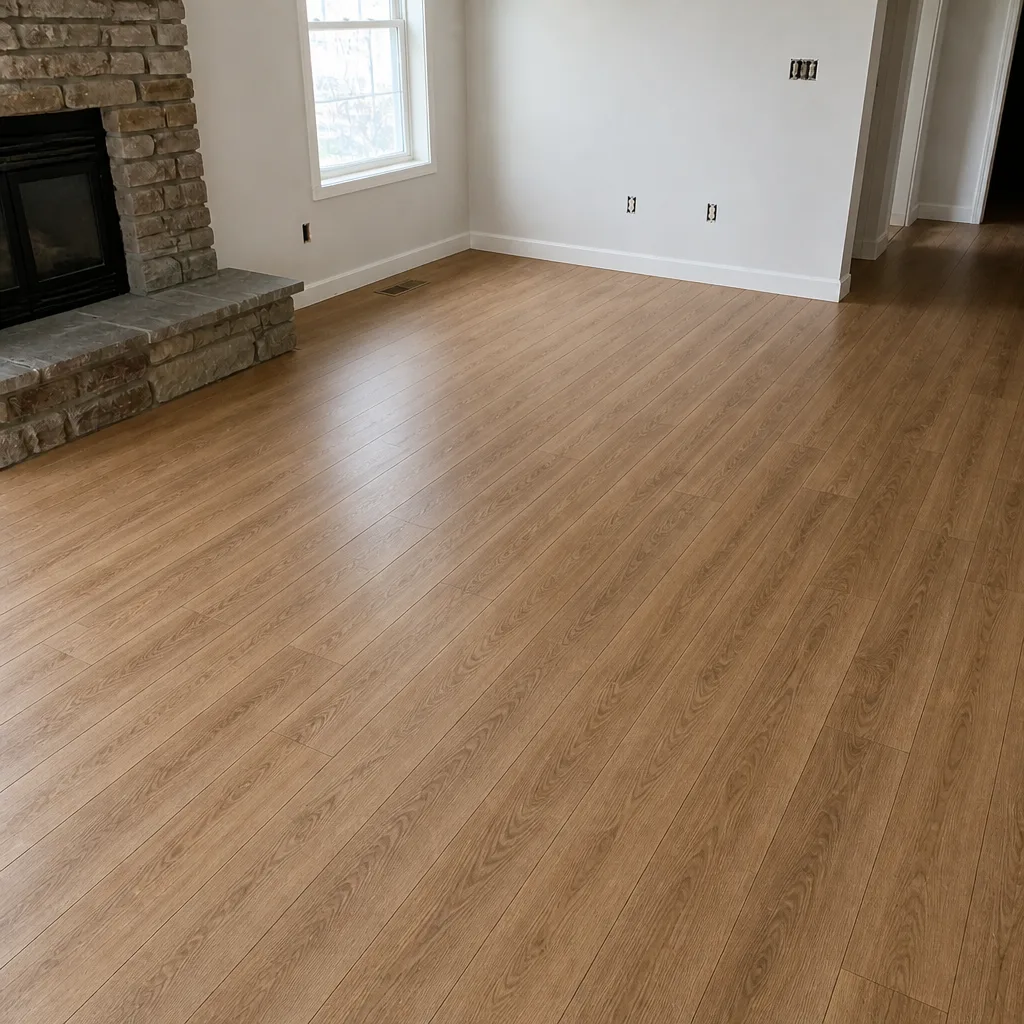 After
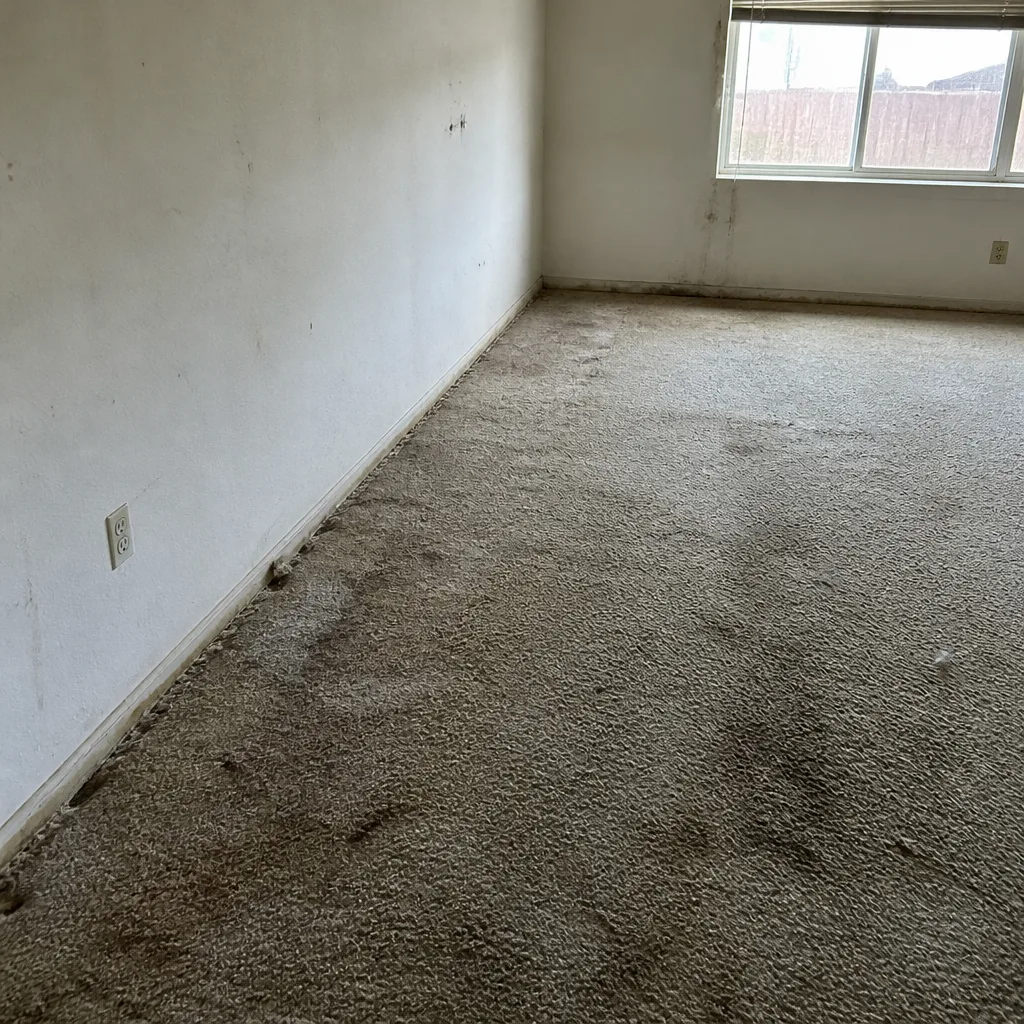 Before
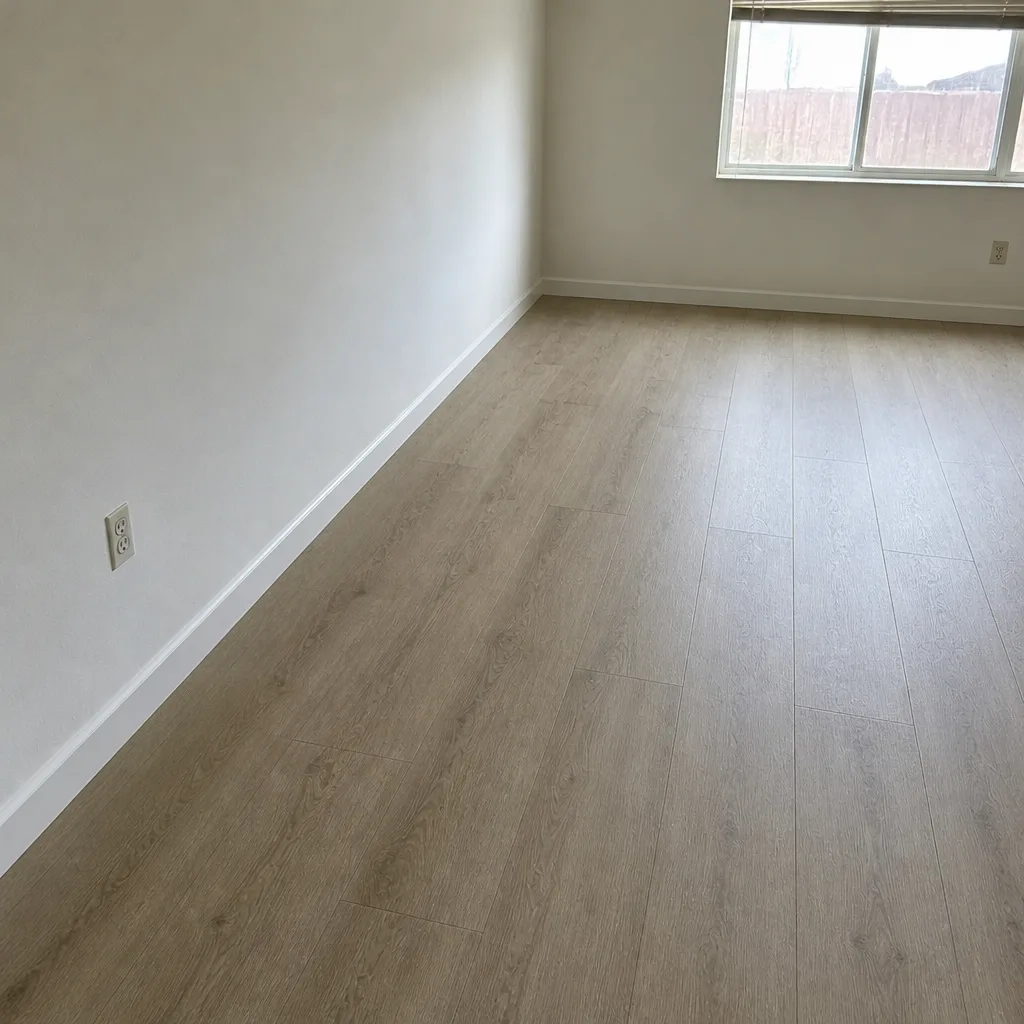 After
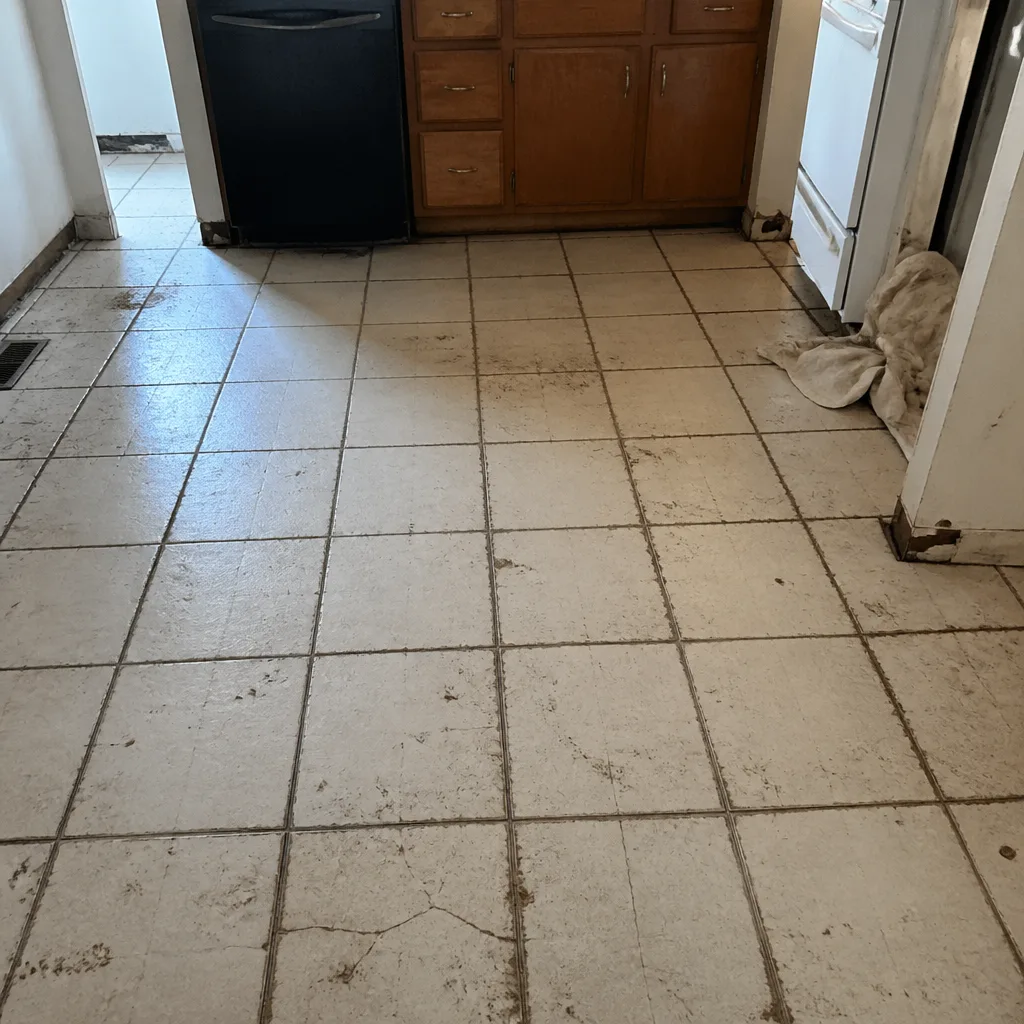 Before
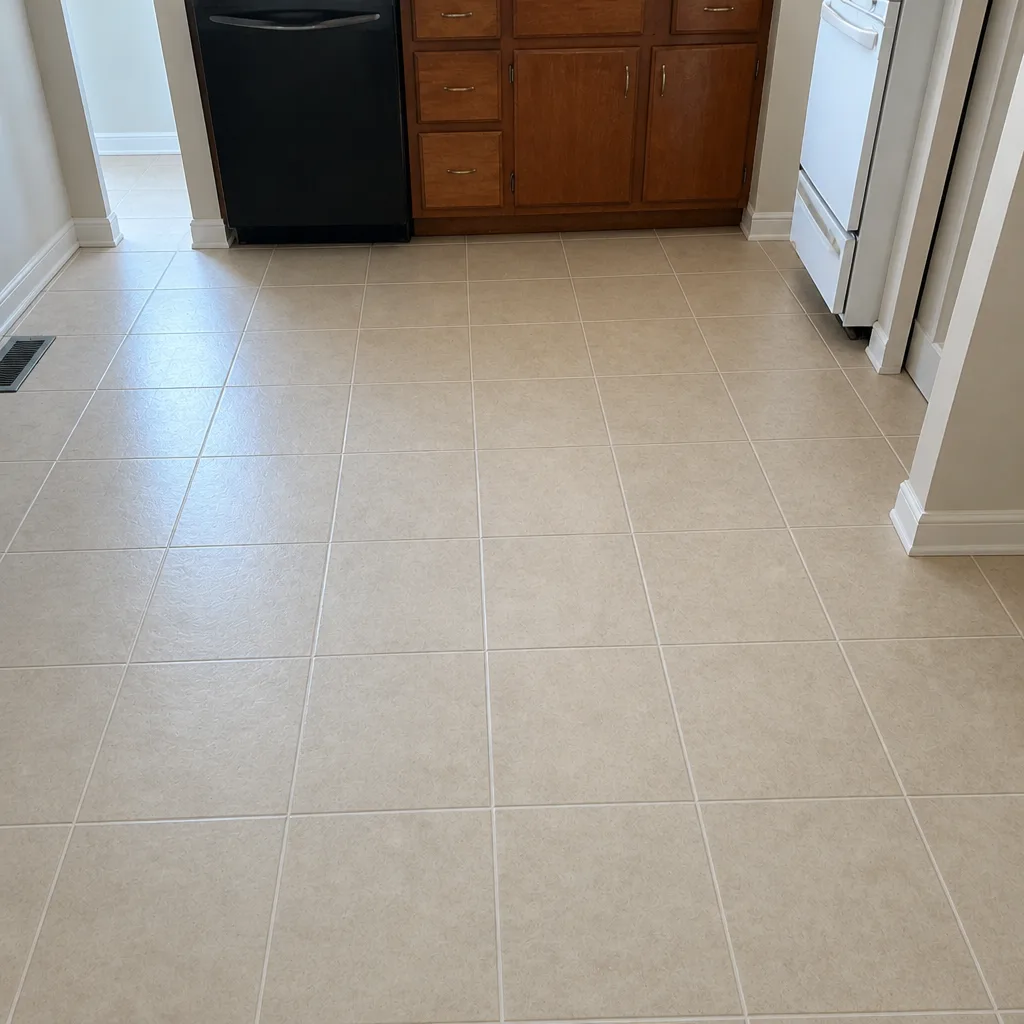 After
When to Call a Professional
Some flooring issues are care problems you can solve yourself. Others need a pro. Call us when wood floors gap or cup beyond a couple of millimeters and won’t move back, when a plank is lifting at a seam and can’t be pressed down, when a grout joint is cracked or missing in a shower or wet area, when a laminate or vinyl floor has been sitting under standing water, or when carpet has a stain that won’t lift with proper blotting. If you’re considering a full replacement, refinishing can be the smart alternative for a solid hardwood floor; we check at the estimate visit whether that’s a fit for your floor. Enterprise Flooring Installation offers free estimates in Enterprise – call (833) 620-6314 to get one scheduled. We answer 24/7, with fast dispatch from 7am to 7pm, Sunday through Friday.
Frequently Asked Questions
You should run it whenever indoor relative humidity drops below 35%, which in an Enterprise home is most of the November-through-March heating season. That’s the level below which wood shrinks and gaps. A hygrometer tells you when to turn it on and when you can leave it off. Call (833) 620-6314 for a free estimate if your floor has already gapped more than you’re comfortable with.
Yes. Ammonia, bleach-based, and oil-polish products can strip or dull the aluminum oxide wear layer on a laminate floor, and once that layer is compromised it can’t be restored. Use a pH-neutral laminate cleaner and a barely-damp mop, and never steam or wet-mop. If a large area of laminate is already damaged beyond cleaning, replacing the affected planks is usually the fix – call us for a free estimate on the work.
Add UV-blocking window film to any window that puts direct sun on the floor, use a pH-neutral cleaner and a damp mop, sweep or vacuum often, and wipe up spills quickly – water-resistant isn’t the same as waterproof. Film is one of the cheapest maintenance steps you can take and it protects the vinyl for years. Call (833) 620-6314 if you want a free estimate on replacing sun-faded planks.
Sanded grout in floors and showers should be resealed annually; unsanded grout in dry areas every 18 to 24 months is typical. A water-drop test tells you whether the seal is still working. Call (833) 620-6314 if a cracked or deteriorated joint needs a professional repair – the estimate is free.
Every 12 to 18 months for a normal household, and more often in homes with pets or heavy traffic. Desert dust settles into the pile in the dry season and vacuuming alone won’t get it all out. Schedule hot-water extraction before the heating season runs. Call (833) 620-6314 for a free estimate on carpet installation if the carpet is past deep cleaning.
Often yes, but not always – it depends on the thickness of the wood above the tongue and the condition of the floor. That’s something we check at the estimate visit, not something we can promise sight unseen. Our team handles Enterprise hardwood work and refinishing alongside installation. Call (833) 620-6314 for a free estimate.
The Bottom Line
The flooring routine that works in Enterprise looks different from what a national blog will tell you. The biggest threats are ultraviolet light and humidity swings, not foot traffic. Control the humidity to 35-55% RH year-round, put UV film on sun-exposed windows, vacuum carpet aggressively in a high-dust environment, reseal grout on a yearly schedule, and keep the wrong cleaners off laminate and vinyl. Those five habits will preserve any floor you put down. If you’re installing new flooring or refinishing an existing floor, our team works with nine manufacturer brands and installs carpet, tile, and hardwood – hard surface, soft surface, or natural wood. Call (833) 620-6314 for a free estimate. We answer 24/7, and we dispatch fast from 7am to 7pm, Sunday through Friday.
Written by the team at Enterprise Flooring Installation.